
Last updated November 5, 2026
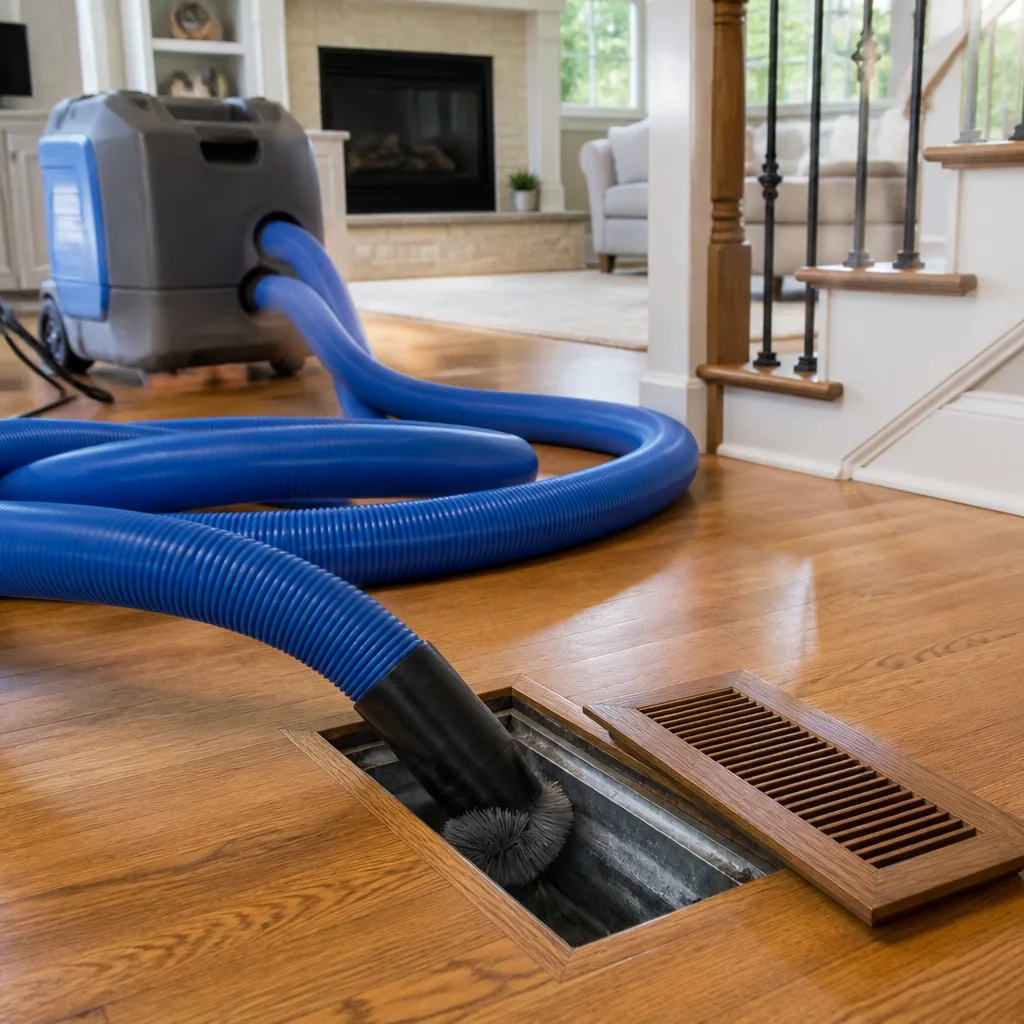 Whole-home duct cleaning
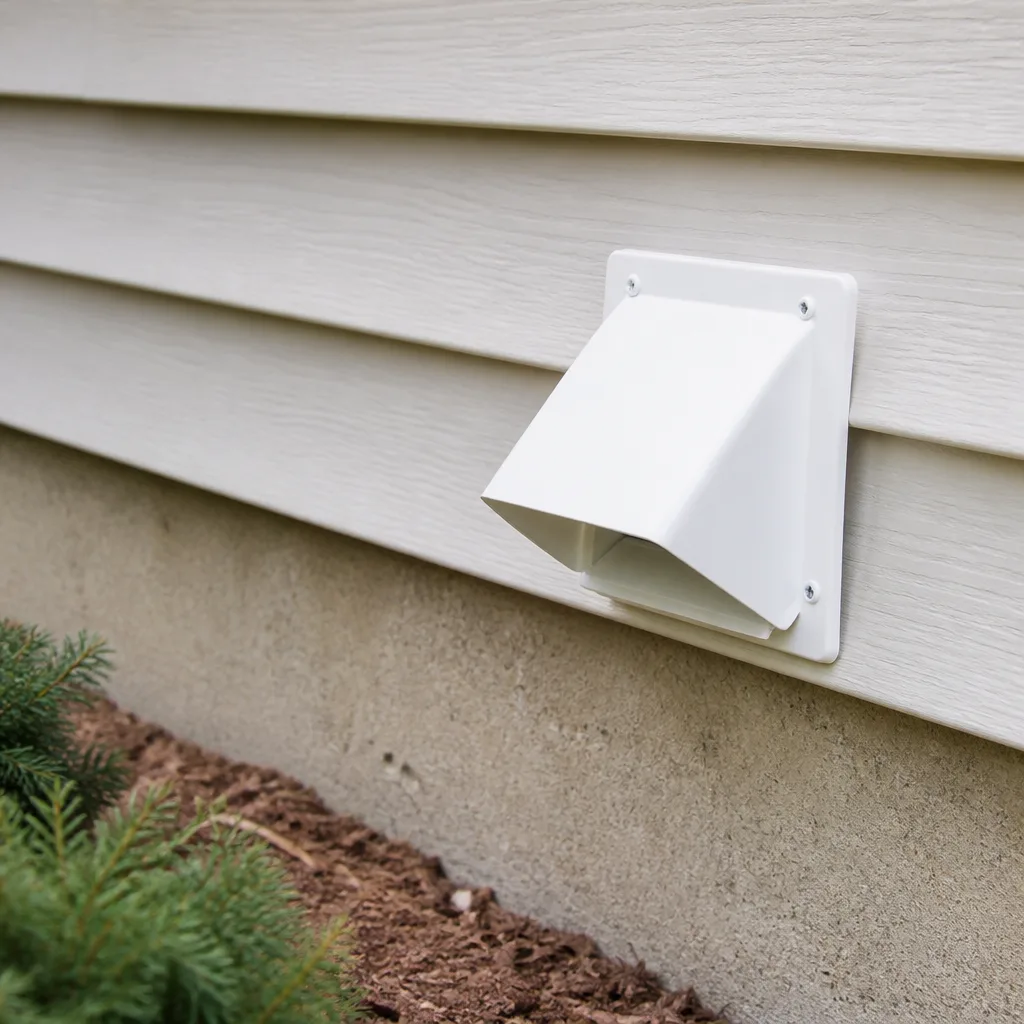 Dryer vent cleaning
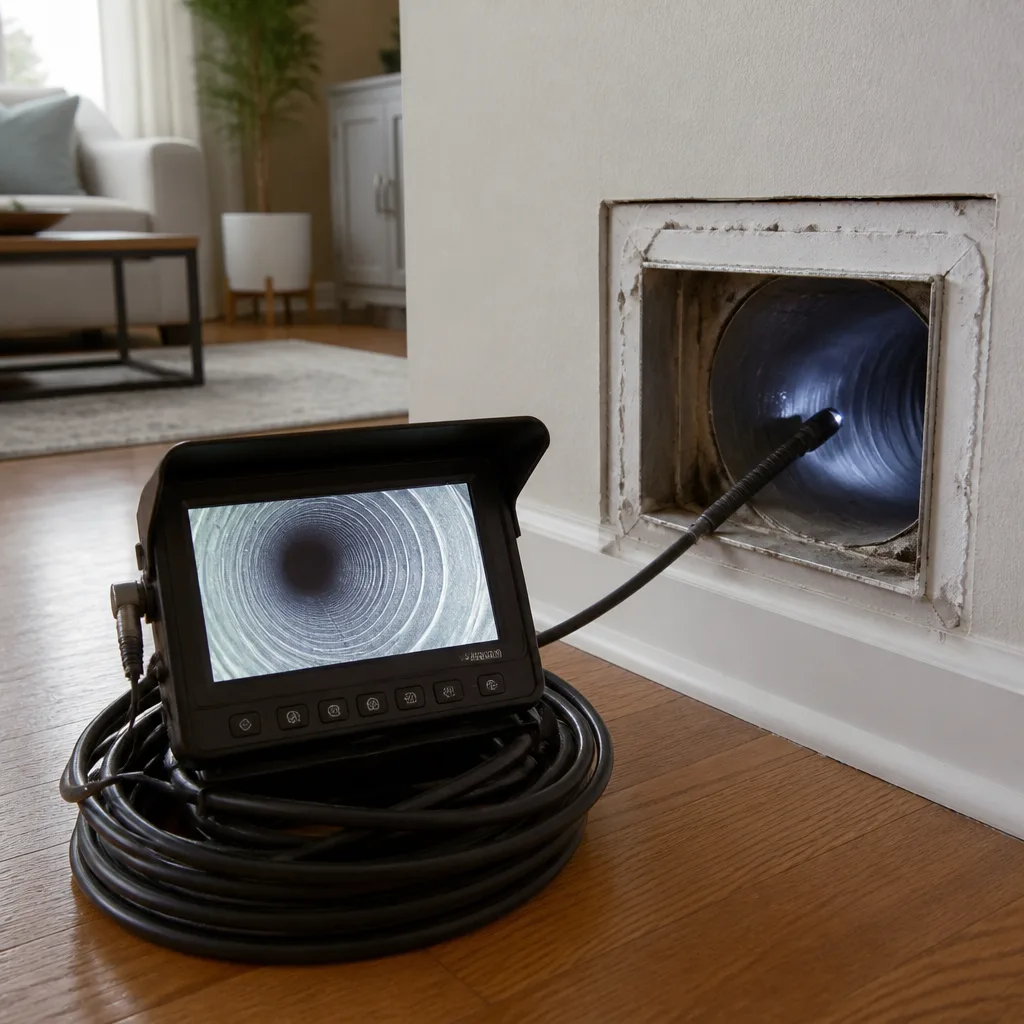 Camera inspection
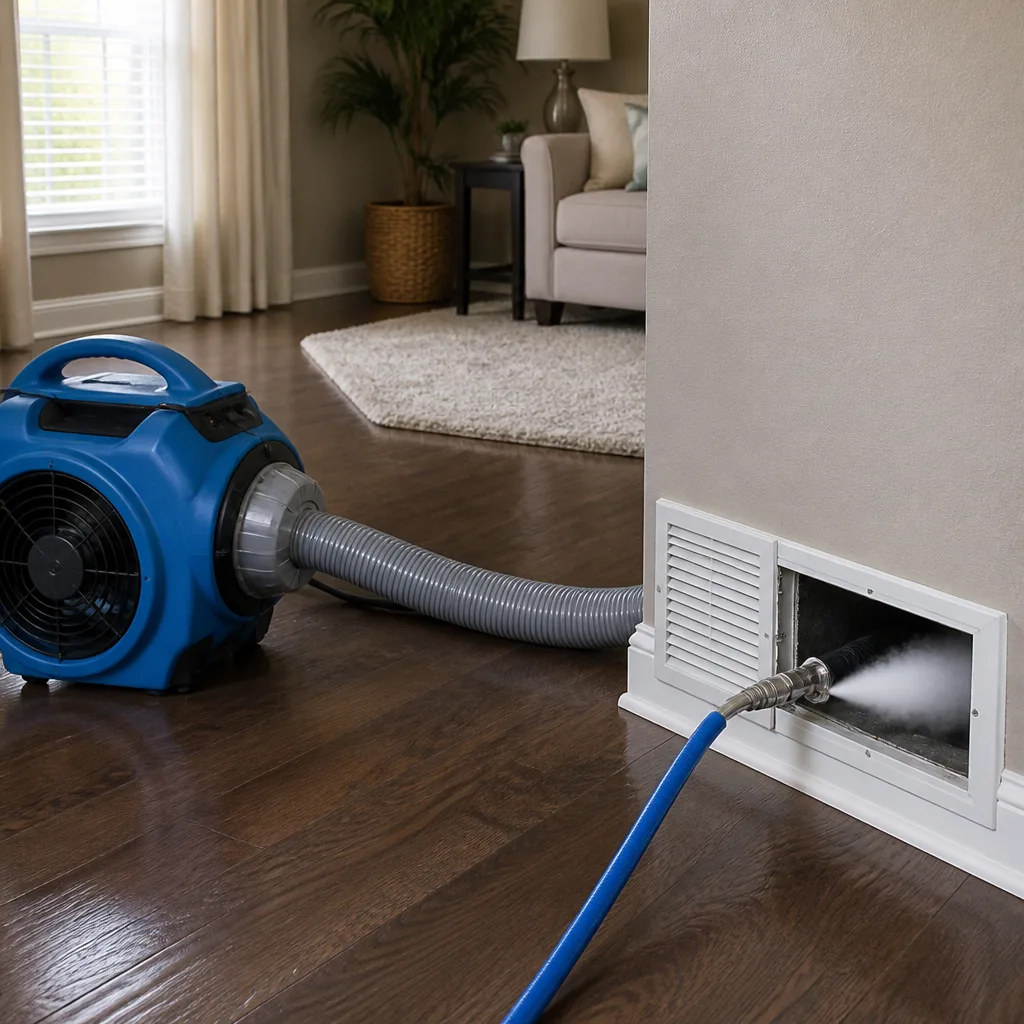 Sanitizing & deodorizing
Whole-system duct and dryer vent check with before-and-after photos - you see exactly what came out of your vents
That "$99 whole-house special" is a bait ad - the real number appears once they are in your hallway, or the "clean" is a shop-vac at the register. We photograph the inside of your ducts before and after instead.
Air Duct Cleaning Maintenance Schedule: What to Do and When
Most homeowners have heard the vague rule that ducts need cleaning “every few years,” but few realize that blanket number was never an actual schedule. What drives real cleaning frequency is the load your specific home puts on its ductwork: pets, remodeling projects, how many hours your HVAC runs, and whether your duct runs pass through unconditioned spaces where coastal marine layer humidity settles in. This guide breaks down a variable-interval maintenance framework built for Laguna Niguel homes, so you’re not spending money on cleanings you don’t need or waiting until symptoms force your hand.
Quick Answer
Most Laguna Niguel homes with no unusual dust load need professional air duct cleaning every 3 to 5 years, but that baseline shifts based on trigger events: a remodel, a new pet, a wildfire smoke season, or an HVAC replacement all reset the clock. Between cleanings, replace your HVAC filter on schedule, check register dust accumulation monthly, and clean dryer vents annually. A home with multiple shedding pets, one that just finished construction, or one with unconditioned attic duct runs in coastal humidity may need service as often as every 2 years.
Styles & brands we work with
- Whole-home duct cleaning
- Dryer vent cleaning
- Camera inspection
- Sanitizing & deodorizing
Table of Contents
- The Real Baseline: How Often Most Homes Need Cleaning
- Trigger Events That Reset the Clock
- Laguna Niguel-Specific Factors That Change the Schedule
- What Homeowners Should Do Between Professional Cleanings
- How to Monitor Duct Condition Without Waiting for Symptoms
- How Filter Choice Affects Cleaning Frequency
- Dryer Vent Cleaning: A Separate Schedule That Deserves Attention
- When Duct Cleaning Reveals Bigger Problems
The Real Baseline: How Often Most Homes Need Cleaning
The National Air Duct Cleaners Association suggests residential ducts be inspected every 2 years and cleaned every 3 to 5 years as a starting point. That’s a defensible range for a house with standard occupancy, no unusual dust sources, and properly maintained filtration. But the honest answer is that a calendar interval alone doesn’t tell you much. A two-person household with no pets, tile floors, and a high-efficiency filter replaced on schedule might go longer than 5 years without measurable buildup. A four-person home with two dogs, carpet throughout, and a filter that gets changed when someone remembers might need cleaning every 2 years.
What matters is the actual rate of particulate accumulation inside the duct system. Dust, pet dander, skin cells, and fibers from carpet and upholstery all move through return registers and settle inside duct runs where airflow slows. Over time, that layer of accumulated material can restrict airflow, force your HVAC system to run longer cycles, and provide a substrate for moisture-loving microbial growth when humidity levels rise. In our experience maintaining systems across Laguna Niguel, homes with the highest runtime hours and the most indoor particulate sources are the ones where buildup becomes visible fastest.
Here’s a practical baseline framework based on household profile:
- Low-load home (no pets, hard flooring, 1-2 occupants, diligent filter changes): every 4 to 5 years
- Standard home (1 pet or carpet in main living areas, 3-4 occupants): every 3 to 4 years
- High-load home (2+ shedding pets, carpet throughout, frequent cooking, windows open often): every 2 to 3 years
- Post-renovation or post-construction (regardless of prior schedule): clean once after the project concludes, then resume baseline
These are starting points, not rigid rules. A home that fits the high-load profile but has never had its ducts cleaned in 10 years needs immediate attention. A low-load home that just finished a kitchen remodel needs service sooner than the baseline suggests. The schedule exists to prevent problems, not to create busywork.
Trigger Events That Reset the Clock
Certain events introduce so much new particulate load that they effectively reset your cleaning interval regardless of when the last service happened. These aren’t reasons to panic; they’re simply moments when the math changes. Think of them as a new “day zero” for your duct system.
The most common triggers we see in Laguna Niguel homes:
- Remodeling or construction. Drywall dust, sawdust, and construction debris enter ductwork through open registers and returns even when contractors use plastic sheeting. This fine particulate settles deep in the system and recirculates for months afterward. Any remodel project larger than a single-room paint job warrants a professional cleaning after final cleanup.
- New pet addition. Adding a dog or cat to a previously pet-free home changes the particulate load overnight. Pet dander is smaller and lighter than household dust, meaning it stays airborne longer and travels deeper into the duct system. If you adopt a shedding breed, plan to move your cleaning schedule up by at least a year.
- Wildfire smoke season. Southern California wildfire events push fine particulate into homes even with windows closed and HVAC fans running. After a sustained smoke event in the region, inspect your filter first. If the filter is heavily loaded and registers show visible soot accumulation, the ducts absorbed the same particulate and may need cleaning sooner than the baseline.
- HVAC system replacement. When a new furnace or air handler is installed, the ductwork gets disturbed. Old accumulated debris can loosen and redistribute. It’s a good moment for a cleaning while the system is fresh and before the new equipment operates against restricted airflow.
- Water intrusion or visible moisture. Any leak, condensation issue, or visible moisture inside ductwork or around registers should trigger immediate inspection. Damp duct environments support microbial growth, and cleaning is part of the response, not a maintenance nicety.
One way to think about it: your baseline schedule assumes steady-state conditions. Any event that significantly increases particulate input or disrupts system operation moves you out of steady state. When the event passes, resetting the clock with a professional cleaning returns you to a predictable maintenance rhythm.
Laguna Niguel-Specific Factors That Change the Schedule
Laguna Niguel sits close enough to the Pacific that the marine layer rolls through on a regular schedule, especially during late spring and early summer. That coastal humidity pattern has a real effect on duct systems, and it’s the main reason generic schedules written for inland climates don’t transfer cleanly to this area. The specific issue is unconditioned attic duct runs. When cool, moist air from the marine layer meets duct surfaces that have cooled overnight from air conditioning cycles, condensation forms. It’s the same principle as a glass of cold water sweating on a humid afternoon.
That condensation matters because dust accumulation inside ducts is hygroscopic: it absorbs moisture from the air. A thin layer of dust in a dry climate stays dry and mostly inert. The same layer in a humid unconditioned attic in Laguna Niguel absorbs marine-layer moisture and creates the kind of damp, organic-rich environment where microbial growth can establish itself. The result is that homes with attic duct runs in our area benefit from an inspection interval at the shorter end of the range, regardless of how clean the rest of the house appears.
Another local factor is HVAC runtime. Coastal Orange County homes typically run air conditioning from late May through October, with some homes running systems nearly year-round to manage humidity even when temperatures are mild. More runtime means more air passes through the duct system, which means more particulate accumulates per month than in a home that only conditions air for a few months. If your system moves air 10 months out of the year, your cleaning interval should reflect that workload.
Finally, the age of housing stock matters. Many Laguna Niguel neighborhoods contain homes built in the 1980s and 1990s. Duct systems of that vintage may have accumulated decades of material before current owners ever considered cleaning, and some have flex duct that has degraded or separated at joints. A home that has never had a professional duct inspection may need not just cleaning but also repair work, which changes both the timeline and the scope of the visit. If you’re unsure when your ducts were last serviced, the honest answer is to have them inspected now and establish a baseline, rather than guessing from a generic calendar.
What Homeowners Should Do Between Professional Cleanings
Professional duct cleaning is a periodic event, not a replacement for routine homeowner maintenance. The schedule below represents what you can do yourself between visits, and it directly affects how often the professionals need to come back. Think of it this way: the better you manage particulate at the source, the longer the interval between full cleanings.
Here’s the homeowner maintenance calendar that applies to every Laguna Niguel home, regardless of duct cleaning schedule:
- Replace HVAC filters on schedule (monthly, quarterly, or per manufacturer). The single highest-leverage maintenance task. A clogged filter reduces airflow, forces longer runtimes, and allows bypass particulate to enter the duct system. If you use higher MERV filters, check them more frequently because they load faster.
- Inspect registers and return grilles monthly. Remove the grille, vacuum the visible interior, and wipe down the grille surface. This takes five minutes and removes surface dust before it travels deeper.
- Vacuum under and around return registers weekly. Return grilles pull air from the room, and floor-level returns act as dust collectors. Keeping the surrounding floor clean reduces what enters the system.
- Check dryer vent exterior hood monthly. Confirm the flap opens when the dryer runs and closes when it stops. Lint buildup on the exterior vent indicates the interior run is accumulating material.
- Note any change in airflow from specific registers. If one room feels noticeably weaker than others, or if airflow changes suddenly, it may indicate a disconnected or crushed duct section that needs professional attention.
None of these tasks requires special tools or technical training. They take minutes each month and they compound over time. A homeowner who follows this routine consistently will see slower duct accumulation, lower energy use, and a longer useful interval between professional cleanings. The maintenance schedule isn’t just about the big service event. It’s about what happens in the months between.
How to Monitor Duct Condition Without Waiting for Symptoms
Waiting for obvious symptoms, like visible dust blowing from registers or unexplained allergy flare-ups, is a losing strategy. By the time symptoms appear, the system is already significantly loaded and you’re playing catch-up. A better approach is to track leading indicators that tell you the ducts are accumulating material before they become a visible problem.
The most useful leading indicator is register dust accumulation. Here’s the simple protocol:
- Choose a consistent observation point. Pick two or three supply registers in main living areas that you can check regularly. Consistency matters more than checking every register.
- Clean the register and grille thoroughly once. Wipe down the grille, vacuum the visible duct interior as far as you can reach, and remove all surface dust.
- Check the same registers every 4 to 6 weeks. Note how quickly visible dust reappears on the grille surface and just inside the duct opening.
- Photograph what you see. A phone photo at each check gives you an objective record. Comparing photos from March to October tells you the accumulation rate without relying on memory.
If dust re-accumulates visibly within 30 days of a thorough cleaning of the register area, your system is moving significant particulate. That’s not automatically a crisis, but it is a signal that the interior duct surfaces are carrying a load and that the next professional cleaning should move up on your schedule. If the registers stay clean for 2 to 3 months after a reset, your baseline interval is probably appropriate or even generous.
Another monitoring point is the filter itself. When you replace your filter, note its condition at the time of change. A filter that’s heavily loaded with visible debris at the end of its interval tells you the system is ingesting a lot of particulate. A filter that comes out relatively clean after 3 months suggests low system load. This data point, combined with register observations, gives you a much clearer picture than any generic calendar ever will.
How Filter Choice Affects Cleaning Frequency
The filter in your HVAC system is the first line of defense for your ductwork. A higher MERV rating captures more and smaller particles, which means fewer of those particles make it into the duct system in the first place. That has a direct effect on how often the ducts themselves need professional cleaning.
Here’s the relationship in practical terms:
- MERV 8 or lower (basic fiberglass or low-efficiency pleated): Captures larger particles only. Fine dust, dander, and smoke pass through into the duct system. This means faster duct loading and shorter cleaning intervals, especially in high-load homes.
- MERV 11 to 13 (mid to high efficiency): Captures significantly more fine particulate. Ducts stay cleaner longer, assuming the filter is changed on schedule and fits properly without bypass gaps.
- MERV 14 or higher (hospital-grade filtration): May require a system designed for that airflow restriction. Check with an HVAC professional before installing these in a standard residential system, as they can reduce airflow if the system isn’t engineered for it.
The key caveat is that a high-MERV filter only extends your cleaning interval if it’s changed on schedule. A MERV 13 filter left in place for 6 months becomes so loaded that airflow drops and bypass occurs, meaning unfiltered air finds its way around the filter media. The result is worse than using a lower-MERV filter that gets changed regularly. The schedule matters as much as the rating.
For homes with allergen-sensitive occupants, a MERV 11 or 13 filter is often the right balance between particulate capture and system compatibility. Homes with Honeywell media cabinets or similar whole-home filtration setups can typically support higher MERV ratings without airflow penalties. The point is to match the filter to the system and to change it without fail. The better that first line of defense works, the longer your professional air duct cleaning interval can be pushed, within reason.
Dryer Vent Cleaning: A Separate Schedule That Deserves Attention
Dryer vent cleaning follows a different schedule than duct cleaning for a simple reason: the consequences of neglect are different. A loaded dryer vent doesn’t just reduce efficiency, it creates a genuine fire hazard. Lint is the leading cause of dryer-related house fires, and the buildup inside a vent run acts as dry, readily combustible fuel sitting directly in the path of hot exhaust air.
The schedule for dryer vents is more predictable than for ducts because the input source is consistent: every load of laundry produces lint. Here’s the baseline:
- Standard household (2-3 people, typical laundry volume): annual professional dryer vent cleaning
- Large household (4+ people, multiple loads per day): every 6 to 12 months
- Households with pets and heavy fabric use (towels, bedding frequently washed): every 6 months
- Any sign of extended dry times, hot dryer exterior, or visible lint at the exterior vent: immediate service, not next calendar date
Dryer vent runs in Laguna Niguel homes are often long, with multiple bends, especially in two-story layouts where the laundry room sits on the first floor and the vent terminates at the roofline. Longer runs accumulate lint faster because airflow slows along the distance. They’re also harder to inspect visually, which is why an annual professional cleaning makes sense even for households that don’t think of themselves as heavy laundry users.
This is a service that should be on your calendar regardless of what’s happening with your air ducts. Dryer vent cleaning is fast, it’s scheduled on its own rhythm, and it has a direct safety benefit. The two services are related but not interchangeable. If you’re establishing a home maintenance calendar, put the dryer vent on its own annual line item and don’t let it ride along as an afterthought to duct cleaning.
When Duct Cleaning Reveals Bigger Problems
A professional duct cleaning doesn’t just remove accumulated dust. It also exposes the condition of the ductwork itself. And in older Laguna Niguel homes, that condition isn’t always good. Flex duct can separate at joints. Sheet metal sections can corrode or crush. Rodents can chew through return plenums. Seals can fail and allow attic air, with all its dust and humidity, into the supply stream.
The critical point is this: if a cleaning crew finds damaged ductwork and only cleans around it, you’ve paid for half a solution. Dust will re-enter through the same compromised sections, airflow will remain restricted, and whatever problem the damage represents will continue. Worse, a cleaning crew that doesn’t understand what they’re looking at may not even flag the problem, leaving you with a clean but still-broken system.
This is why we approach every cleaning job as an inspection opportunity. When our equipment moves through the system with a Rotobrush rotary brush system, the process itself reveals discontinuities: airflow changes at separated joints, debris patterns that indicate attic particulate entering the system, temperature variations at specific registers that suggest disconnected runs. When we find damage, the conversation doesn’t end with “you should get that looked at.” We can repair the ductwork in the same visit, because duct repair is part of what we do, not a referral to another contractor.
The practical maintenance implication is that your first professional cleaning in a home with unknown duct history is also a diagnostic event. You’re not just paying for dust removal. You’re paying to establish the condition of the system you’ll be maintaining for years to come. That information determines everything else on your schedule: whether you can confidently run a 4-year interval, whether you need to address a repair before setting a baseline, and whether your system has underlying issues that will keep loading the ducts no matter how often you clean them.
Duct cleaning in Laguna Niguel homes of a certain age rarely turns out to be just dust removal. It’s a status check on the system that moves your air. If you haven’t had that check done, or if it’s been years since the last one, the next step isn’t to guess. It’s to get the inspection done and build your schedule from what’s actually there.
Common Mistakes to Avoid
- Using a calendar alone to decide when to clean. The 3-5 year range is a starting point, not a rule. A home that just finished a remodel or added two dogs needs service sooner, and a low-load home can go longer. Track your home’s actual particulate load and adjust accordingly.
- Assuming a cheap standard cleaning addresses dryer vents. Dryer vent cleaning is a separate service with separate equipment. A duct cleaning package that doesn’t explicitly include the dryer vent isn’t cleaning it, and the fire hazard from lint buildup remains unaddressed.
- Ignoring the filter because “the ducts were just cleaned.” A clean duct system with a clogged filter will re-load quickly. The filter schedule is the maintenance backbone; the duct cleaning resets the system, but the filter schedule keeps it clean.
- Waiting for visible dust blowing from registers. By that point, the system is already significantly loaded. Use register dust accumulation as a leading indicator and act before it becomes visible from across the room.
- Treating duct cleaning as a solution for water damage. If a duct system has been wet, cleaning is only part of the response. The source of moisture must be identified and addressed, or the problem returns regardless of how thoroughly the ducts are cleaned.
- Hiring a crew that can only clean, not repair. If damage is discovered during cleaning and the crew can’t fix it, you’re left with a clean system that’s still compromised. In Laguna Niguel’s humid attic conditions, compromised ducts continue to pull in particulate and moisture.
- Extending the interval because “we’re not home that much.” Part-time occupancy doesn’t mean the system isn’t running. Many Laguna Niguel homeowners run HVAC systems on schedule even when away to manage humidity, which means the duct system keeps accumulating regardless of occupancy.
See the difference
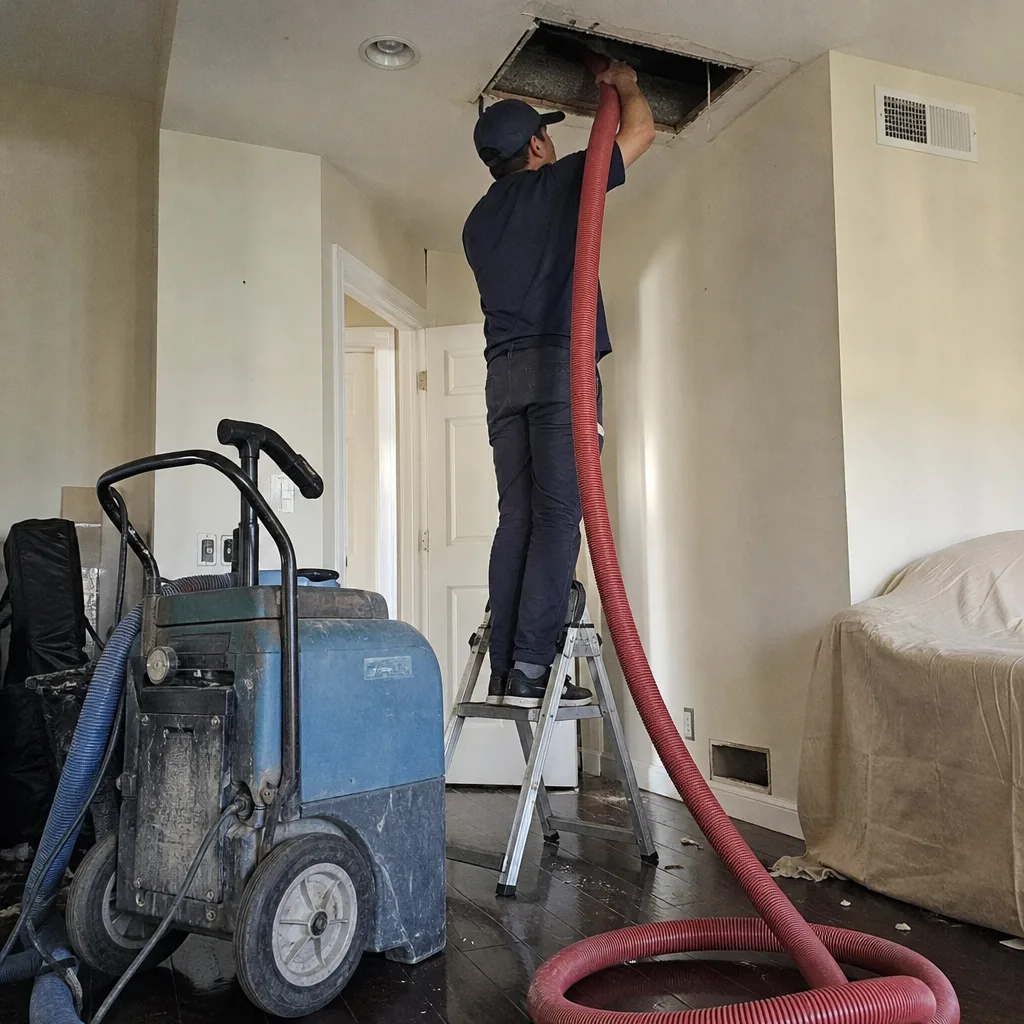 Before
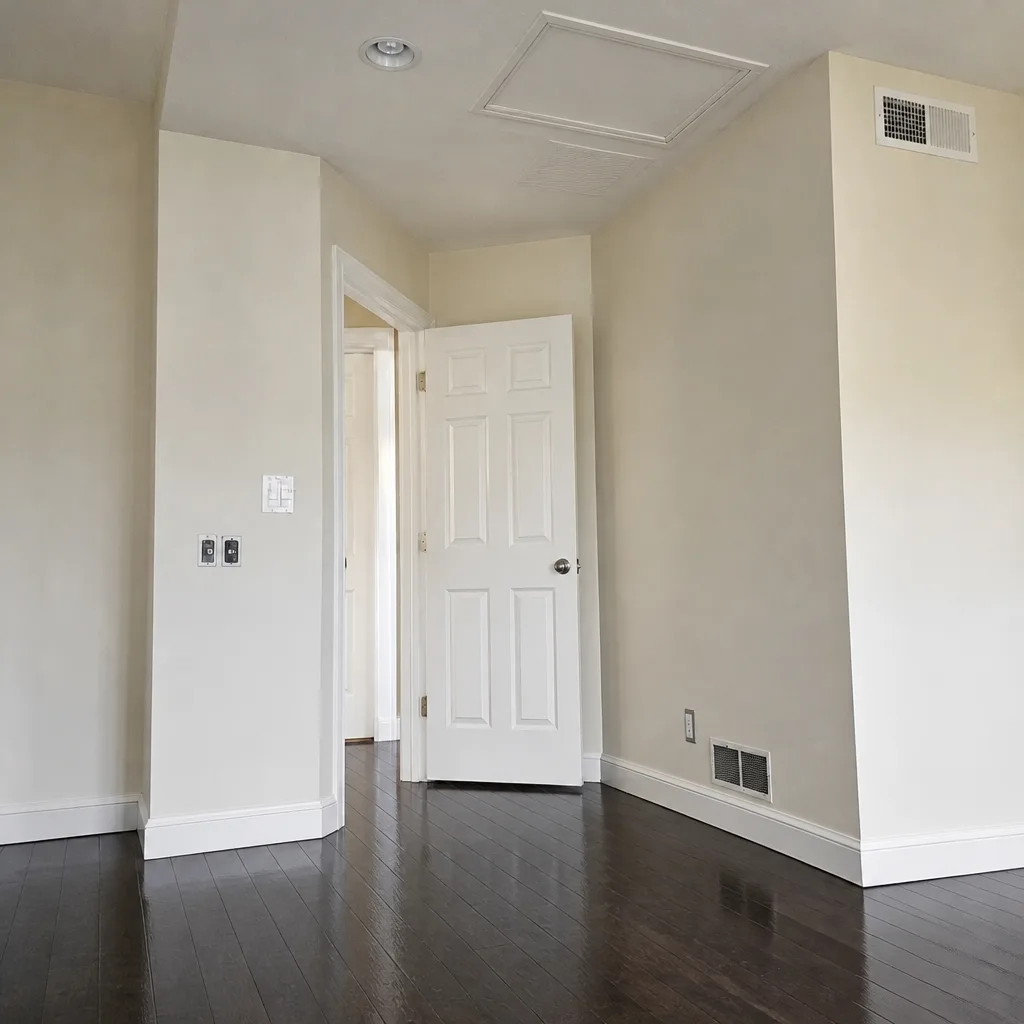 After
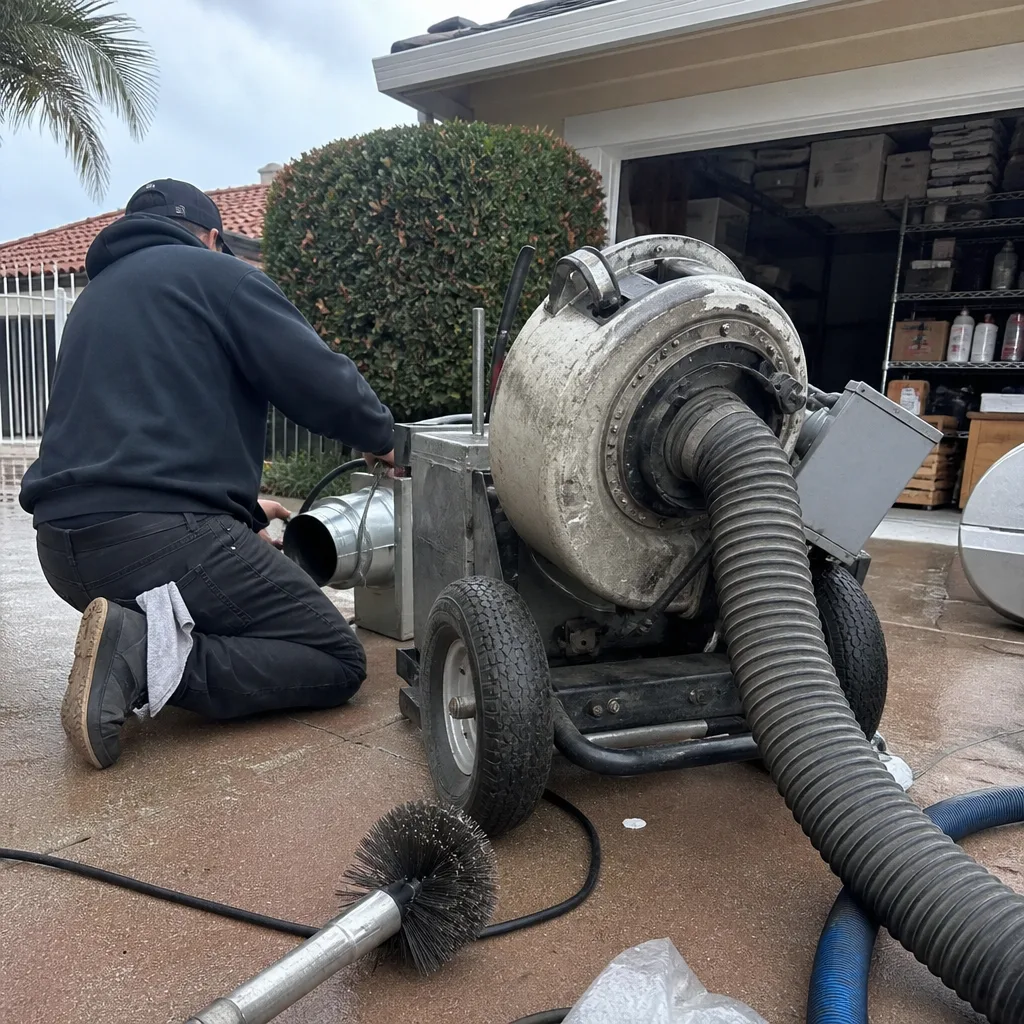 Before
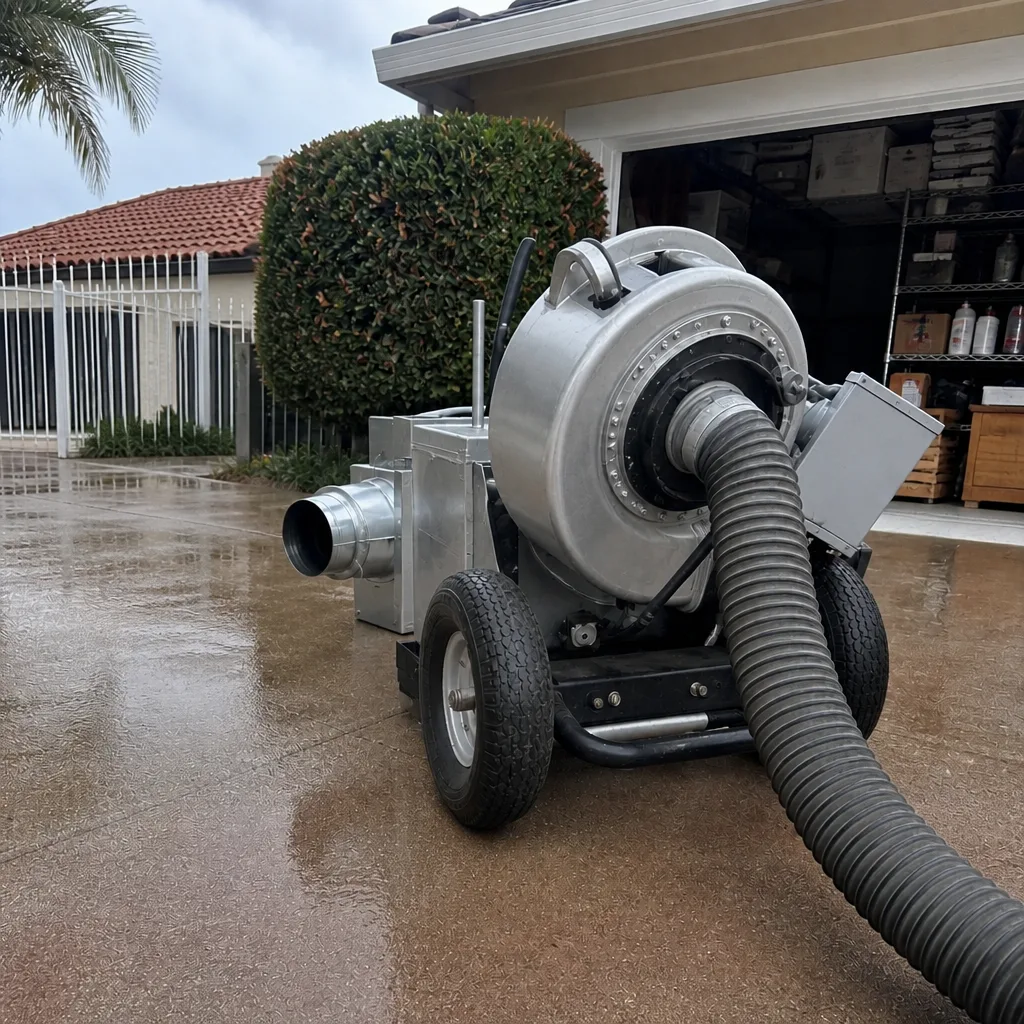 After
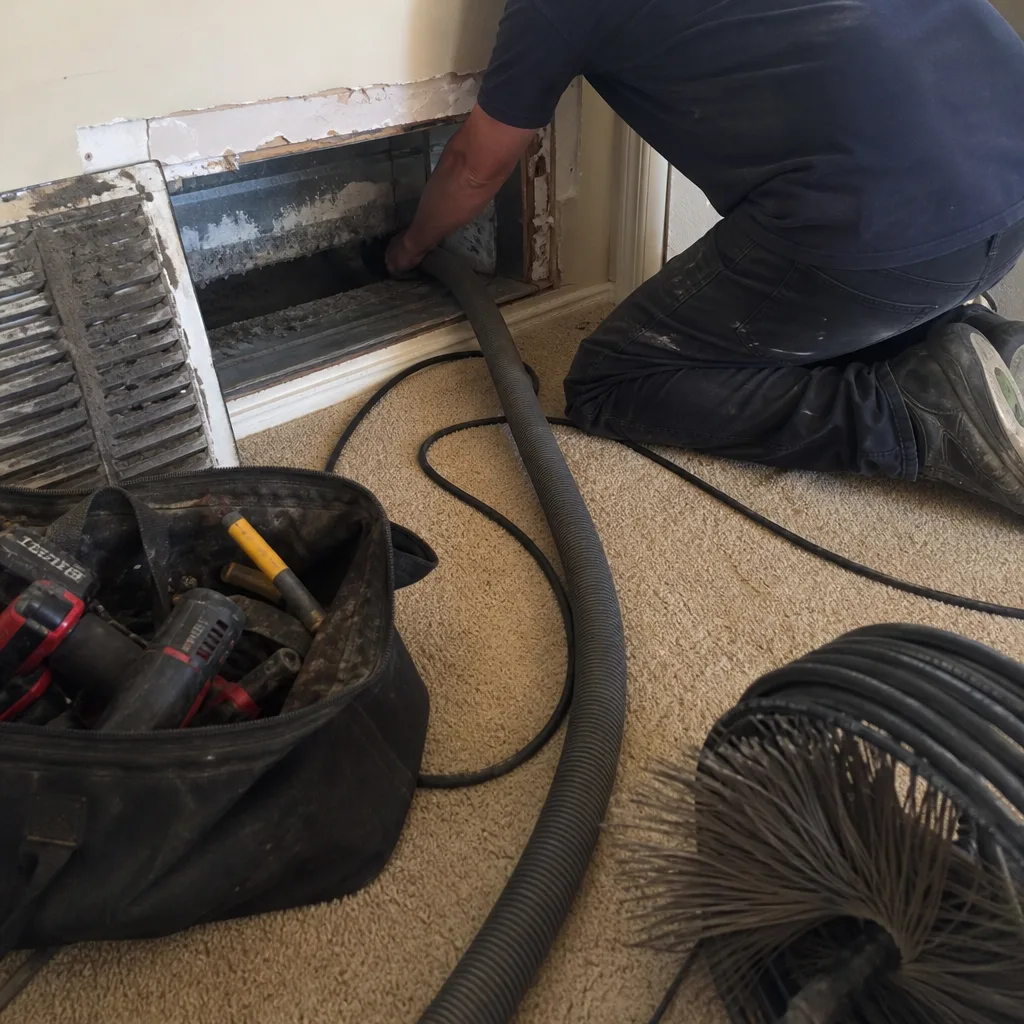 Before
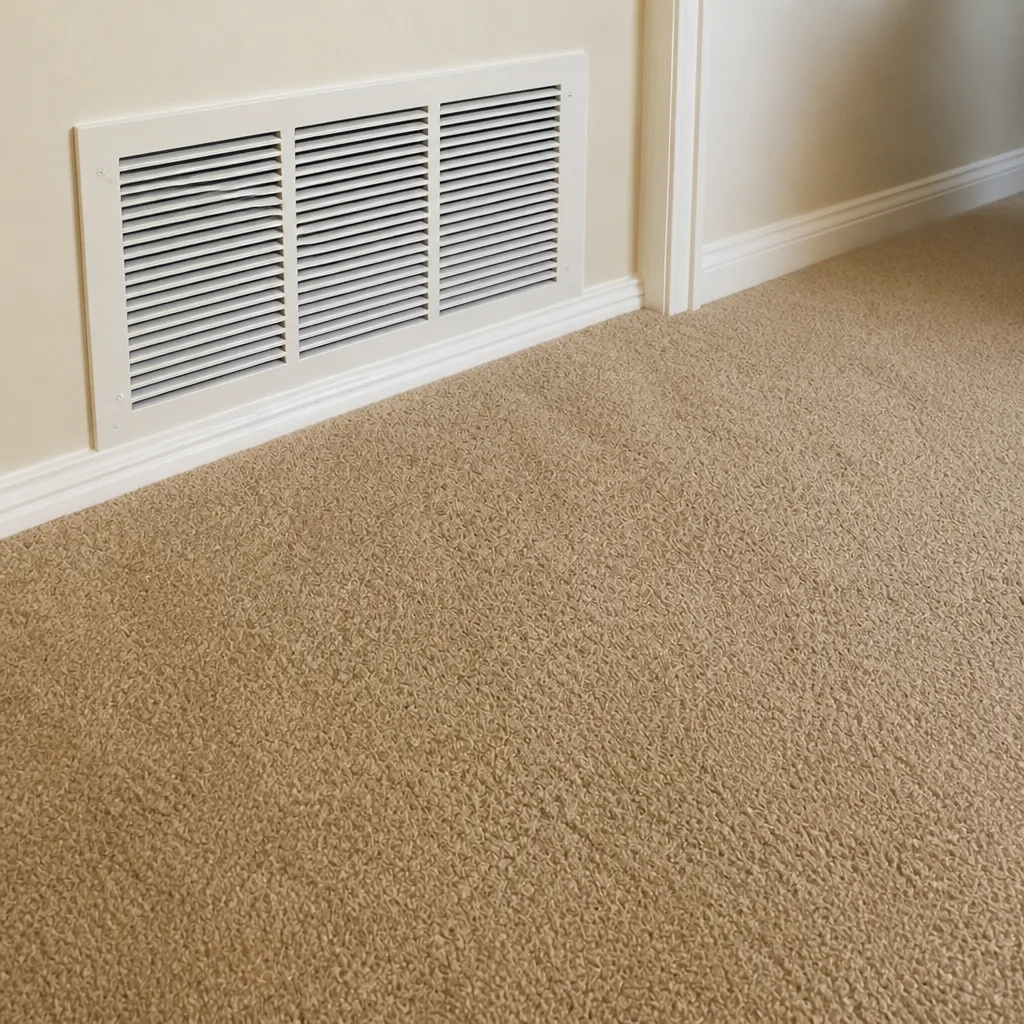 After
When to Call a Professional
If your home hasn’t had a professional duct inspection in more than 5 years, that’s reason enough to schedule one now, regardless of symptoms. Establishing a baseline condition is the foundation of any maintenance schedule. Beyond that, call when you see visible mold or moisture around registers, when airflow from specific rooms drops noticeably, when a remodel or wildfire smoke event concludes, or when your HVAC system is replaced and the ducts are disturbed. If your dryer takes longer than one full cycle to dry a normal load, that’s a separate call for dryer vent service. Duct Cleaning Laguna Niguel offers free estimates in Laguna Niguel. Call (855) 525-6862. We answer 24/7. Fast dispatch from 7am to 7pm, Sunday through Friday.
Frequently Asked Questions
Every 3 to 5 years is a reasonable baseline for most Laguna Niguel homes with standard occupancy and no unusual dust sources. Homes with multiple pets, recent remodeling, or unconditioned attic duct runs in coastal humidity may need cleaning every 2 to 3 years. Homes with no pets, hard flooring, and diligent filter changes can often go 4 to 5 years. The schedule should reflect your home’s actual particulate load, not just the calendar. Call (855) 525-6862 to schedule a free estimate and establish a baseline for your system.
Low-cost duct cleaning offers typically come from crews using consumer-grade vacuums or portable equipment that can’t generate the airflow needed to dislodge and extract debris from the full duct run. The job may take under an hour and leave most of the system untouched. Professional-grade equipment like Rotobrush rotary brush systems and Nikro negative-air machines produces a fundamentally different result. We show before-and-after photos of your own ducts so the work is verifiable, not just claimed. Call (855) 525-6862 for a free estimate with no per-vent pricing games.
Ask for before-and-after photos of the duct interior taken during the job. Any reputable duct cleaning company should provide visual documentation showing the condition of the duct surfaces before and after service. If a company refuses or can’t produce photos, that’s a red flag. At Duct Cleaning Laguna Niguel, we document every job with interior photos so you can see the work, not just take our word for it. Call (855) 525-6862 to schedule a free estimate.
Yes, with a caveat. A MERV 11 or 13 filter captures more fine particulate, which keeps duct surfaces cleaner longer and can legitimately extend your cleaning interval. But the filter must be changed on schedule. A heavily loaded high-MERV filter restricts airflow and creates bypass, which lets unfiltered air around the media and actually accelerates duct loading. The filter rating only helps if the filter maintenance is consistent. Call (855) 525-6862 to discuss what filter setup makes sense for your system.
Yes, in one specific way: the marine layer humidity that affects coastal and near-coastal Orange County homes. Unconditioned attic duct runs in Laguna Niguel experience condensation when cool duct surfaces meet moist marine-layer air, and dust inside those ducts absorbs that moisture, creating conditions where microbial growth can establish. This means attic duct runs in our area deserve inspection at the shorter end of the standard interval. Call (855) 525-6862 for a free estimate, and we’ll assess your specific duct configuration.
After. Cleaning ducts before a remodel means the dust generated during construction enters a clean system and you pay twice. Clean once the project is finished and the construction debris has stopped being generated. During the remodel, keep the system off as much as possible and seal registers in the work area. Then schedule the professional cleaning as the final step before the system resumes normal operation. Call (855) 525-6862 to schedule a post-remodel cleaning estimate. We answer 24/7. Fast dispatch from 7am to 7pm, Sunday through Friday.
The Bottom Line
A duct cleaning schedule built on a generic calendar is a guess. A schedule built on your home’s actual conditions, its particulate sources, its HVAC runtime, and its duct system configuration is a maintenance plan. For most Laguna Niguel homes, the workable baseline is every 3 to 5 years, adjusted for pets, remodels, smoke events, and marine-layer humidity in unconditioned attic runs. Between professional cleanings, the homeowner’s filter discipline and monthly register checks do more to extend the interval than anything else. And when cleaning day comes, hire a crew that can inspect and repair, not just vacuum. The whole point of a schedule is that it keeps the system from becoming a symptom-driven emergency. That only works if the schedule is real.
Written by the team at Duct Cleaning Laguna Niguel, serving Laguna Niguel since 2011.