
Last updated November 5, 2026
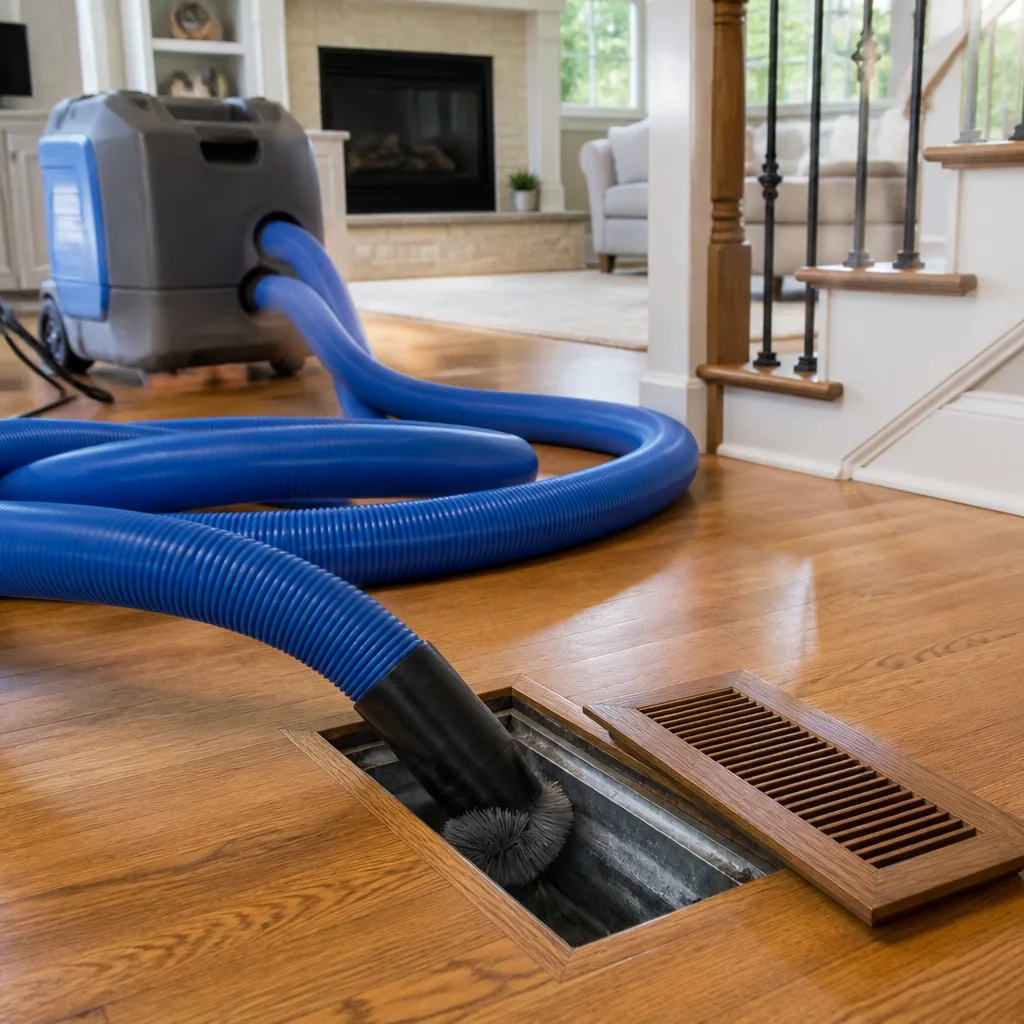 Whole-home duct cleaning
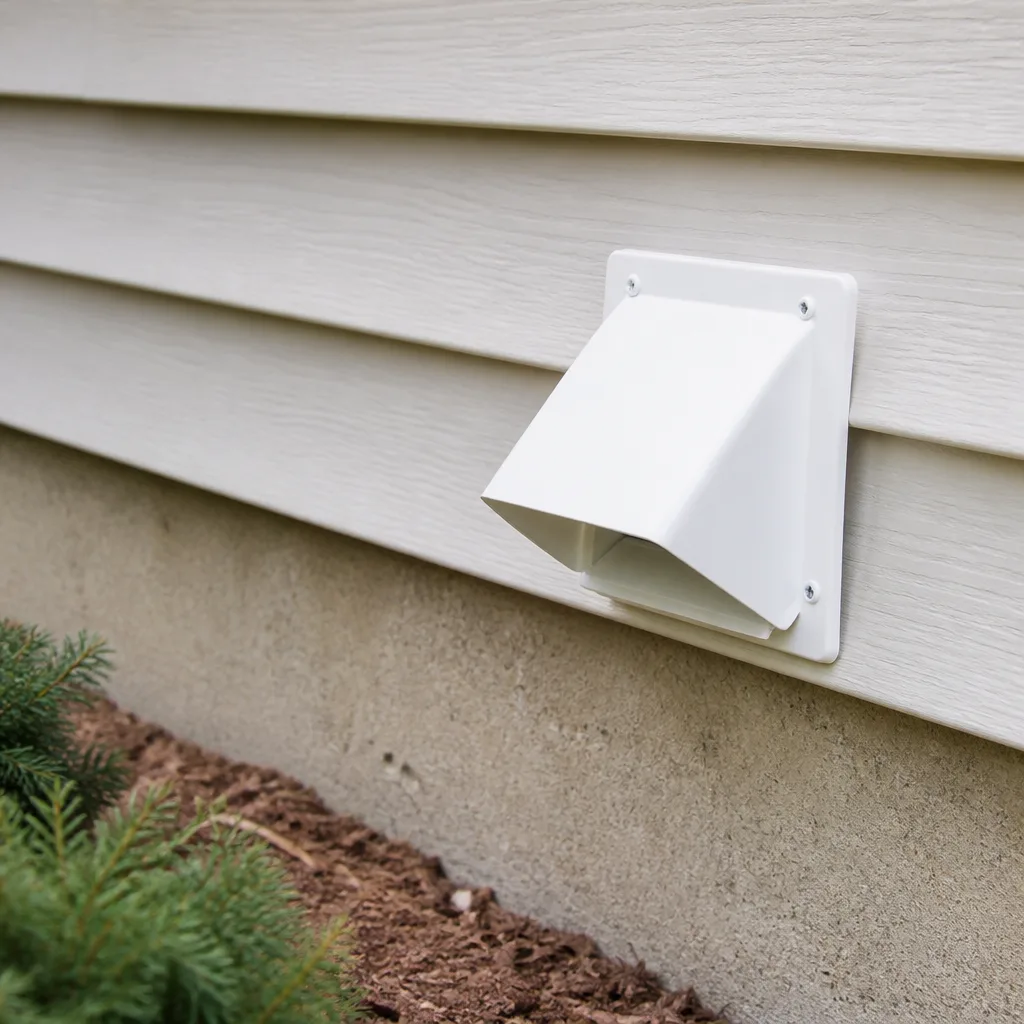 Dryer vent cleaning
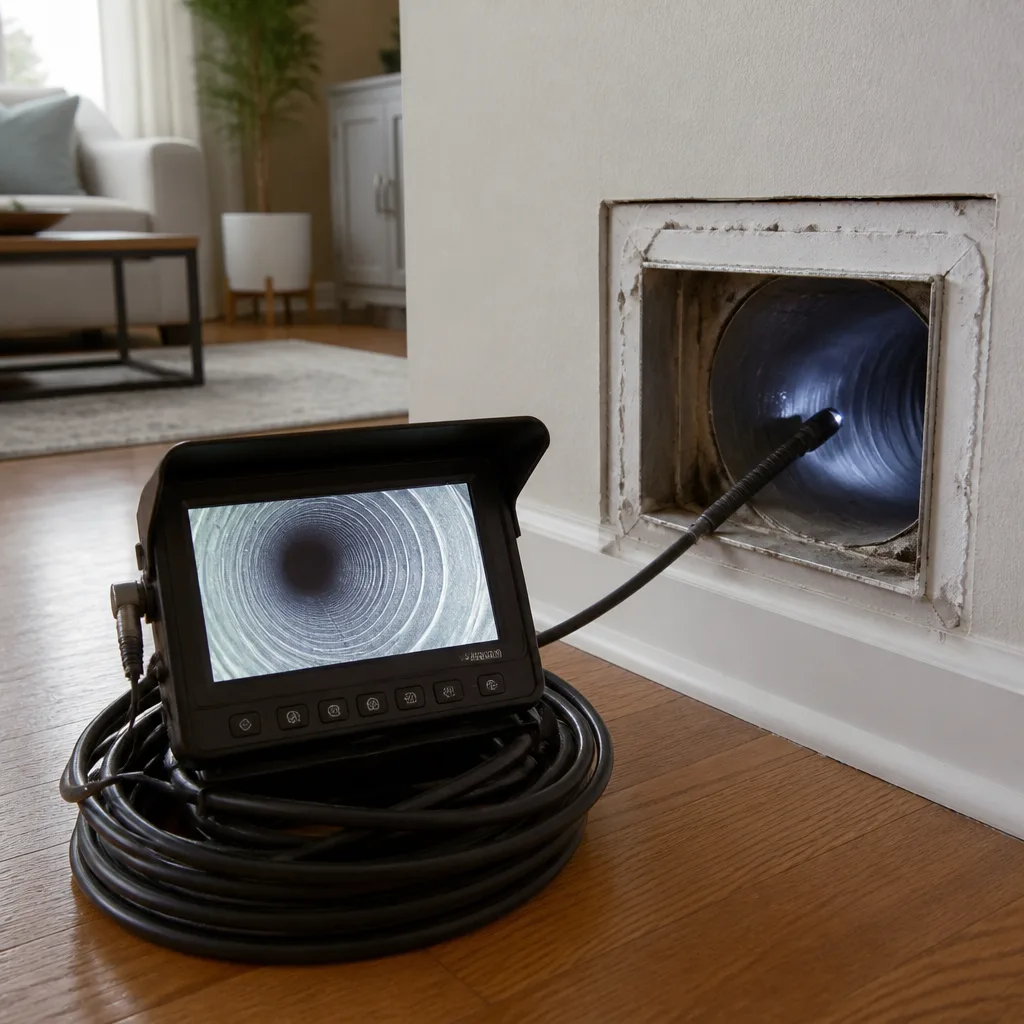 Camera inspection
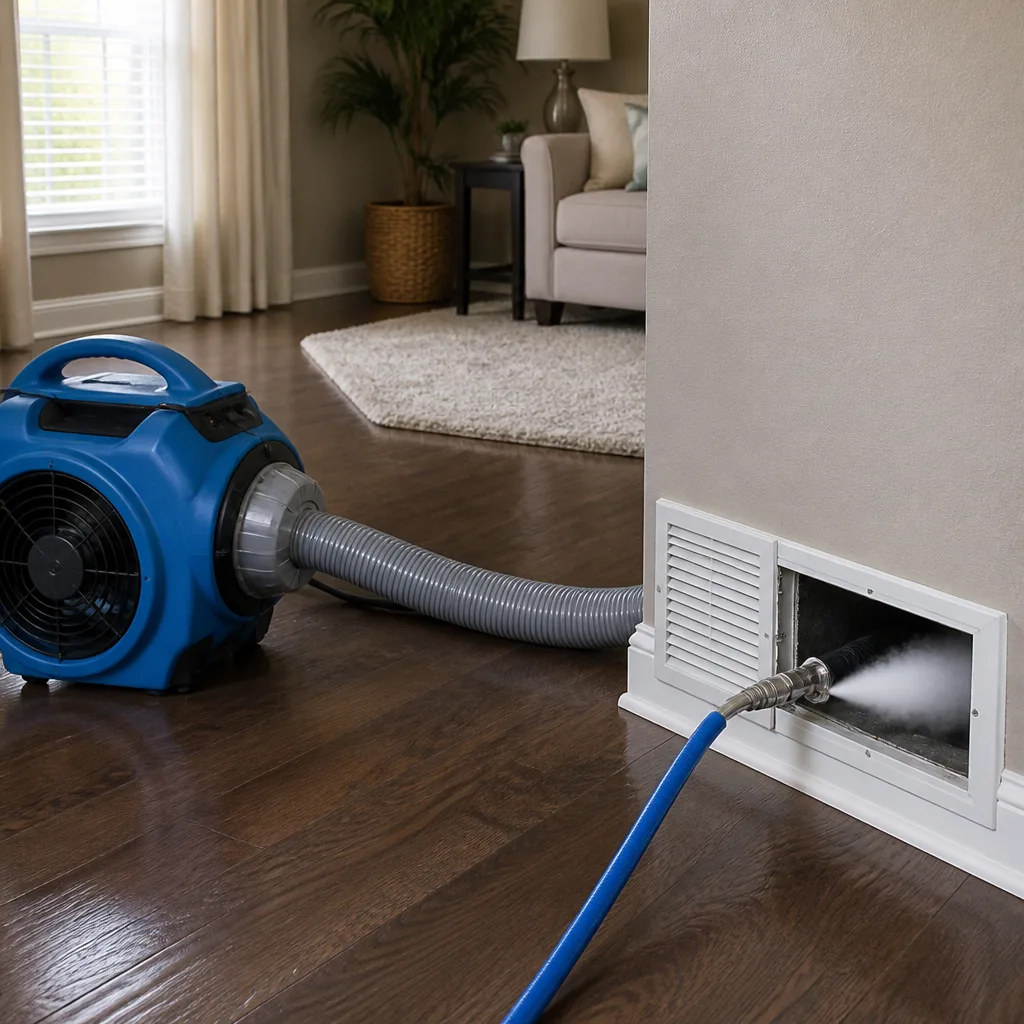 Sanitizing & deodorizing
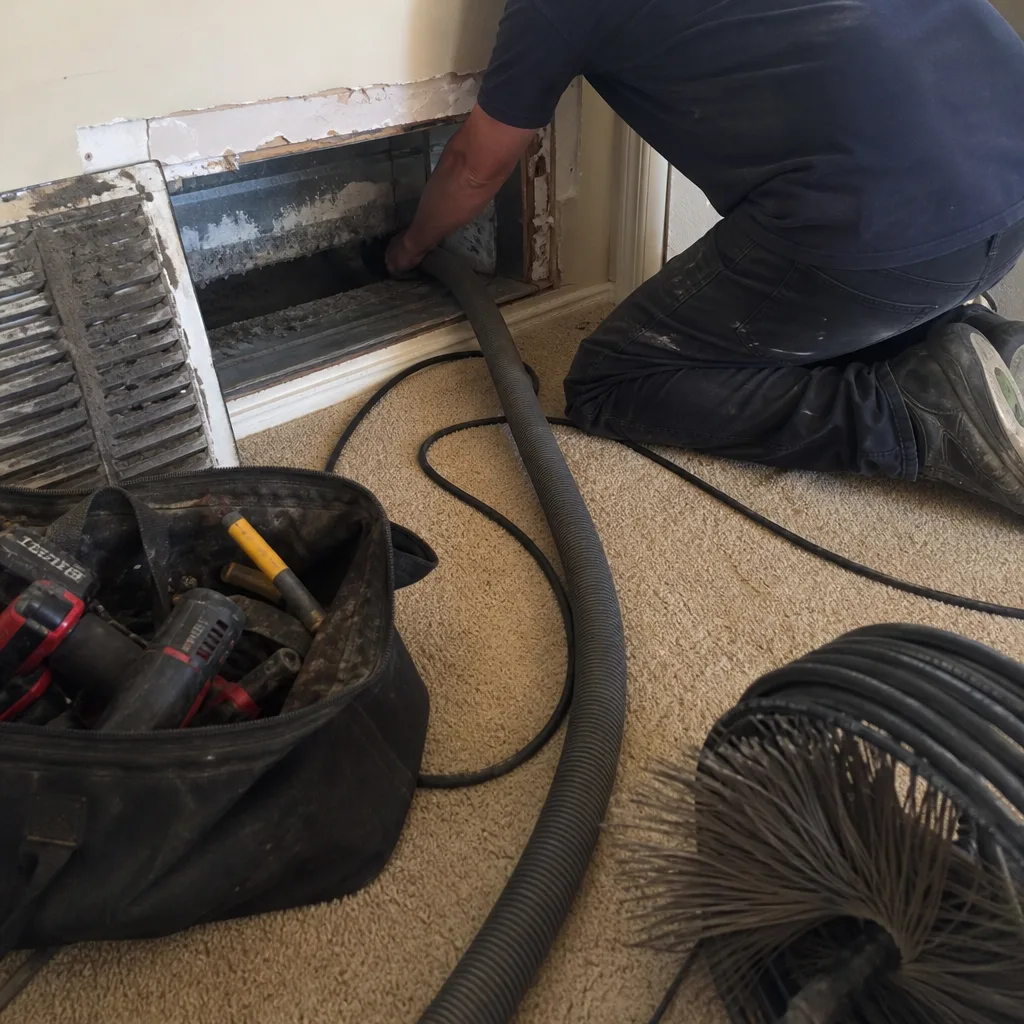
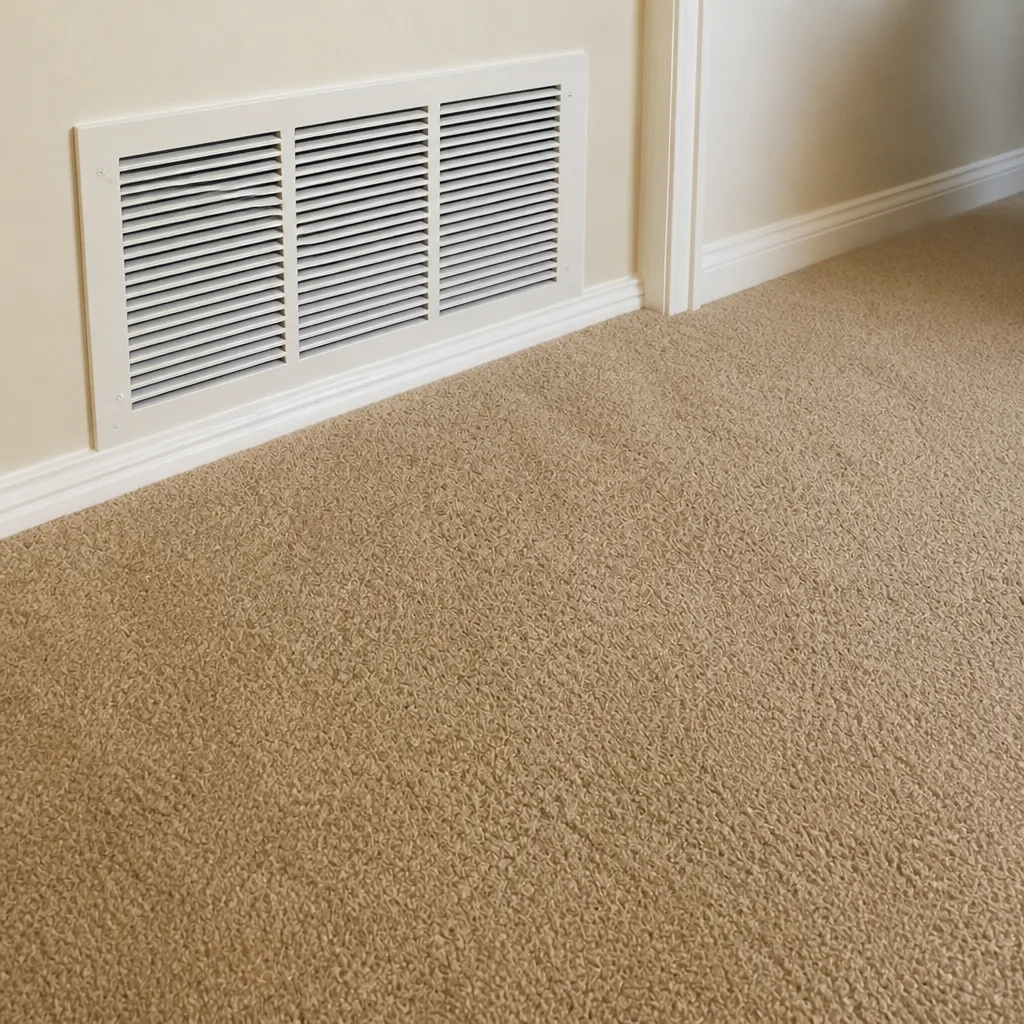
Whole-system duct and dryer vent check with before-and-after photos - you see exactly what came out of your vents
That "$99 whole-house special" is a bait ad - the real number appears once they are in your hallway, or the "clean" is a shop-vac at the register. We photograph the inside of your ducts before and after instead.
Air Duct Cleaning Warning Signs: A Laguna Niguel Homeowner’s Reference Guide
Dust on a supply register isn’t a warning sign. It’s normal. Dust on a return grille that’s visibly wet or carries a musty odor is a different conversation entirely, and conflating the two is how homeowners get oversold. This guide draws a precise line between symptoms that warrant professional attention and normal system behavior you’d misread as problems. We’ll explain the actual mechanics behind each warning sign, walk you through what you can inspect yourself, and cover the post-wildfire and post-renovation dust patterns unique to Laguna Niguel homes. By the end, you’ll know exactly when to pick up the phone and when to simply change a filter.
Quick Answer
The air duct warning signs that actually matter are visible mold growth on registers or grilles, musty odors that persist after the system shuts off, vermin activity you can confirm by droppings or shredded insulation, a sudden spike in dust accumulation within weeks of cleaning, and airflow so restricted that rooms become uncomfortable. A fine layer of dust on a supply vent by itself is not a warning sign. Neither is a brief dusty smell the first time the furnace kicks on in fall. Those are normal. What matters is whether the symptom is persistent, measurable, and tied to the ductwork rather than the HVAC equipment itself.
Styles & brands we work with
- Whole-home duct cleaning
- Dryer vent cleaning
- Camera inspection
- Sanitizing & deodorizing
Table of Contents
- Normal Dust vs. Warning Sign Dust: Where the Line Actually Is
- What Duct Odors Actually Tell You About What’s In There
- Mold in Ducts: The One Sign You Should Never Ignore
- Vermin, Pests, and What They Leave Behind in Ductwork
- Uneven Airflow and Temperature: Duct Problem or HVAC Problem?
- Post-Wildfire and Post-Renovation Duct Contamination in Laguna Niguel
- How to Visually Inspect Your Own Ducts (and When You Need a Scope)
- Common Mistakes to Avoid
- When to Call a Professional
Normal Dust vs. Warning Sign Dust: Where the Line Actually Is
Every forced-air system moves dust. That’s true in a new construction home in Laguna Niguel and it’s true in a 30-year-old house in a hillside neighborhood near Crown Valley. Your blower draws air through a return, passes it over the evaporator coil or heat exchanger, and pushes it through supply ducts to each room. The filter catches a percentage of particulates before air reaches the equipment, but not everything. Dust that’s smaller than the filter’s MERV rating sails right through. Over time, some of it settles inside the duct walls, and some of it deposits at the register grille where air velocity drops.
None of that is a warning sign. That’s physics. A light gray film on a supply register in a room you use daily is the system doing what systems do. What turns dust from normal into a warning sign is rate. Here’s the practical distinction:
- Normal: A thin dust film accumulates over 6-12 months. You wipe it and it doesn’t recur noticeably for several months.
- Warning sign: You clean or replace the filter, wipe the registers, and within 2-3 weeks the same level of dust is back. Or you see dust actively blowing out of a supply register when the system runs.
- Normal: Dust is uniform in color, mostly gray or tan, and matches household dust elsewhere on furniture.
- Warning sign: Dust appears dark, greasy, or has a fibrous quality that looks like insulation. Or it’s concentrated at one register while others stay clean.
The mechanical reason rapid dust recurrence matters: it means the duct system itself has become a dust reservoir. A leak on the return side of the system pulls dirty air from an attic, crawlspace, or wall cavity directly into the return plenum before the filter gets a chance to catch it. The filter can’t help because the contaminate enters after the filter in the airflow path. We’ve scoped ducts in Laguna Niguel homes where a disconnected return boot was pulling in two decades of attic dust every time the blower ran. The homeowner saw the symptoms at the registers but the actual problem was eight feet upstream.
If you’re seeing dust production accelerate despite a clean filter, the ductwork itself needs to be evaluated, not just cleaned blindly. The professional-grade approach we use starts with finding the source, because air duct cleaning on a system with an active return leak is just a very expensive way to vacuum an attic.
What Duct Odors Actually Tell You About What’s In There
Odors are the second-most common reason homeowners call about their ducts, and they’re also the most frequently misread symptom. The key distinction is whether the smell is tied to the equipment cycling on or whether it persists as a constant, location-specific odor in the room itself.
When a furnace first fires up in fall after months of sitting idle, the dust that settled on the heat exchanger burns off. That produces a brief, slightly acrid smell that dissipates within minutes. This is normal startup behavior and not a duct issue. You’ll notice it once or twice at the start of the heating season and possibly never again until next year. Same goes for the first time you run the A/C in late spring: coil condensation evaporating can produce a brief damp smell that clears quickly.
Here are the odors that warrant a professional look:
- Musty smell that persists while the system runs and lingers in the room after it shuts off: This indicates microbial growth somewhere in the system. Common locations are the evaporator coil, the drain pan below it, or duct liner that’s been repeatedly dampened by condensation. In a Laguna Niguel summer, a coil can condense several gallons of water a day. If the drain line is slow, that water sits. What grows there isn’t visible from the register.
- Sharp ammonia or rodent smell: This is vermin activity, almost always mice or rats. The odor is strongest near the return grille or wherever the animals are nesting. Warm ductwork in winter is an attractive nest site. The smell won’t clear on its own and comes from urine-soaked insulation or nesting material.
- Burning or chemical smell that never happened before: This is not normal startup dust. It can indicate melted wiring, a failed capacitor, or synthetic material that’s come into contact with the heat exchanger. Shut the system off and have both the equipment and ducts checked.
- Fiberglass or insulation smell: Often described as a vaguely sweet, slightly irritating odor. It means duct liner or external insulation has broken down and fibers are circulating. This happens in older systems where the liner adhesive has failed after years of thermal cycling and humidity.
One useful diagnostic: walk through the house when the system is off. If the musty smell is strongest at the return grille, the issue is likely in the return path or the equipment. If it’s strongest at a specific supply register in one room, the duct serving that room is the source. This matters because cleaning the main trunk line won’t solve mold in a single branch duct in an upstairs bedroom.
Mold in Ducts: The One Sign You Should Never Ignore
Visible mold on a register, grille, or the inside of an accessible duct section is the single clearest warning sign there is. You don’t need a test to know you have a problem: if you can see growth, it needs to be addressed. The question becomes whether the mold is on the surface only or whether it extends into the duct runs themselves.
The mechanical conditions that let mold colonize ducts are consistent: moisture, organic food source, and still air. Ducts are absolutely full of organic material, which is most of the dust you see. The limiting factor in a dry climate is moisture. Southern California homes, including those throughout Laguna Niguel, have several ways moisture enters a duct system:
- Condensate pan overflow: The coil produces water during cooling season. If the drain line clogs with algae, that pan fills and the coil sits in standing water. Air passing over it picks up moisture and organic byproducts, which then deposit inside the supply plenum and adjacent ductwork.
- Humidistat settings and coastal-adjacent microclimates: While Laguna Niguel is inland enough that salt air isn’t a realistic corrosion factor, the city’s location creates distinct morning marine-layer humidity in some canyon-adjacent neighborhoods. Ducts running through unconditioned spaces can condense water on their exterior, which leads to rust-through and interior dampness.
- Bathroom and laundry exhaust ducting that’s been incorrectly tied into the return system: This is more common in older homes than you’d think. A dryer vent that’s partially disconnected inside a wall, or a bathroom fan that vents into an attic adjacent to a return leak, will push moisture-laden air into the duct loop.
- Undetected plumbing leaks: A slow drain leak in a wall cavity above a duct run can drip for months before anyone notices. The duct becomes a collection point.
Here’s what matters practically: if you see greenish-black, brown, or powdery white growth on a register in any room, that’s a warning sign. The visible portion is typically the smallest part of the growth. Duct surfaces downstream receive more moisture and less UV light than the visible register does. We use Rotobrush equipment with a rotating brush head that physically abrades the duct walls, loosening biofilm and organic growth that a vacuum alone wouldn’t lift. The mechanical removal matters because dead mold still triggers allergic responses in sensitive people. It has to be removed, not just chemically treated in place.
If you do see mold, don’t run the system until it’s evaluated. Every blower cycle spreads spores from the contaminated surface to every connected room.
Vermin, Pests, and What They Leave Behind in Ductwork
Rodents in ductwork are more common in Laguna Niguel than most homeowners want to think about. The city’s mix of mature landscaping, canyon-adjacent lots, and older housing stock creates exactly the conditions mice and rats look for: access points, food sources, and warm enclosed spaces. Ducts that run through attics or crawlspaces offer all three.
A rodent doesn’t need a large opening to enter a duct system. A mouse can squeeze through a gap the diameter of a pencil. Return boots, supply register boxes, and joints between duct sections all provide potential entry points if they aren’t sealed properly. Once inside, the animals nest, defecate, and sometimes die. You’re now circulating particles of urine, feces, and decaying material through every room the system serves.
Warning signs to look for:
- Droppings visible on or around floor registers: Pull a register off and look inside the boot with a flashlight. Droppings look like dark grains of rice. They’re almost always present before you notice an odor.
- Shredded insulation or nesting material visible at the return grille: Rats tear duct insulation to build nests. If you see fibers protruding from the grille openings, something was actively pulling material.
- Nocturnal sounds: Scratching, running, or gnawing sounds inside walls or above the ceiling, especially when the blower is off. Rodents tend to avoid duct sections that are actively moving air.
- Unexplained odor that comes and goes: A dead animal produces a strong odor for a period of weeks, then it fades as the body desiccates. The smell then recurs whenever humidity rises.
- Pet behavior: Dogs staring at a register, whining at a wall, or refusing to leave a register area alone. Animals detect rodent scent better than we do.
This is a case where cleaning alone may not be enough. If rodents are in the ducts, the entry points have to be found and sealed or the problem repeats. That’s why Duct Cleaning Laguna Niguel evaluates duct integrity and seal points during the cleaning, not just after. If we find compromised sections while cleaning, we repair them. A duct system that’s clean but has an open return boot in the attic is a wildlife access point, not a functioning component.
One distinction that saves money: if you hear sounds in the walls but see no evidence at the registers, the rodents may be in the wall cavities, not the ducts. In that case, it’s a pest control issue with duct inspection as a secondary step, not a duct cleaning job. Conversely, if evidence is present at multiple registers, the animals have likely traversed the entire system and every section needs to be cleaned.
Uneven Airflow and Temperature: Duct Problem or HVAC Problem?
Rooms that are noticeably warmer or cooler than the rest of the house get blamed on ducts constantly, often incorrectly. Uneven temperatures have several potential causes, and ducts are only one of them. Here’s how to separate them.
If it’s the ducts, the symptom is usually airflow restriction. A crushed flex duct in an attic, a damper that’s been closed for years, a duct that’s come apart at a junction, or a section that’s collapsed under its own weight all reduce the volume of air reaching a room. You can test this at the register: does the airflow feel noticeably weaker than at other registers in the house? Hold a tissue up to the vent. If it barely moves while other registers make it flutter strongly, the duct serving that room is likely the problem. A scope camera run down that specific branch will confirm it.
If it’s the HVAC equipment, the symptom is usually insufficient capacity or improper zoning. A room with large west-facing windows in a Laguna Niguel afternoon gets dramatically more solar gain than a north-facing room. No duct condition will fully compensate for that without a zoning damper or supplemental cooling. If airflow feels strong but the room still won’t cool, the issue is thermal load, not duct performance. Similarly, a thermostat located in a hallway that never gets direct sun will run the system based on a misleading reading while west-facing bedrooms overheat.
If it’s a thermostat or sensor issue, the symptom is usually intermittent. Rooms that are comfortable sometimes and uncomfortable other times, with no pattern tied to outdoor temperature, often indicate a thermostat that’s miscalibrated or positioned poorly. This is frequently the cheapest fix and the one most often overlooked.
Here’s the practical triage order we recommend for a Laguna Niguel homeowner:
- Check airflow at the suspect register against other registers. If weak, it’s likely the duct.
- If airflow is strong and the room still misbehaves, note when it’s uncomfortable. All afternoon? Thermal load. Unpredictably? Thermostat or sensor.
- If airflow is weak and the room is also on a long duct run far from the air handler, restriction is very likely. Flex duct runs over 25 feet lose significant velocity if not properly sized and supported.
- If the problem started after a renovation, assume construction debris or a disconnected duct section first. Contractors often disconnect boots to work around them and don’t reconnect properly.
If a duct is restricted, cleaning alone rarely solves it. A crushed section has to be replaced. A disconnected boot has to be reattached and sealed. That’s why repair capability matters: cleaning a duct that’s physically compromised is cosmetic, and the homeowner will call another company in six months with the same complaint.
Post-Wildfire and Post-Renovation Duct Contamination in Laguna Niguel
Laguna Niguel sits in a region where wildfire smoke and ash are recurring events. Even when fires are miles away, fine particulate matter travels remarkable distances and enters homes through ventilation systems. A significant wildfire event can deposit ash and soot inside ducts that gets released gradually for months afterward, long after the outdoor air has cleared.
The warning signs after a wildfire are specific:
- Charcoal or campfire odor from registers when the system runs, even weeks after the outdoor air cleared. This means particulates are embedded in the duct lining or the filter media and are being gradually released.
- Dark gray or black dust accumulating at supply registers much faster than normal. Wildfire ash is finer than household dust and bonds more readily to duct surfaces. It also passes through lower-grade filters entirely.
- A fine, gritty residue on furniture only in rooms with central air, not in rooms with windows open. This is the system distributing captured ash.
Post-renovation warning signs are easier to predict but often ignored. Drywall dust, sanding residue, paint overspray, and sawdust are all produced in volumes that would never occur in normal occupancy. If the system ran during construction, or if return air was drawn through active work areas, a significant amount of that material is now inside the ducts. The warning signs are dust that reappears within days of a fresh filter install, visible construction dust at registers, and a drywall-sweet smell that persists for weeks. In a Laguna Niguel remodel, the HVAC system should be treated as part of the affected area. It’s not uncommon for a renovation to leave several pounds of fine dust inside a duct system, and that dust will find its way into every room over the following months unless mechanically removed.
Renovation dust is also more abrasive than household dust. It scores the internal surfaces of flex duct and accelerates liner breakdown. What might have been a benign dust load becomes a system wear issue over time.
How to Visually Inspect Your Own Ducts (and When You Need a Scope)
You can learn a lot about your duct system with a flashlight, a screwdriver, and ten minutes. Here’s what a homeowner can practically evaluate, and where the limits are.
- Pull off a floor or wall register. Most are held by two screws. Look into the boot with a flashlight. You’re looking for visible dust accumulation thicker than a light coating, visible growth of any color, droppings, construction debris, or standing water. A thin film of gray dust is acceptable. Anything else is a finding.
- Check the return grille. If it’s on a wall, remove it and look inside. The return side of the system moves unfiltered air when the filter isn’t seated properly, so this area often shows the first evidence of problems. Look for dust caking on the return cavity walls, insulation fibers, or unusual odor.
- Look at the filter itself. A filter that’s heavily loaded within 4-6 weeks of installation indicates either an exceptionally dusty environment or a return leak pulling from an unfiltered source. Note: a very dirty filter doesn’t mean the ducts are dirty, but a filter that gets dirty unusually fast often means the ducts are pulling from somewhere they shouldn’t be.
- Inspect accessible duct runs. In many Laguna Niguel homes, some ducts run through the garage or an open attic area. Look for sagging flex duct, visible holes or tears, disconnected joints, and crushed sections. If a duct is resting directly on the ceiling joists and kinked at a 90-degree angle, that’s a restricted run even if nothing else looks wrong.
- Note the condensate drain. If you can access the indoor coil, check whether the drain pan has standing water or visible growth. The coil pan is one of the most common mold sources in any system, and it feeds directly into the supply ducts.
What you cannot see as a homeowner is the interior of the main trunk line, the supply plenum, or most branch runs. That’s what a scope camera is for. We run a camera into the system and look at the duct walls themselves, not just what’s visible at the register. This matters because several warning signs are only visible in cross-section: growth on the top of a horizontal duct run where condensation forms, a separated joint 15 feet from any register, or a dead rodent in a return branch. If you’ve done the visual checks above and found nothing but symptoms persist, a scoped inspection is the next step.
Nikro and similar professional inspection systems also let you document what’s there before and after cleaning. On a job where we find real findings, the camera footage is the proof that the work addressed the actual problem rather than simply brushing the visible surfaces.
Common Mistakes to Avoid
- Treating visible mold as a cleaning-only problem. Mold in a duct system means there’s a moisture source. Cleaning removes the growth; if the moisture source remains, the growth returns. A proper evaluation identifies why the ducts got wet in the first place.
- Ignoring a musty smell until you get used to it. Olfactory fatigue is real: live in a house long enough and you stop registering the smell your guests notice immediately. If a visitor comments, take it seriously.
- Assuming uneven temperatures are always a duct issue. Spend time on airflow testing before assuming restricted ducts. A room with weak airflow and one with strong airflow but high solar load are different problems with different fixes.
- Running a bargain duct cleaning company that uses a consumer-grade vacuum. A shop-vac attached to a drill brush simply cannot create the negative pressure needed to pull contaminants from a 30-foot duct run. It’s surface cleaning disguised as duct cleaning. Cheap duct cleaning in Laguna Niguel usually means the system wasn’t actually cleaned, just the first few feet of each register were.
- Replacing filters more often instead of addressing the source. A filter that’s black within a month isn’t a filter problem. It’s a system telling you something upstream is wrong. A higher MERV filter will just clog faster while the underlying issue persists.
- Forgetting that dryer ducts are part of the system. Lint accumulation is the leading cause of dryer-related house fires. Dryer vent cleaning isn’t an optional add-on to duct cleaning. It’s a separate system with a separate safety profile, and it needs its own maintenance schedule.
- Waiting for visible symptoms before checking anything. By the time you see mold at a register or smell rodent odor throughout the house, the contamination is well established. A scoped inspection every 3-5 years catches problems before they become visible throughout the home.
When to Call a Professional
Call when you see visible growth anywhere in the system. Call when dust returns within weeks of a full filter change and register wipe-down. Call when you confirm vermin evidence at registers or in return cavities. Call when a musty odor persists beyond the first few minutes of system operation. Call when a post-wildfire or post-renovation dust pattern doesn’t subside after the outdoor conditions improve. Call when airflow at a register is weak enough that a tissue barely moves while other registers show strong flow.
These are the scenarios where guessing wrong has real consequences: allergen exposure, fire risk from lint-loaded dryer vents, wasted money on cleaning that doesn’t address the actual source. Duct Cleaning Laguna Niguel offers free estimates in Laguna Niguel. Call (855) 525-6862. We answer 24/7. Fast dispatch from 7am to 7pm, Sunday through Friday.
See the difference
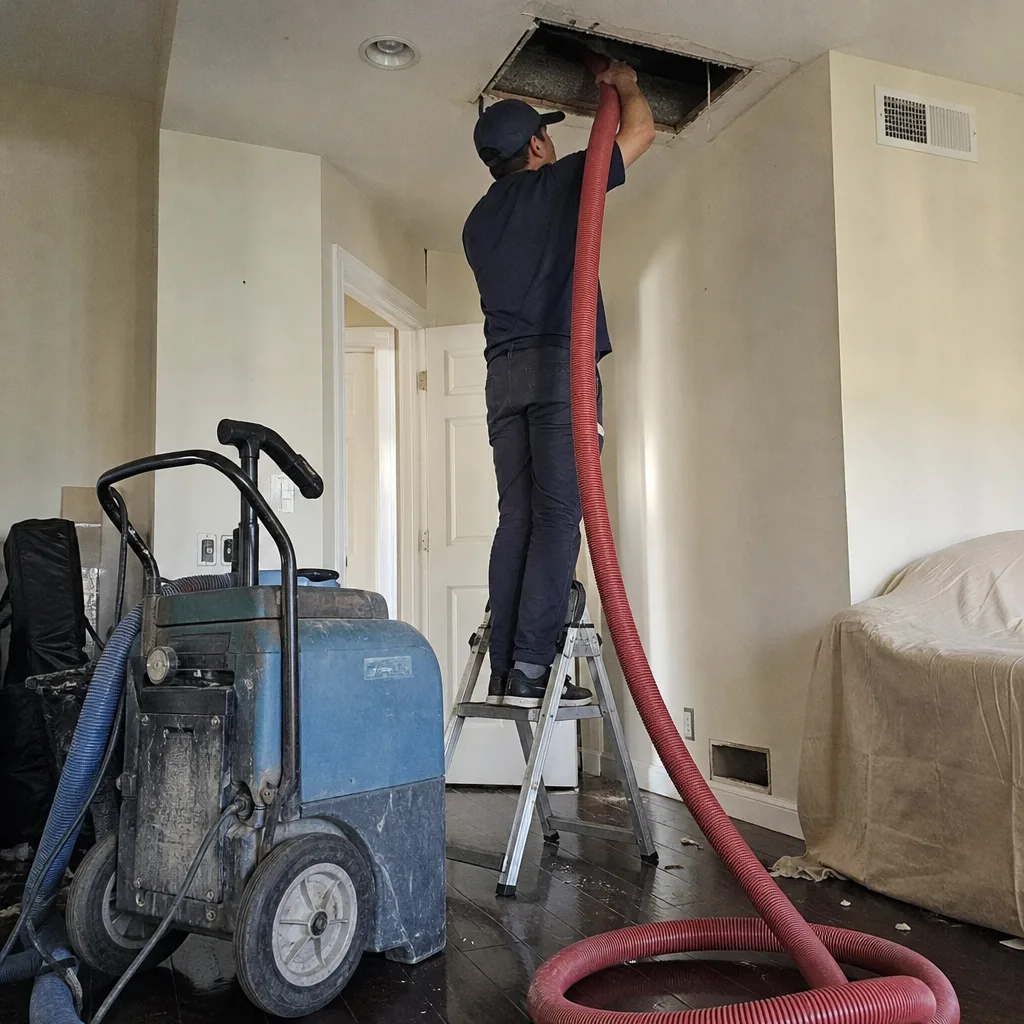 Before
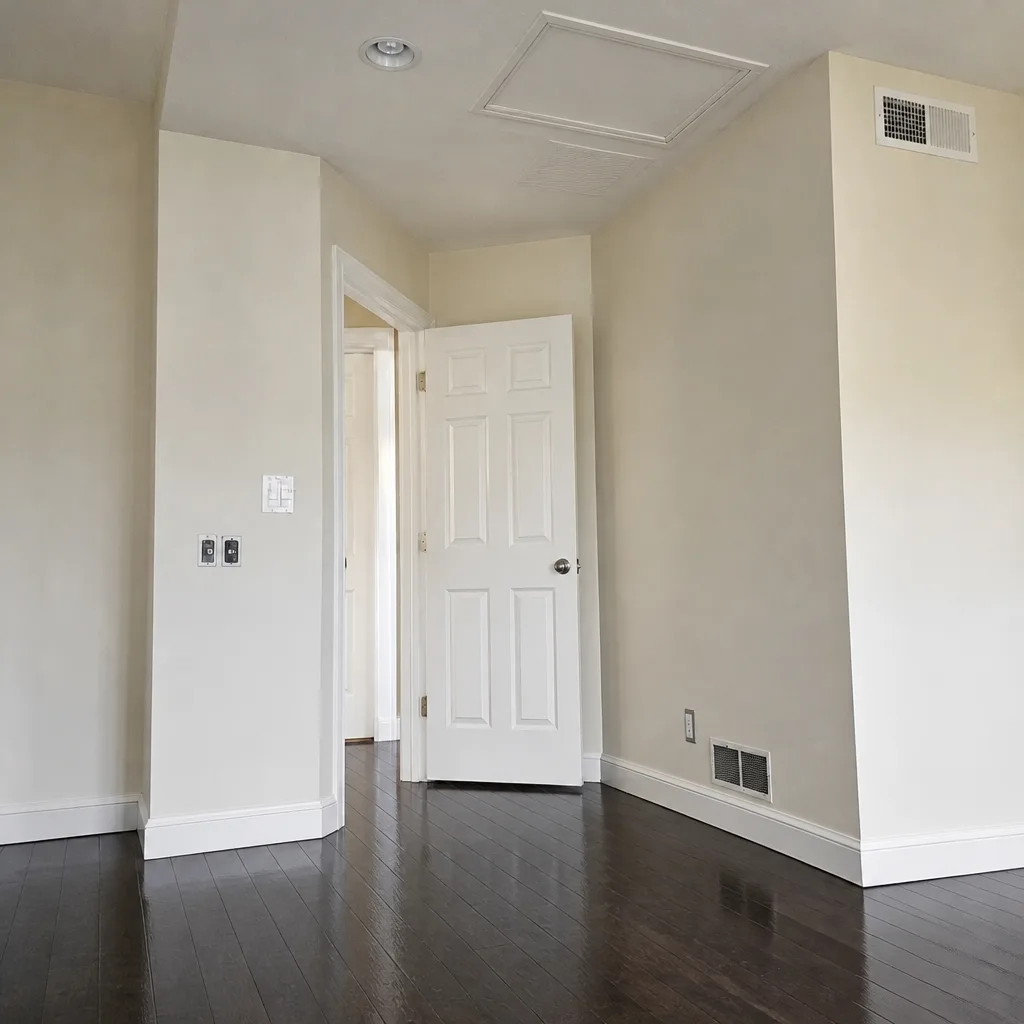 After
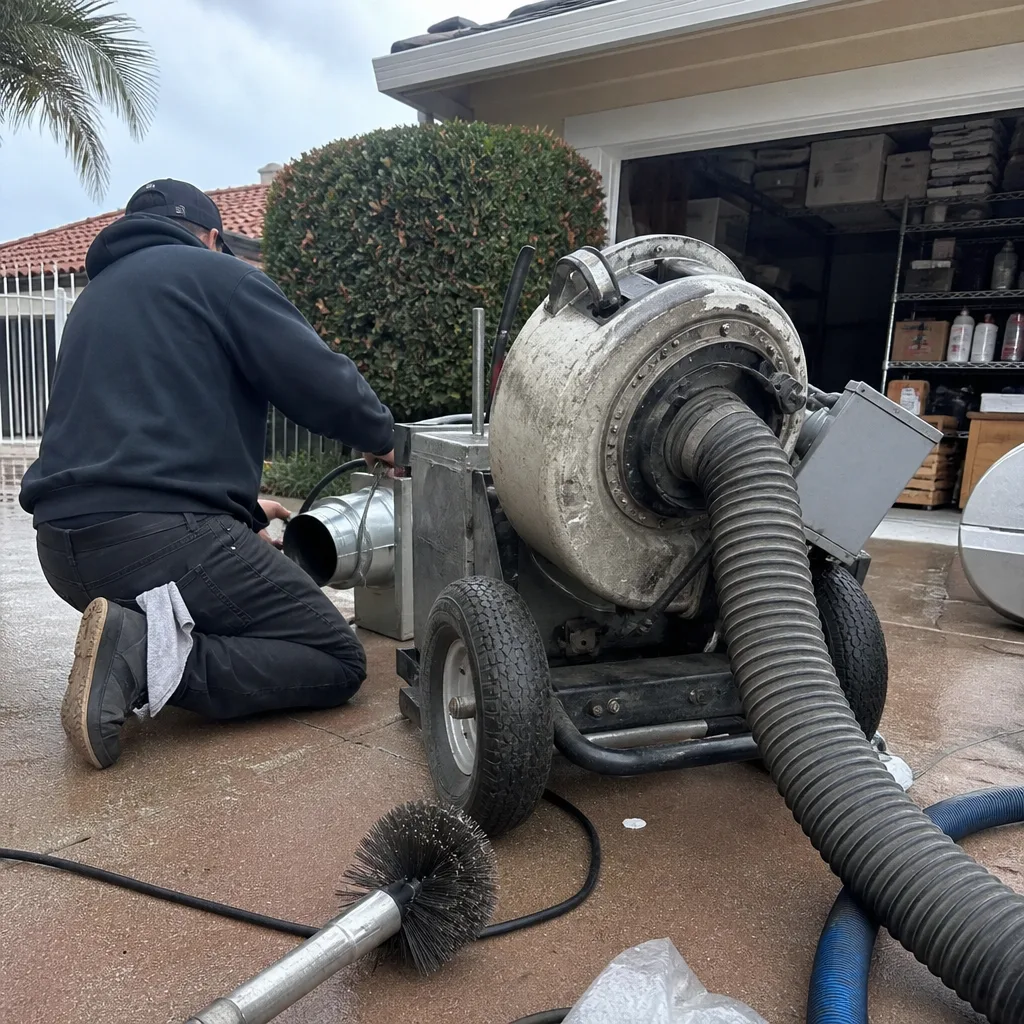 Before
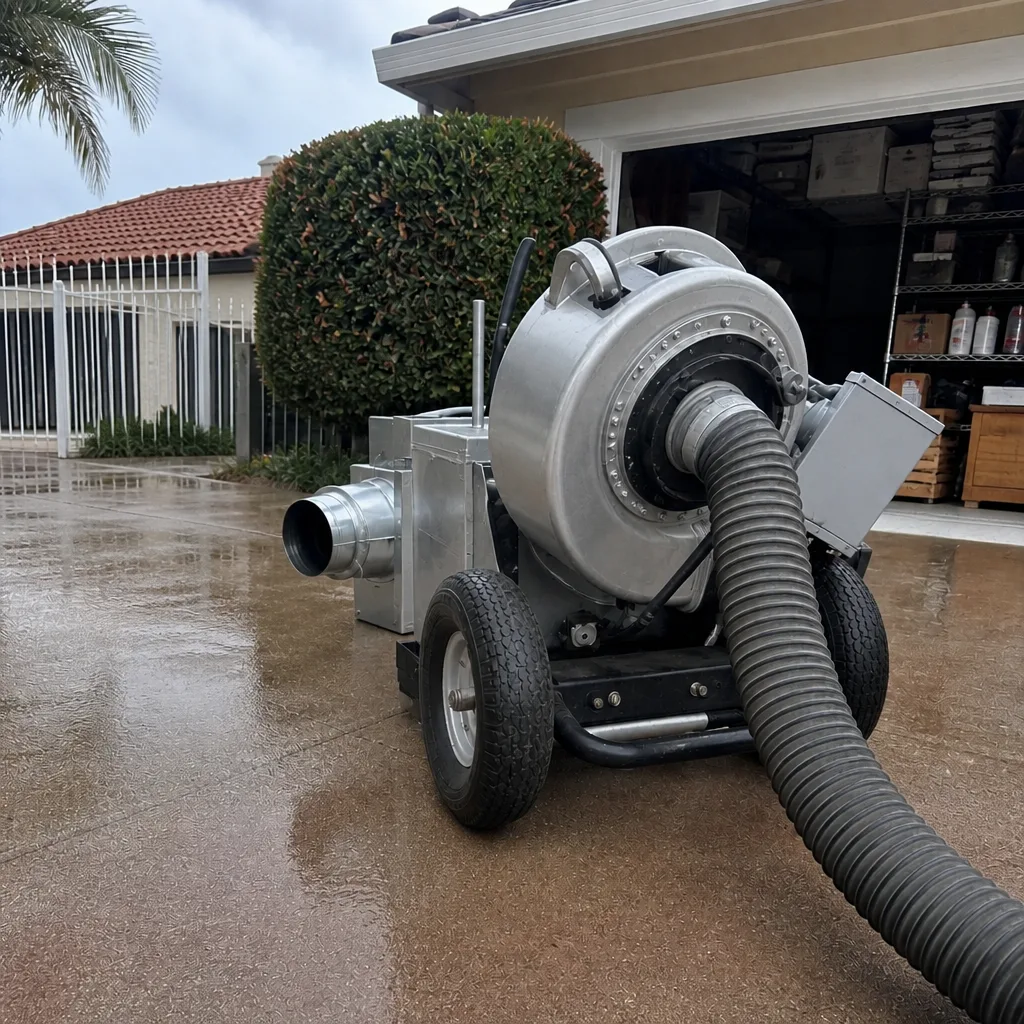 After
 Before
 After
Frequently Asked Questions
You need cleaning if you have visible mold growth on registers or grilles, confirmed vermin activity in the ductwork, dust recurrence within weeks of filter changes, or a musty odor that persists when the system runs. A light dust film on a supply register after months of normal use is not, by itself, a reason to clean. In Laguna Niguel, post-wildfire ash exposure and post-renovation construction dust are also legitimate triggers that would not exist in normal occupancy. If you are unsure, a scoped inspection showing the interior duct surfaces is the definitive answer, and it prevents paying for cleaning a system that doesn’t need it.
Air duct cleaning in Laguna Niguel is priced per job based on system size, number of returns, contamination level, and accessibility, not per vent. Be very skeptical of any quote built on a per-vent price with a teaser minimum. Those are the deals that turn into a much larger invoice once the technician is inside the home. A written estimate following a system evaluation is the only price that matters. Call (855) 525-6862 for an exact quote: estimates are free, and the price is agreed to before any work begins.
The difference is equipment. A consumer-grade vacuum with a rotating brush attachment can make the first few visible inches of a register boot look clean but cannot generate the negative pressure needed to extract material from a full duct run. Professional systems like Rotobrush and Nikro create high-velocity airflow and mechanical agitation throughout the duct length, not just at the access point. The cheaper quote is often a different service entirely: cosmetic register cleaning rather than actual duct cleaning. In our experience, homeowners who choose the lowest bid often pay a second time for the job to actually be done.
Request before-and-after photos or video from inside the ducts. A professional operator using proper scope equipment can show you the interior condition of the main trunk line before starting and after finishing. If a company cannot or will not show you the duct interior, question whether the work goes beyond the visible register area. Also, a proper job includes inspection findings: a technician should be able to tell you about seal failures, disconnected boots, or restricted runs found during the work, which is exactly the kind of information you don’t get from a surface-level cleaning.
There is no fixed interval that applies to every home. The honest answer is that ducts need cleaning when inspection shows they need cleaning. A typical Laguna Niguel home with a well-sealed system, regular filter changes, and no pets or smoking might go many years between legitimate cleanings. A home with pets, a recent renovation, a history of vermin, or a wildfire smoke intrusion will need it sooner. The trigger should be evidence, not the calendar. If a company tells you ducts need cleaning every two years as a rule, they’re selling a schedule rather than an assessment.
Not always, but it always warrants investigation. A musty, damp odor can come from mold growth on the coil or in the ducts, but it can also come from a clogged drain pan that’s grown bacterial biofilm, insulation that’s been dampened repeatedly, or even a dead pest in an inaccessible section. The location and persistence of the smell help narrow it. Musty smells that rise and fall with the blower cycle point to the equipment or supply ducts. A constant smell in one room points to that room’s branch duct or the wall cavity it passes through. Either way, it doesn’t resolve on its own. Call (855) 525-6862 for an evaluation: we’ll scope the system and identify the source rather than treating the symptom.
The Bottom Line
The duct warning signs that matter are specific, observable, and mechanical: visible growth, persistent musty odor, vermin evidence, accelerated dust recurrence, and measurable airflow restriction. What doesn’t matter is a normal accumulation of household dust and a brief startup smell when the system first runs each season. For Laguna Niguel homeowners, wildfire ash and renovation debris add two contamination patterns that wouldn’t appear in other climates. When signs are present, the right response is an evaluation that finds the source, followed by professional-grade cleaning using equipment designed for the job. Clean the system. If we find damage, we fix it. That’s the distinction that determines whether the problem stays solved.
Written by the team at Duct Cleaning Laguna Niguel, serving Laguna Niguel since 2011.