
Last updated November 5, 2026
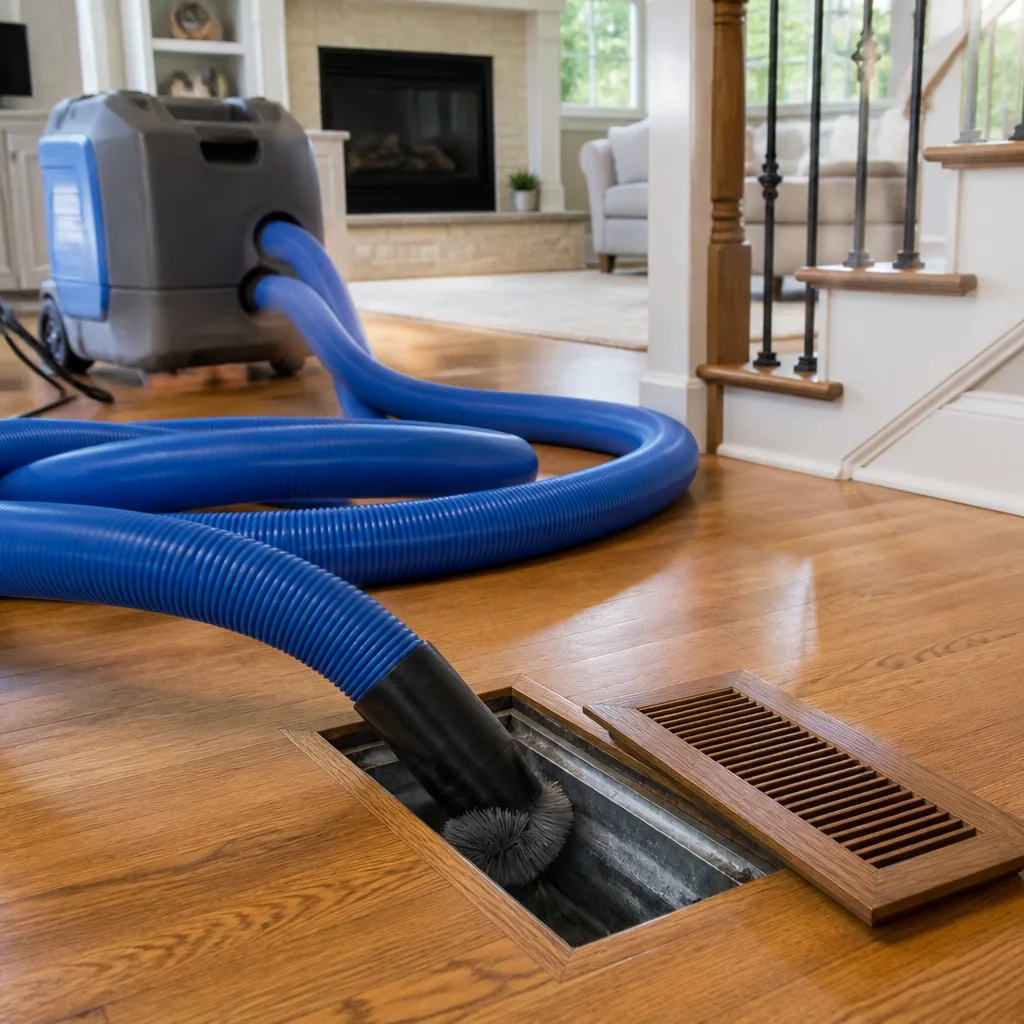 Whole-home duct cleaning
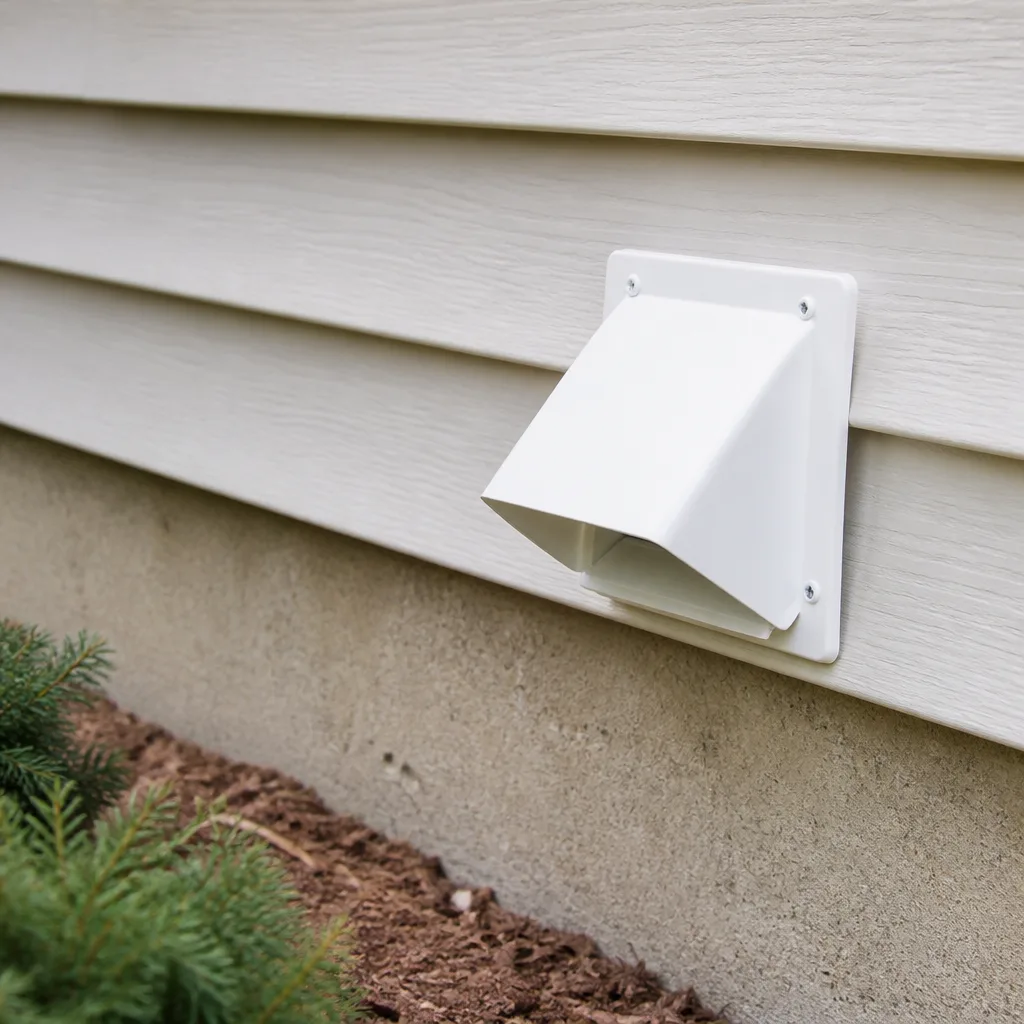 Dryer vent cleaning
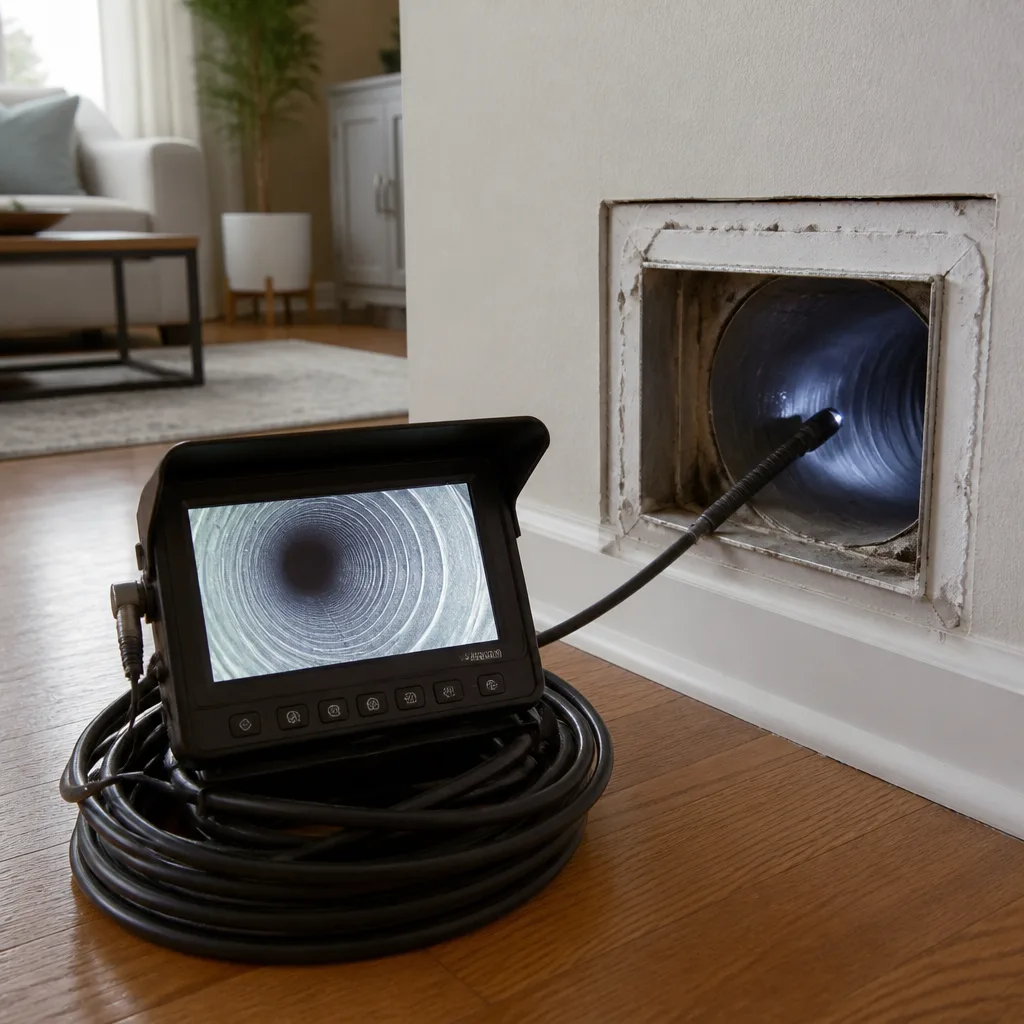 Camera inspection
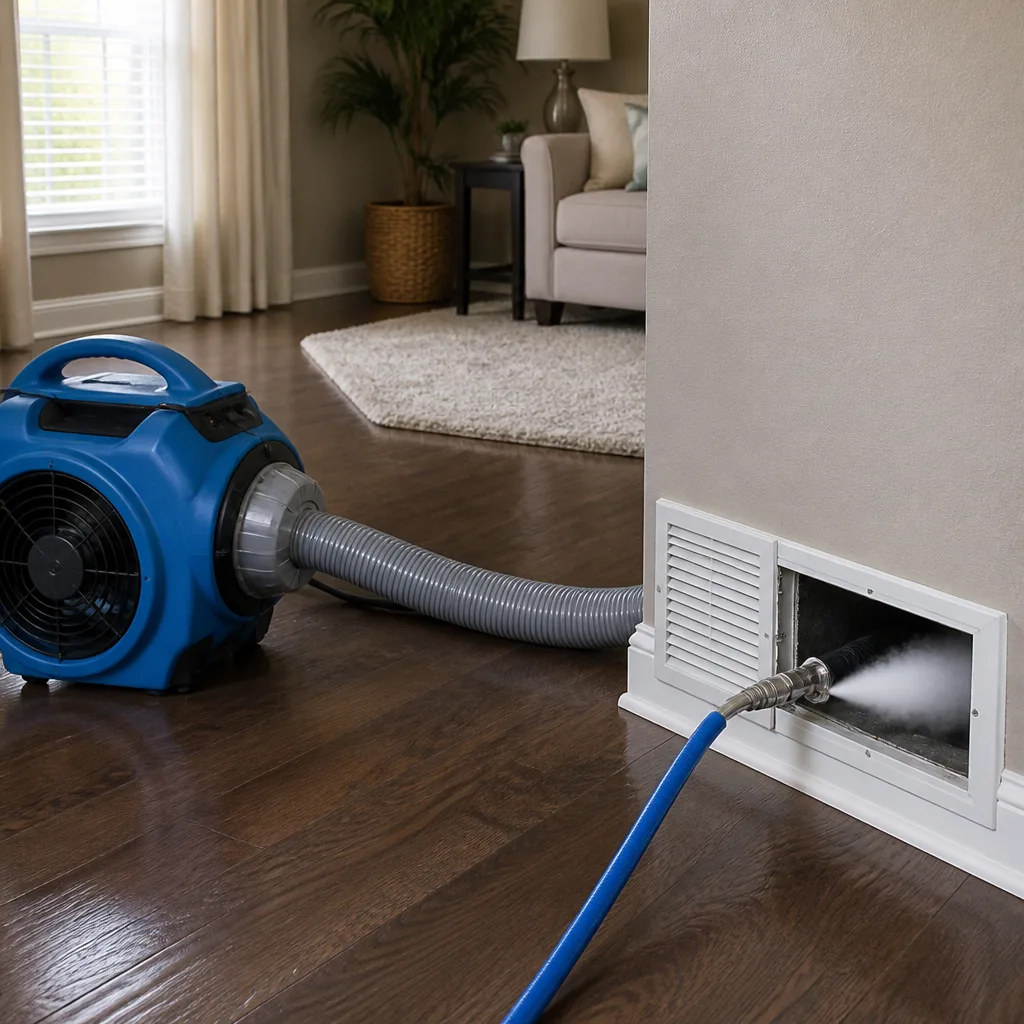 Sanitizing & deodorizing
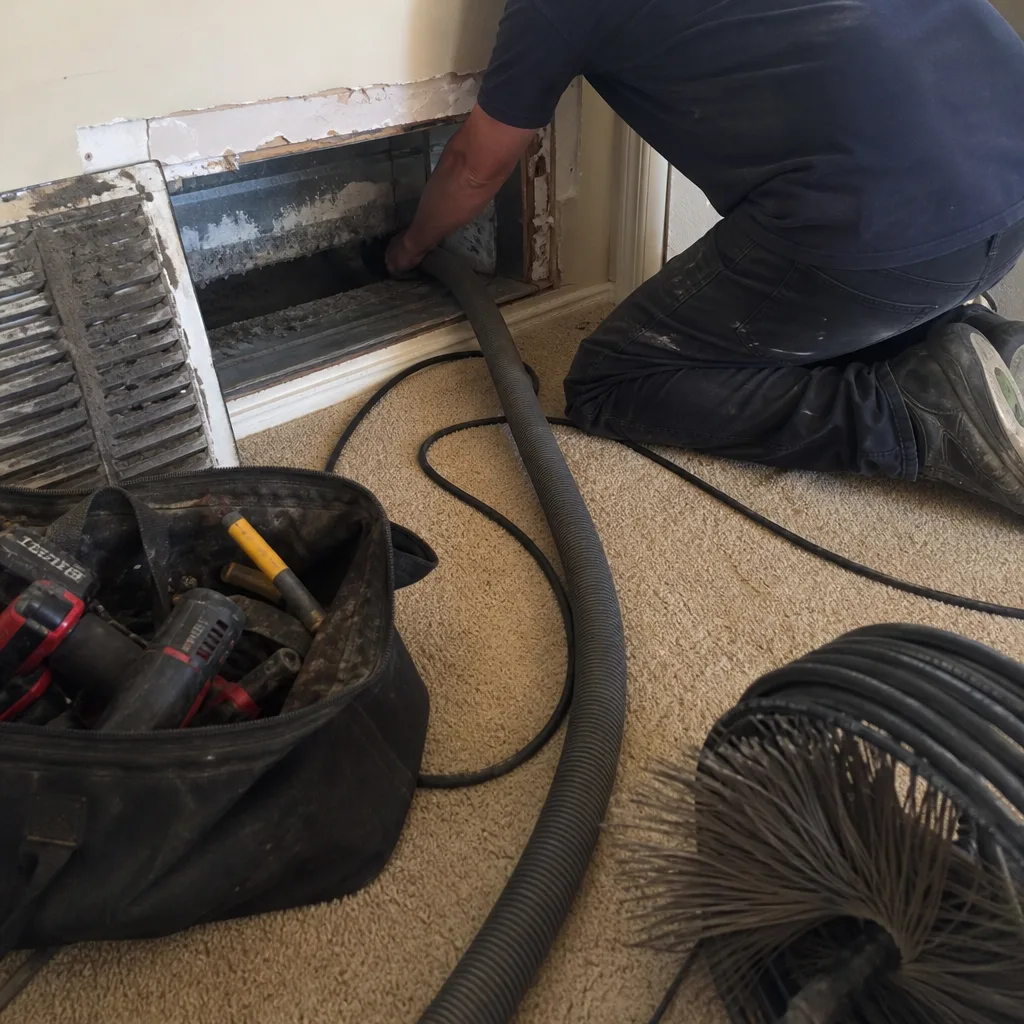
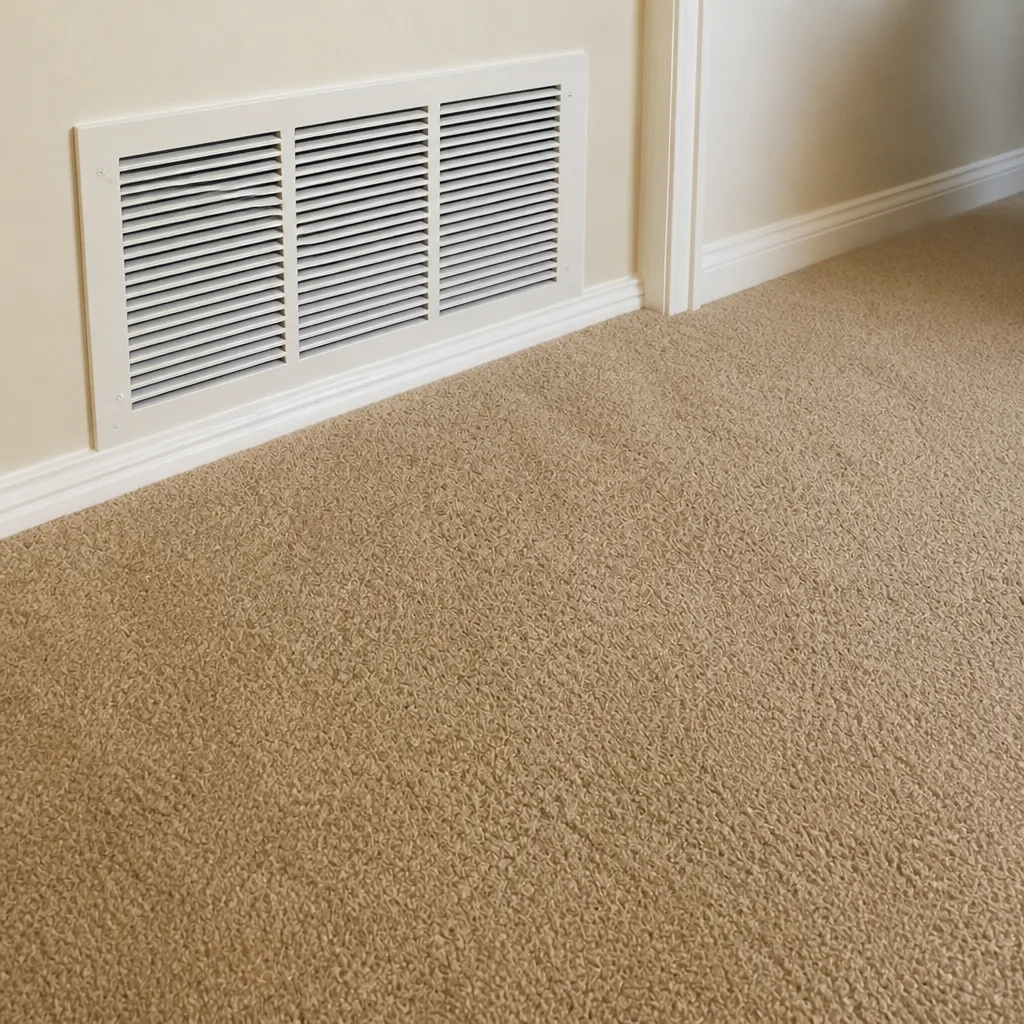
Whole-system duct and dryer vent check with before-and-after photos - you see exactly what came out of your vents
That "$99 whole-house special" is a bait ad - the real number appears once they are in your hallway, or the "clean" is a shop-vac at the register. We photograph the inside of your ducts before and after instead.
DIY vs Professional Air Duct Cleaning: The Laguna Niguel Homeowner’s Decision Guide
Most homeowners assume a DIY duct cleaning session saves money by doing roughly the same job a professional would do with less expensive tools. That assumption falls apart the moment you understand how air actually moves through a duct system. A shop vac attached to a register opening doesn’t create the suction path needed to pull embedded debris from a full duct run. It agitates surface material and, in many cases, sends a portion of it back into your living space. This guide explains the mechanical difference between consumer equipment and professional negative-air extraction, what you can safely handle yourself in Laguna Niguel, and when the right answer is to stop cleaning and start repairing.
Quick Answer
DIY duct cleaning is not a cheaper version of professional air duct cleaning; it’s a fundamentally different activity that moves surface debris without extracting it from the system. Professional cleaning uses negative-air machines like Nikro systems to pull contaminants out of the duct run while it’s isolated from the rest of the house. Homeowners in Laguna Niguel can legitimately handle register cleaning, filter replacement, and some dryer vent lint access, but deep duct contamination, post-renovation dust, and any duct damage require professional equipment and repair capability.
Styles & brands we work with
- Whole-home duct cleaning
- Dryer vent cleaning
- Camera inspection
- Sanitizing & deodorizing
Table of Contents
- The Mechanical Difference: Negative Air vs. Surface Agitation
- What DIY Can Legitimately Do in Laguna Niguel
- When DIY Makes the Problem Worse
- Cost Analysis: DIY Equipment vs. Professional Cleaning
- When Cleaning Is the Wrong Fix: Duct System Issues
- Dryer Vents: The DIY Line Is Different
- What Professional Equipment Actually Does
- What to Ask Before You Hire Anyone
The Mechanical Difference: Negative Air vs. Surface Agitation
Every duct cleaning method, from a homeowner’s shop vac to a professional Nikro negative-air setup, works on the same basic principle: pressure differential. Air moves from high pressure to low pressure. The question is how much air moves and where it goes.
A typical consumer shop vac moves somewhere between 100 and 200 cubic feet per minute (CFM) of air through a hose that’s roughly 2 inches in diameter. That’s fine for picking up sawdust from a garage floor. It is not fine for a duct run that stretches 20, 30, or 40 feet through walls and ceilings. The static pressure loss across that distance means the air velocity at the far end of the run drops dramatically. What the shop vac actually does is stir up debris near the register opening. Some gets captured. The rest gets pushed deeper into the duct or blown back into the room when the vac is removed.
Professional systems work differently. A negative-air machine like a Nikro unit connects to the duct system and creates suction that moves 2,000 to 4,000 CFM or more through the entire run. The duct is sealed off from the rest of the house with inflatable bladders or temporary isolation covers. Air enters only through controlled points, moves through the duct run, and exits through the machine’s HEPA filtration. Debris that was resting anywhere in the run gets pulled toward the extraction point. It doesn’t recirculate because the system is closed.
Rotobrush adds a mechanical agitation step. A rotating brush head travels through the duct, loosening debris that’s adhered to the duct walls. The negative-air extraction then removes what the brush has dislodged. Without that extraction, a brush alone would just push debris around. Without the brush, sticky buildup might not release from the duct surface. The two components have to work together.
In Laguna Niguel, where homes are typically closed up with HVAC running through much of the summer and cooler months, duct systems collect a fine layer of dust, skin cells, pet hair, and construction debris if renovations have happened. That material sits in the duct until something disturbs it. A shop vac disturbs it. A negative-air system removes it.
What DIY Can Legitimately Do in Laguna Niguel
There is a real do-it-yourself maintenance layer for duct systems, and it’s worth doing. What follows is what our technicians tell Laguna Niguel homeowners they can handle safely between professional cleanings.
- Replace your HVAC filter on schedule. This is the single highest-impact maintenance task. A clogged filter restricts airflow, which makes the whole system work harder and pull more debris into the ducts. In Laguna Niguel, where fire-season smoke and dry dust are routine, we suggest checking filters monthly during heavy-use months and replacing them every 60 to 90 days. Homes with pets or active renovations should check more often.
- Clean your supply registers and return grilles. Remove the register cover, wipe it down with a damp cloth, and vacuum the visible channel behind it with a standard household vacuum and crevice tool. You’ll reach maybe 12 to 18 inches into the duct. That’s surface-level maintenance, not deep cleaning, but it keeps the visible openings from becoming a source of recirculating dust.
- Vacuum around the return air intake. The return grille pulls air from your living space into the system. It collects hair, lint, and dust on the grille itself. Remove and wash the grille, then vacuum the filter slot area if your filter is located there.
- Check accessible duct sections in attics or crawl spaces. If you can see a duct run, look for obvious disconnections, crushed sections, or gaps at junctions. You are looking, not fixing. But knowing a problem exists is the first step toward a repair rather than a wasted cleaning.
- Keep the area around outdoor HVAC condensers clear. Debris near the condenser doesn’t enter the ducts, but restricted airflow through the outdoor unit affects system performance and can increase dust circulation indoors.
None of these tasks requires special equipment. None of them risks damaging the duct system. All of them genuinely help. What they don’t do is clean the deep interior of duct runs, which is where most of the contamination settles.
When DIY Makes the Problem Worse
There are specific scenarios where a DIY duct cleaning attempt actively worsens the situation. Understanding these helps Laguna Niguel homeowners know when to stop and call someone with professional equipment.
Post-Renovation Dust
Laguna Niguel has an active remodeling market. Drywall dust, tile grout particles, and fine construction debris find their way into duct systems during renovation even when contractors use plastic barriers. Drywall dust is especially fine and easily airborne. If you run a shop vac at a register opening, you’ll pull some of that dust out and send the rest deeper into the run or back into the living space. Drywall dust can also clog a standard shop vac filter quickly, reducing suction to nearly nothing. Professional negative-air systems with proper filtration are designed to move that volume of fine particulate without recirculation.
Mold-Adjacent Cleaning
If you see or suspect mold growth in or around your ducts, do not attempt to clean it yourself. Disturbing mold sends spores into the air throughout your home. Proper containment and HEPA extraction are the standard for any mold-adjacent duct work. A consumer vacuum, even one with a HEPA-rated filter, doesn’t provide the system isolation needed to prevent spore dispersal. This is a case where the DIY attempt turns a contained problem into a distributed one.
Vermin Debris
If rodents or other animals have been in your duct system, the debris they leave behind is a health hazard. Droppings and nesting material should never be disturbed without proper personal protective equipment and extraction. The duct may also have insulation damage or access points that need repair, which is beyond any cleaning task.
Visible Debris at Multiple Registers
If you see dust and debris at more than one register, the contamination is systemic. A single-register DIY approach will not address it. You’ll spend a weekend moving a shop vac from room to room, kicking up material as you go, and finish with ducts that look clean at the opening but remain loaded through the middle of the run.
Cost Analysis: DIY Equipment vs. Professional Cleaning
Homeowners usually frame this decision as “DIY costs less.” That’s true only if you value the result of DIY as equal to the result of professional cleaning. It isn’t.
Here’s what a realistic DIY attempt costs in Laguna Niguel:
- Rental equipment: Home improvement stores rent duct cleaning kits in the $100 to $250 per-day range. These kits typically include a long hose, a brush head, and an adapter for a shop vac. They do not include a negative-air machine or HEPA filtration. The hose attaches to a consumer vacuum, which provides the same 100 to 200 CFM airflow you’d get from equipment you already own.
- Purchased equipment: Consumer-grade duct cleaning attachments sold online run $40 to $100. They are essentially extensions for a shop vac. The physics don’t change because you bought a longer hose.
- Your time: A full DIY attempt across a typical Laguna Niguel home takes a full weekend if you do it thoroughly. That’s eight to twelve hours of work, including moving registers, working in attics or crawl spaces, and cleaning up dust that inevitably escapes during the process.
A professional whole-home duct cleaning in Laguna Niguel typically ranges from $400 to $800 depending on system size, number of vents, and contamination level. The estimate is set per job after an on-site assessment, not by a per-vent price that grows once the crew arrives. What that money buys is negative-air extraction with equipment designed for duct work, HEPA filtration, mechanical agitation of the entire run, and a technician who can identify duct damage during the process.
The honest comparison is not $50 of DIY tools versus $600 of professional service. It’s $50 of tools that cannot do the job versus $600 for a completed job. If the DIY attempt gives you a false sense of completion and the ducts remain contaminated, the money wasn’t saved. It was spent on the wrong activity.
Rental options fall short for the same reason. A rental kit addresses the hose length problem but not the airflow problem. Without a negative-air machine, you’re still agitating surface debris without extracting it from the full run. You also don’t get HEPA filtration, which matters if you’re dealing with fine dust or allergens.
When Cleaning Is the Wrong Fix: Duct System Issues
Sometimes the question of DIY versus professional cleaning is moot because the problem isn’t dirt. It’s the duct system itself. A duct that’s disconnected, crushed, or losing insulation will not be fixed by cleaning, no matter how thorough.
Laguna Niguel homes built in the 1970s and 1980s often have flexible duct runs in attics. Those ducts age. The outer insulation jacket degrades. The inner liner can separate. Connections at boots and plenums loosen. When that happens, the system pulls attic air into the duct stream or pushes conditioned air into the attic. Either way, the symptom is the same: dust in the house, uneven temperatures, and a system that never feels clean no matter how recently it was cleaned.
Our approach on every cleaning job is to look for this kind of damage. We clean it. If we find damage, we fix it. Duct repair is a separate service from cleaning, but it’s often the thing that makes a cleaning actually work. A cleaning on a system with a disconnected return is a temporary fix at best. The gap keeps pulling unfiltered air in.
Signs you may have a duct system issue rather than a dirt problem:
- Dust that returns within days of cleaning
- Rooms that are consistently warmer or cooler than the rest of the house
- Visible gaps, crushed sections, or hanging ducts in the attic
- Unusually high utility bills during cooling season
- Whistling or rattling sounds from vents when the system runs
If any of these are present, a DIY cleaning is not just ineffective; it’s addressing the wrong problem entirely. The right call is an inspection from someone who repairs ducts, not just cleans them.
Dryer Vents: The DIY Line Is Different
Dryer vent cleaning operates under different rules than duct cleaning, and homeowners have more legitimate DIY ground here. The access point is external in most Laguna Niguel homes, and the run is typically shorter than an HVAC duct branch.
What you can do yourself:
- Clean the lint trap after every load. This is non-negotiable. A full lint trap restricts airflow and is the leading contributor to dryer vent lint buildup.
- Vacuum the lint trap housing. Once a month, remove the trap and use a crevice tool to vacuum the slot it slides into. Lint accumulates below the trap level where it’s not visible.
- Check the exterior vent hood. Walk outside and check the vent flap. It should open when the dryer runs and close when it stops. If it’s stuck open, lint and pests have an entry point. If it’s stuck closed, airflow is blocked.
- Clear visible lint from the exterior opening. You can reach a few inches into the vent from outside with a gloved hand or a small brush. That’s surface maintenance, not a full cleaning.
Where the DIY line sits: if the vent run is longer than about 10 feet, makes multiple turns, or exits through the roof, you cannot reach the full run with consumer tools. Dryer vents are a fire hazard when neglected. Lint is highly flammable, and a restricted vent raises the dryer’s operating temperature. The U.S. Fire Administration consistently identifies lint buildup as a leading cause of dryer-related house fires.
A professional dryer vent cleaning uses rotary brushes and negative air to clear the entire run, including the sections you can’t see. In a Laguna Niguel home with a roof vent or a long run through an attic, that equipment difference matters.
What Professional Equipment Actually Does
Equipment names like Rotobrush and Nikro get thrown around in marketing copy, but the mechanical function is what matters. Here’s what professional duct cleaning equipment actually does and why it’s built differently than anything you can rent or buy as a homeowner.
Rotobrush rotary brush systems are purpose-built for duct work. The brush head rotates at high speed, scrubbing the duct walls to break loose debris that has adhered over years of HVAC operation. The brush is sized to the duct diameter, so it makes contact with the walls without damaging flexible liner. Consumer brush attachments lack that sizing precision and can tear or puncture older flex duct.
Nikro negative-air machines are the extraction side of the equation. These machines move thousands of CFM and connect to the duct system to create a sealed airflow path with HEPA filtration downstream. The system runs while the brush agitates, so debris is captured the moment it’s loosened. This is the same principle used in remediation and restoration work, where containment of particulates is non-negotiable.
Abatement Technologies equipment applies the same containment principles to air quality work. The standard is negative-air-capable cleaning, where the work area is under constant negative pressure so nothing escapes into the living space. That standard exists because it’s the only way to clean without recirculating the material you’re trying to remove.
These tools are built for technicians, not homeowners. They’re expensive because they solve the airflow, filtration, and containment problems that consumer equipment ignores. A Laguna Niguel home with typical flex-duct construction and attic runs needs that capability to get a full-system clean.
Compatibility with whole-home air quality systems also matters. Homes with Honeywell or Aprilaire filtration systems often have bypass ducts, UV units, or media cabinets that need cleaning alongside the main duct runs. Our equipment and process work with those systems rather than around them. Your ducts work with your HVAC system. The cleaning crew should too.
What to Ask Before You Hire Anyone
If you’ve decided professional Duct Cleaning Laguna Niguel is the right call, the next question is who to hire. The industry has a reputation for bait-and-switch pricing, largely because some companies advertise a low per-vent price and then inflate the invoice once they arrive. Here’s what to ask before anyone steps into your home.
What equipment do you use on the job? If the answer is a shop vac with a long hose, keep looking. You can rent that yourself. Professional-grade systems like Rotobrush and Nikro are the standard for a reason. Ask specifically.
How do you price the job? If the answer is a per-vent fee, expect the price to grow. A legitimate whole-system quote is set per job based on the size of the home and the condition of the ducts. The written estimate should be the price, not a starting point.
What happens if you find duct damage? A company that only cleans will either ignore the problem or tell you to call someone else. A company that repairs ducts can address it during the same visit. That’s a meaningful difference, especially in older Laguna Niguel homes where flex duct has been in place for decades.
Can you show me before-and-after photos? Every legitimate cleaning produces them. If a company can’t show you the inside of your ducts before and after, you have no way to verify the work was done. We photograph every job because it protects the homeowner and proves the result.
Do you work with whole-home IAQ systems? If your home has a Honeywell or Aprilaire filtration system, the cleaning company needs to understand how to clean around those components without damaging them. Not every company does.
Common Mistakes to Avoid
- Renting a “duct cleaning kit” and expecting professional results. Rental kits extend a shop vac’s reach but not its airflow. You’ll agitate surface debris without extracting it, and some of it will end up back in the house. The result is a weekend of work and ducts that are still loaded through the middle of the run.
- Attempting to clean mold-adjacent ducts yourself. Disturbing mold without containment and HEPA extraction spreads spores through the home. What was a localized problem becomes a distributed one. This is one of the few scenarios where a DIY attempt is genuinely more dangerous than doing nothing.
- Ignoring the filter for months, then blaming the ducts. A clogged HVAC filter forces the system to pull air through gaps and around the filter media, which increases dust circulation in the house. In Laguna Niguel’s fire-season smoke and dry, dusty conditions, filter replacement every 60 to 90 days is the minimum standard for most homes.
- Cleaning around duct damage instead of fixing it. A disconnected or crushed duct will not be fixed by cleaning. We’ve seen homeowners pay for cleaning on systems with open gaps in the attic that kept pulling unfiltered air in. The cleaning was wasted because the repair was never made.
- Choosing a contractor by the lowest advertised price. Per-vent pricing is designed to get a low number in front of you before the real quote arrives. A whole-system estimate that accounts for the home’s size and duct condition is the only honest way to price duct cleaning.
- Treating dryer vent cleaning as optional. Lint-filled dryer vents are a fire hazard, and the risk increases with every neglected load. In Laguna Niguel homes with roof vents or long attic runs, a homeowner cannot reach the full run from either end.
- Cleaning ducts that should be repaired based on age alone. Duct systems in Laguna Niguel homes built decades ago are often past their service life. If the flex duct is deteriorating, cleaning it is a stopgap. Replacement or repair is the real fix, and a cleaning is the wrong tool for that job.
See the difference
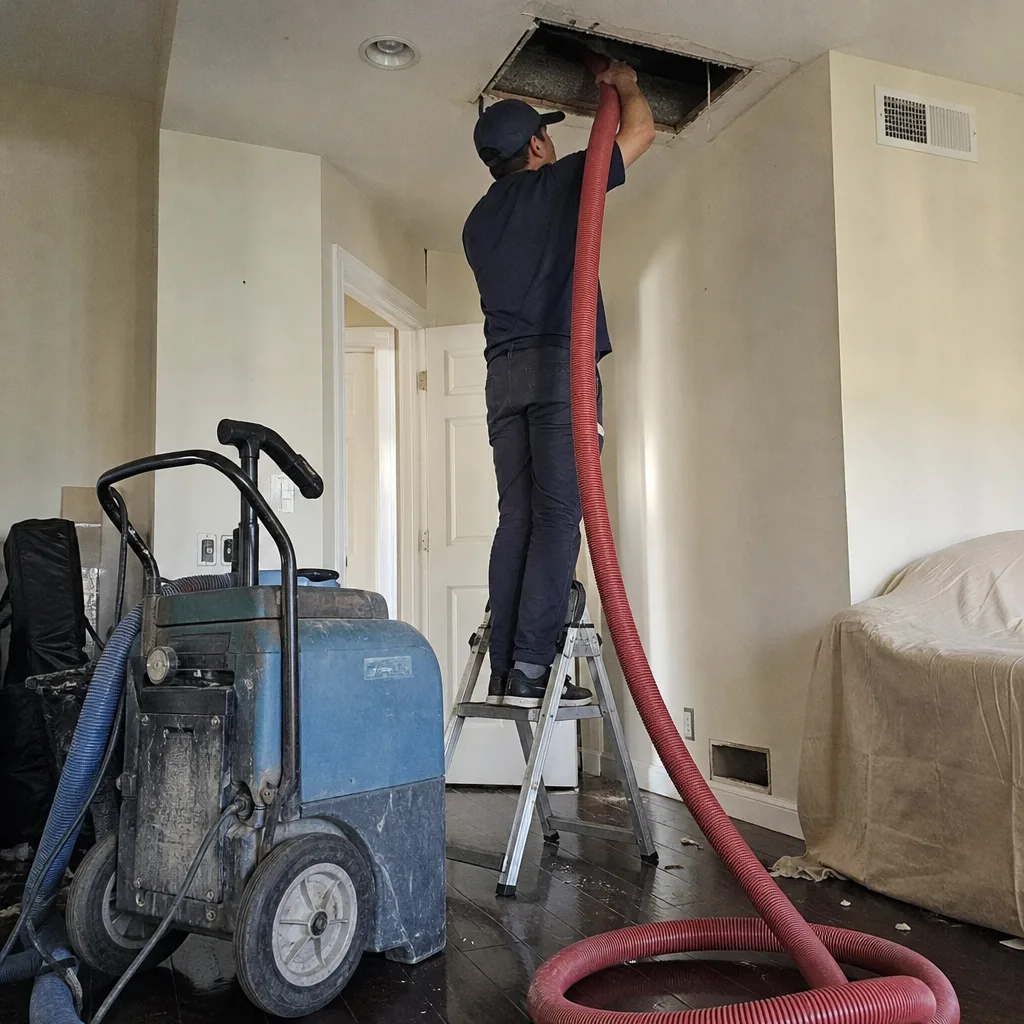 Before
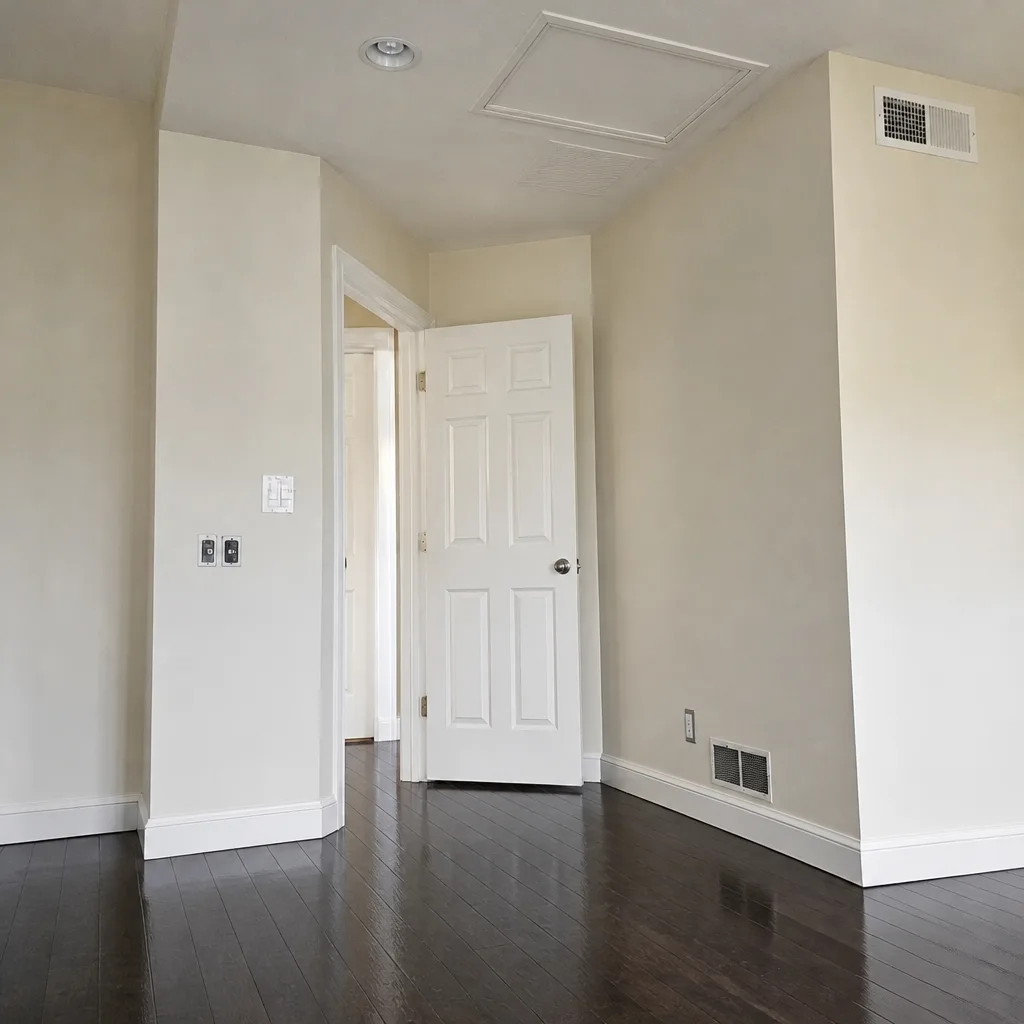 After
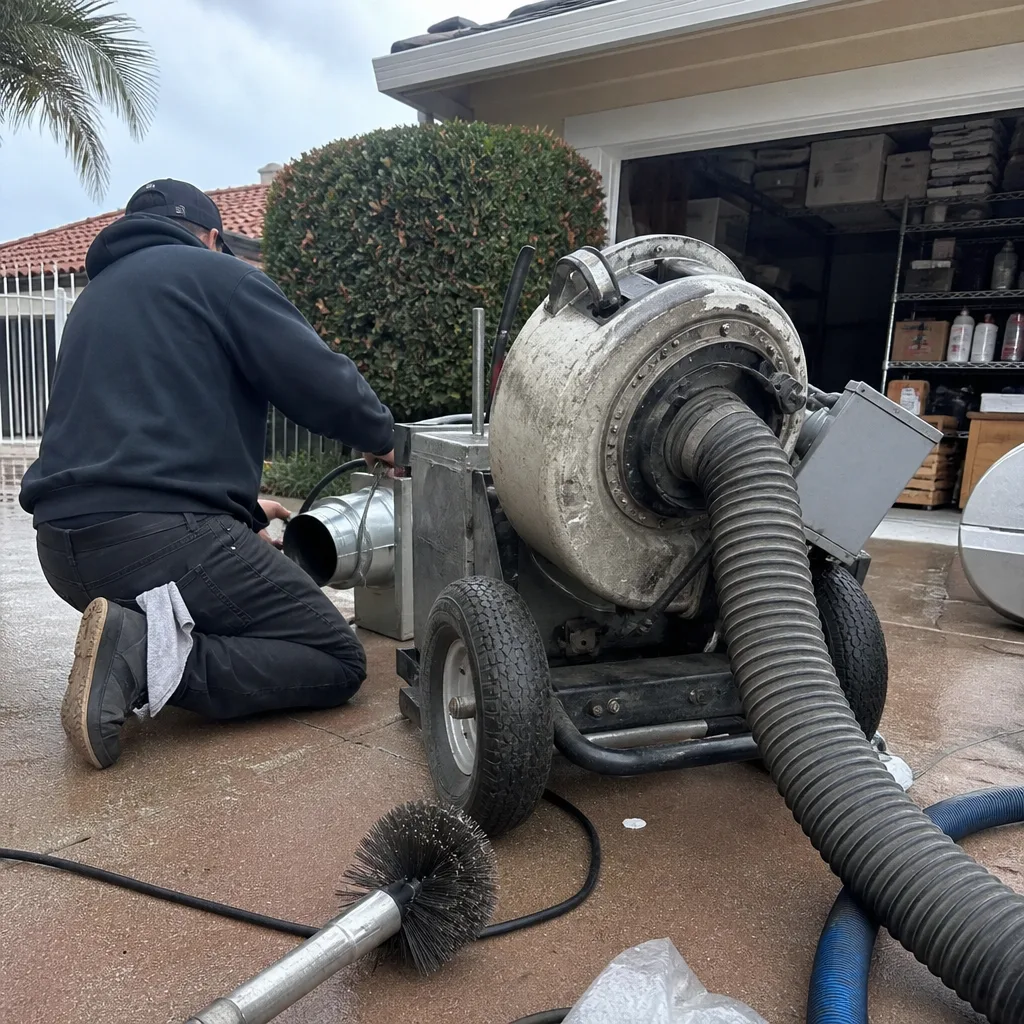 Before
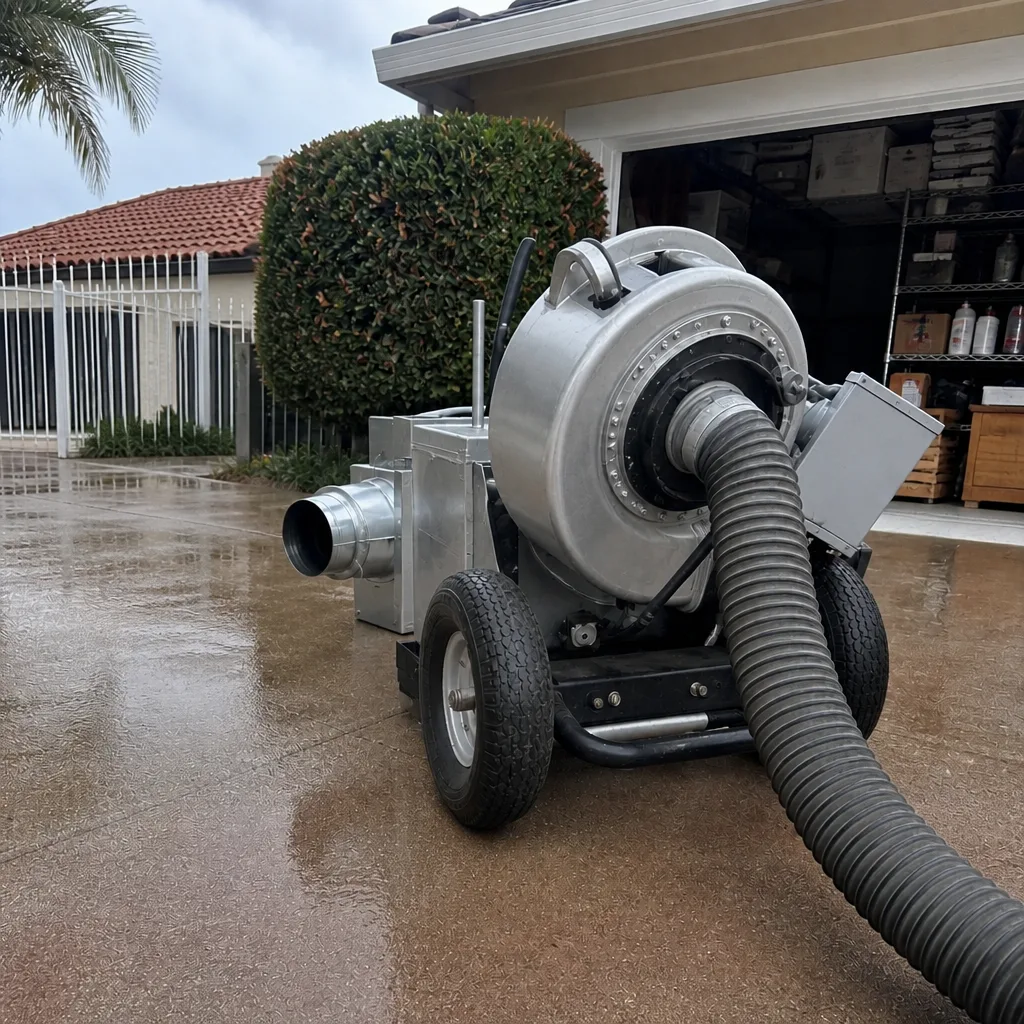 After
 Before
 After
When to Call a Professional
Call a professional when the contamination is systemic, visible at multiple registers, or has sat undisturbed for years. Call when you have post-renovation dust, mold-adjacent concerns, or signs of duct damage that cleaning won’t fix. Call when your dryer vent is long, turns multiple times, or exits through the roof. And call when you want verification that the work was actually done, with before-and-after photos and equipment that moves enough air to extract debris rather than stir it. Laguna Niguel homeowners can reach us at (855) 525-6862. We answer 24/7. Fast dispatch from 7am to 7pm, Sunday through Friday. Estimates are free.
Frequently Asked Questions
DIY air duct cleaning is not effective for deep duct contamination because consumer equipment lacks the airflow and filtration needed to extract debris from a full duct run. A shop vac moves 100 to 200 CFM, while professional negative-air machines move 2,000 to 4,000 CFM or more. The DIY approach agitates surface material but doesn’t remove it from the system. Call (855) 525-6862 for an exact quote. We answer 24/7.
Professional whole-home air duct cleaning in Laguna Niguel typically costs between $400 and $800, depending on system size, number of vents, and contamination level. The written estimate sets the final price, and there’s no per-vent fee that grows once work begins. Call (855) 525-6862 for a free estimate.
You can clean the visible portion of your registers and return grilles with a shop vac, but you cannot clean the full duct run. A shop vac doesn’t create the negative pressure needed to pull debris from a 20-to-40-foot run, and it lacks the HEPA filtration required to prevent recirculation. The result is surface agitation without extraction. For a full-system clean, call (855) 525-6862.
Homeowners can replace HVAC filters every 60 to 90 days, clean supply registers and return grilles, vacuum the visible channel behind each register, check accessible attic duct sections for visible damage, and keep the outdoor condenser area clear of debris. These tasks maintain the system’s openings and airflow but do not replace professional deep cleaning of the duct interior.
Dust that returns within days of cleaning, rooms that stay warmer or cooler than the rest of the house, visible gaps or hanging ducts in the attic, and unusually high utility bills all point to duct system damage rather than simple dirt. A cleaning won’t fix these problems. We clean ducts and repair them when we find damage during the job. Call (855) 525-6862 to schedule an assessment.
Cheaper quotes often come from companies using consumer-grade equipment or per-vent pricing designed to get a low number in front of you before the real invoice arrives. Professional negative-air cleaning with Rotobrush and Nikro equipment costs more because it actually extracts debris from the full duct run with HEPA filtration. Ask about equipment and pricing structure before you hire. Call (855) 525-6862 for a straight answer.
You can clean the lint trap, vacuum the lint trap housing, check the exterior vent hood, and clear visible lint from the exterior opening. If the vent run is longer than 10 feet, turns multiple times, or exits through the roof, you cannot reach the full run with consumer tools. Professional dryer vent cleaning uses rotary brushes and negative air to clear the entire run. Call (855) 525-6862 for a quote.
The Bottom Line
The DIY versus professional air duct cleaning decision comes down to physics, not effort. A shop vac cannot create the negative pressure or provide the filtration needed to extract debris from a full duct run. What it can do is stir up surface material and send it back into your living space. Laguna Niguel homeowners should handle filter changes, register cleaning, and dryer lint trap access themselves, and leave deep duct cleaning to equipment designed for the job. If the ducts are damaged, cleaning is the wrong fix entirely. The right call is an inspection from a company that cleans and repairs. That’s the choice that actually changes your air quality, and it’s the one we’d make in our own homes.
Written by the team at Duct Cleaning Laguna Niguel, serving Laguna Niguel since 2011.