
Last updated November 5, 2026
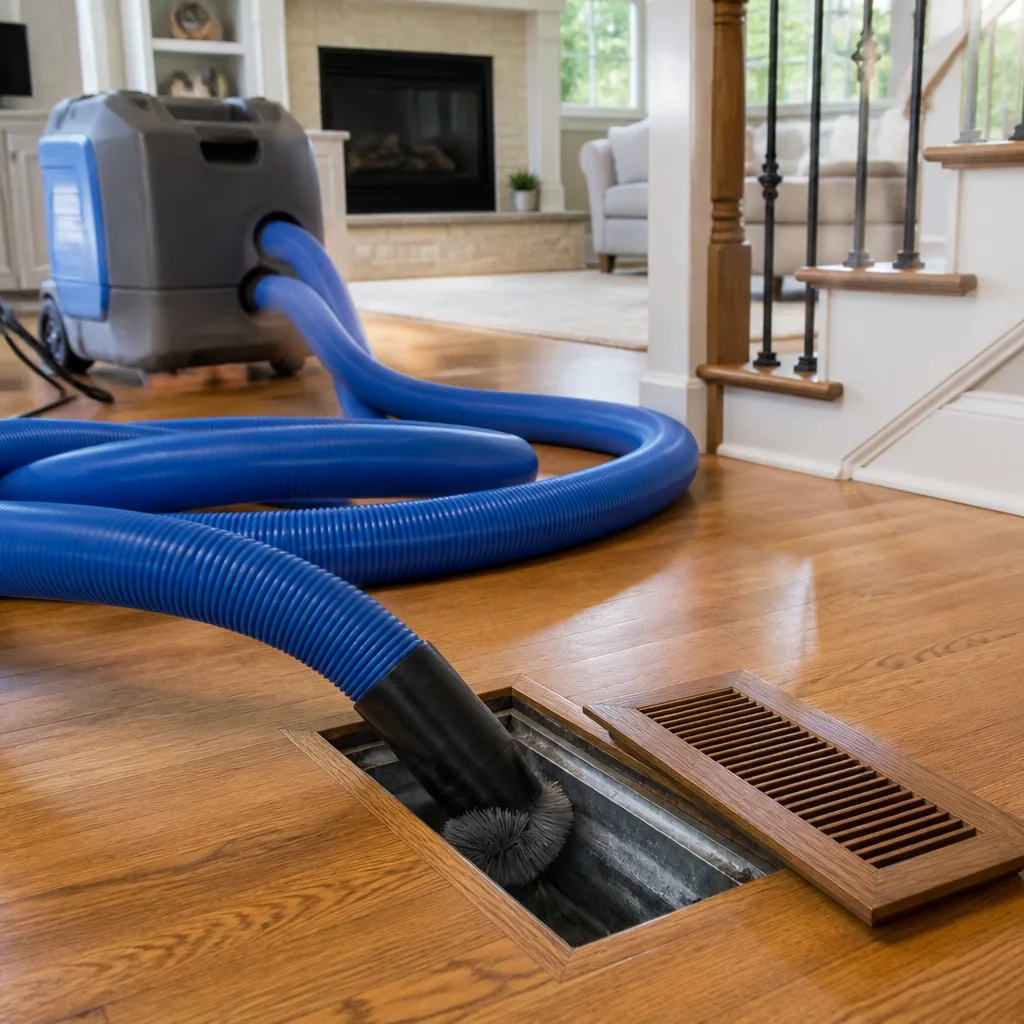 Whole-home duct cleaning
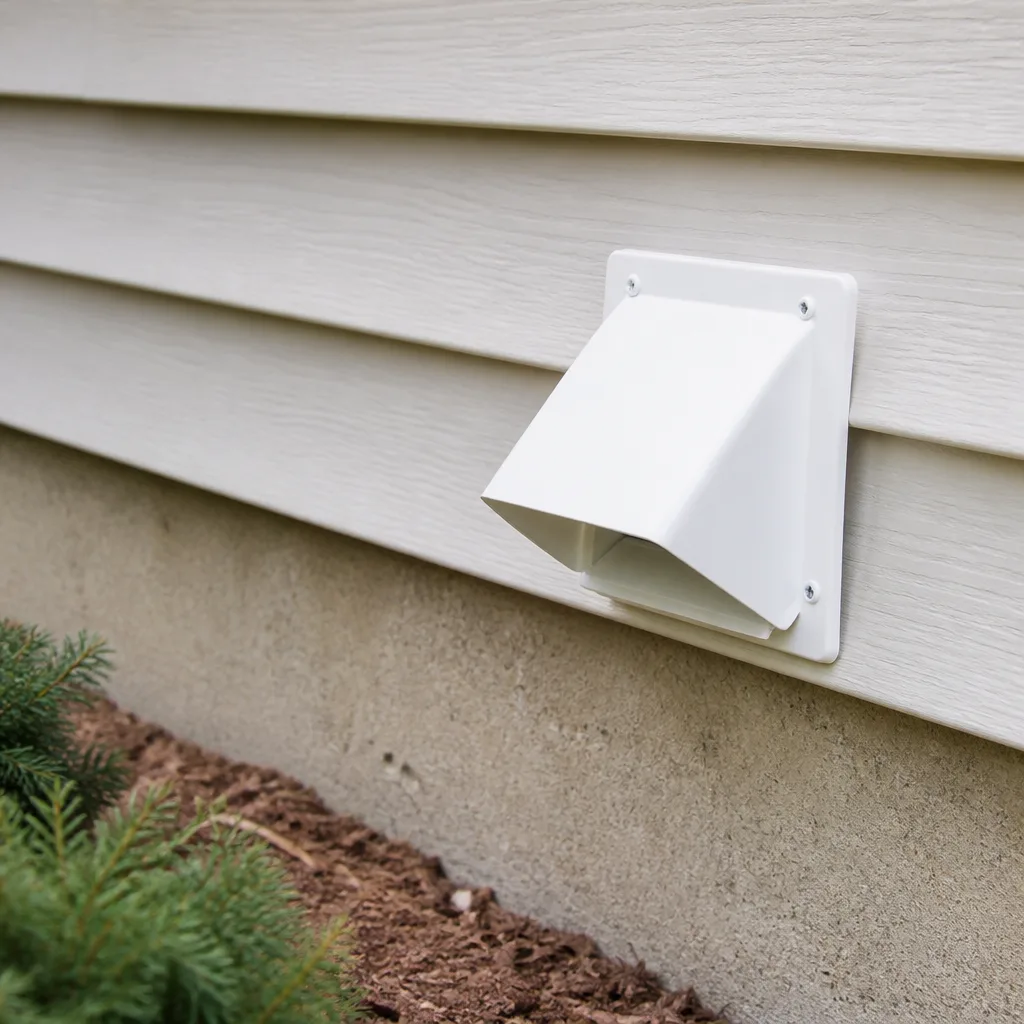 Dryer vent cleaning
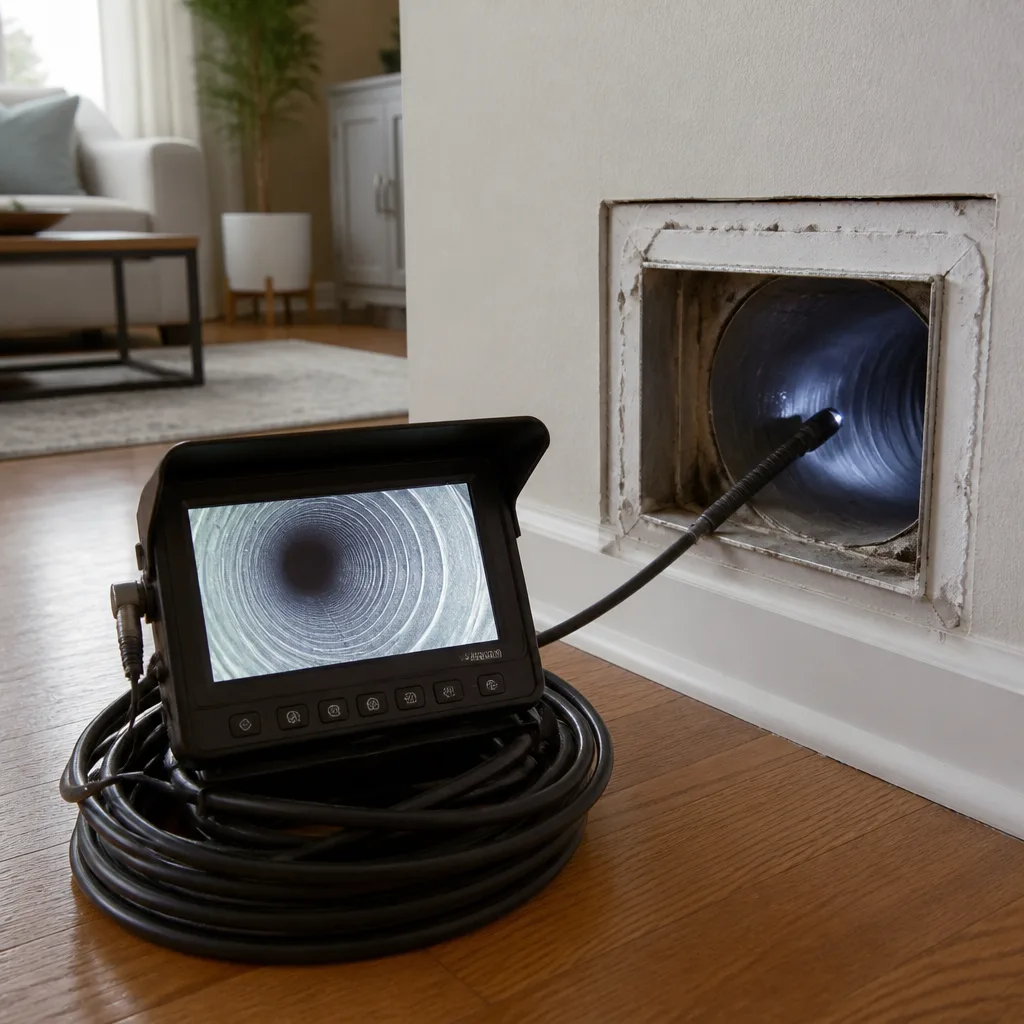 Camera inspection
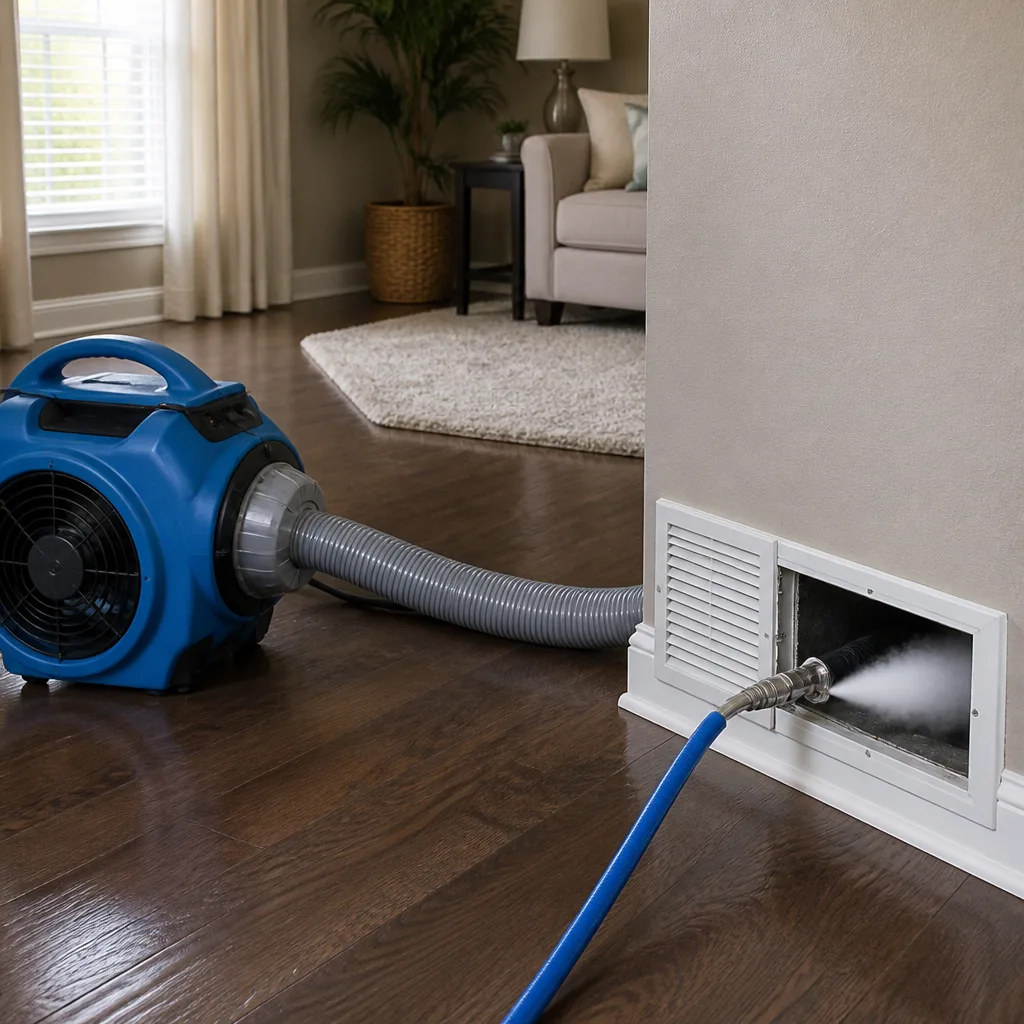 Sanitizing & deodorizing
Whole-system duct and dryer vent check with before-and-after photos - you see exactly what came out of your vents
That "$99 whole-house special" is a bait ad - the real number appears once they are in your hallway, or the "clean" is a shop-vac at the register. We photograph the inside of your ducts before and after instead.
Seasonal Air Duct Cleaning Care for Laguna Niguel: Year-Round Homeowner’s Guide
Most seasonal duct-cleaning advice imagines a home in Ohio or Massachusetts, where winter means a furnace running for five straight months and fall means leaves piling into gutters. Laguna Niguel has none of that. What it does have is a dry, gusty autumn that can drive ash and fine particulate through return grilles with startling efficiency, a late-spring marine layer that changes how flex ductwork behaves, and a long cooling season that follows its own rhythm. This guide replaces the generic four-season calendar with one built for the actual conditions your system faces here, month by month. If you understand these three pressure points, you’ll know when cleaning is genuinely warranted and when it can wait.
Quick Answer
In Laguna Niguel, the most consequential times for duct cleaning and inspection are late summer before Santa Ana wind season, mid-spring after the marine layer has peaked, and any time wildfire smoke has pushed into your neighborhood. A home with normal occupancy in our climate typically benefits from a professional air duct cleaning every 2 to 4 years, but the calendar should flex around local conditions far more than around a fixed interval. The goal is not cleaning on a schedule; it’s cleaning when the ducts have actually accumulated something worth removing.
Styles & brands we work with
- Whole-home duct cleaning
- Dryer vent cleaning
- Camera inspection
- Sanitizing & deodorizing
Table of Contents
- Why Santa Ana Season Matters More Than Winter
- Marine Layer Months and Duct Moisture: What June Gloom Actually Does
- Wildfire Smoke: When Surface Dust Becomes System Contamination
- Spring HVAC Restart: What to Check Before the First Heavy Cooling Run
- Return-Side Filter Integrity: The Pre-October Check That Prevents Most Problems
- Coordinating Duct Work With HVAC Tune-Ups Without Duplicate Calls
- Recognizing Moisture Intrusion in Flex Duct Systems
- How Often Should Laguna Niguel Homes Really Have Ducts Cleaned?
Why Santa Ana Season Matters More Than Winter
Laguna Niguel doesn’t get a classic winter, and we don’t need to pretend it does. The seasonal event that most consistently loads your duct system with debris is the late-autumn stretch of offshore winds, the dry and gusty conditions that arrive when high pressure settles over the Great Basin. These winds move significant amounts of fine dust, leaf litter, and various airborne particulate across the Saddleback Valley and surrounding ridgelines. What matters for your system is this: a great deal of that material gets pulled through exterior vents, attic spaces, and return pathways before it ever lands on a windowsill where you might notice it.
The return side of your system is the doorway in. When wind-driven debris spikes, the filter is the only thing standing between that material and the interior of your ducts, your evaporator coil, and your blower assembly. A filter that has been in place for too long or an ill-fitting filter slot lets a surprising amount of particulate bypass entirely. We have pulled apart return plenums in Laguna Niguel that looked fine from the outside and found a fine layer of reddish-brown dust coating everything inside, the kind of accumulation that builds up year after year without anyone seeing it.
What to check before October:
- The return filter fits its slot without gaps around the edges. A gap as small as a quarter inch lets unfiltered air slip past under vacuum pressure.
- Return grilles on walls and ceilings are not drawing from dusty attic spaces. A poorly sealed chase or a disconnected return boot will pull exactly the kind of fine particulate Santa Ana winds push around.
- Supply registers are blowing evenly from room to room. A sudden imbalance often indicates a partial blockage or a return-side restriction, not a problem in the supply duct itself.
You don’t need to clean every autumn. But the pre-October window is the right moment to assess what the summer cooling season left in the system and to make sure the return path is tight before the wind season loads it further. This kind of inspection is where a specialist’s eye differs from a general contractor’s: we’re not just checking filter condition, we’re checking the whole entry path.
Marine Layer Months and Duct Moisture: What June Gloom Actually Does
Late spring and early summer in Laguna Niguel bring the familiar overcast mornings that linger until midday and then burn off. The marine layer carries high relative humidity, often well above the indoor comfort range, and that moisture moves through your duct system every time the blower cycles during the cooler overnight and morning hours. For the owner of a newer home with rigid metal ductwork, this is mostly a non-issue. For a home with flex duct runs in unconditioned attic space, it’s the most likely time of year for condensation to form on duct surfaces.
Flex duct is a thin, insulated tube. The insulation is often compressed or damaged, particularly in attics where previous trades have worked around it, and once the outer jacket is compromised the dew point matters. When humid marine-layer air is drawn across a cold interior surface or when warm indoor air contacts duct surfaces cooled by attic conditions, water condenses. Not buckets of it. A fine film. But that film sits there for weeks during the June Gloom stretch, and it is exactly the kind of sustained moisture that lets dust in the duct become something more tenacious than dust.
Signs of moisture intrusion during marine layer months are often subtle:
- A faint mustiness from certain registers when the system first starts after sitting off overnight.
- Discoloration or rings on ceiling register boots where the metal meets the drywall.
- Filter media that feels damp when you change it, even though you haven’t run the system in a day.
- Peeling register paint or tiny rust spots on supply register screws.
This is also the season to walk the attic if you have access. Look at the flex duct runs that sit near roof penetrations. If the vapor barrier looks compressed, the R-value is largely gone. If you see condensation beading or dark spots forming on the jacket, the duct is a candidate for repair or replacement, not just cleaning. A professional Duct Cleaning Laguna Niguel inspection includes checking duct condition, not just dust load. Moisture problems compound quickly in a mild, humid stretch.
Wildfire Smoke: When Surface Dust Becomes System Contamination
Wildfire smoke is no longer an occasional event in Southern California; it’s a recurring seasonal fact. When smoke drifts over Laguna Niguel, fine combustion particulate settles on every exterior surface. Your duct system draws from both conditioned indoor air and, in any home with a fresh-air intake or naturally leaky return path, from outside air. Smoke particles are extraordinarily fine, measured in microns, and they don’t behave like household dust. They move deeper into systems, cling to surfaces differently, and linger far longer than standard household particulate.
What we need homeowners to understand is the difference between surface particulate and deeper system contamination. After a smoke event, much of what you see on furniture and window sills is larger ash particles, the stuff you can wipe away with a damp cloth. That’s surface particulate. If that’s the majority of what entered your home, replacing your filter and wiping down surfaces is sufficient. The ducts are probably fine.
But if smoke was heavy enough that the indoor air quality was noticeably degraded for more than a day or two, some fraction of the finer combustion particles has moved through the return path and into the system. These particles coat blower wheels, evaporator coils, and the interior surfaces of return ductwork. They don’t wipe away. They require physical agitation and vacuum collection to remove, which is exactly what professional air duct cleaning systems are built for.
- During a smoke event, run the HVAC fan continuously with a quality filter installed. The fan on setting recirculates indoor air through the filter, reducing smoke concentration inside the home.
- Immediately after the smoke clears, replace the filter. Do not wait for the next scheduled change. The filter has captured fine particulate and is likely heavily loaded.
- Wipe down registers and return grilles with a damp cloth. This prevents surface ash from being drawn into the system on the next blower cycle.
- Vacuum indoor surfaces thoroughly. The less fine particulate remains in the living space, the less gets pulled through the return path over subsequent weeks.
- If the smoke event was prolonged or the indoor air remained visibly hazy for multiple days, schedule a duct inspection. The question is whether particulate has settled deep enough to require mechanical cleaning, and that’s worth an expert eye.
One additional note about smoke and equipment: this is a context where containment-level cleaning standards genuinely matter. Systems like Abatement Technologies negative-air units and Nikro vacuum systems are designed for remediation-grade particulate control, which is a different animal from the consumer vacuum approach. The distinction matters more after smoke events than it does after a routine dust-bunny cleaning.
Spring HVAC Restart: What to Check Before the First Heavy Cooling Run
In Laguna Niguel, the transition from mild spring weather to the first real stretch of air conditioning is often abrupt. One week the system runs a few hours a day; the next, it’s cycling for eight hours. That first heavy cooling run is a stress test, not just for the compressor, but for the entire duct network. Any restriction, leak, or imbalance that was masked during light operation becomes obvious once the system is moving full air volume continuously.
This makes the spring restart window one of the most useful times for a duct inspection, and it’s often the least scheduled because people associate duct issues with fall and winter. That’s a New England habit. Here, the cooling season is the main event, and the weeks before it starts are the right time to verify system integrity.
A practical pre-cooling checklist:
- Replace the filter before the first heavy cooling week, even if it has life left by the rated interval. Summer loads are the highest of the year.
- Walk every room and confirm each supply register is open and unobstructed. Furniture, rugs, and storage bins routinely block low wall registers in Laguna Niguel homes.
- Listen to the system on the first few full cycles. A hissing or whistling sound at a register often means the duct is partially restricted or the grille is too small for the air volume.
- Check upstairs spaces first. Heat rises and upper-story rooms run warmer. These are often the rooms where homeowners close off dampers and inadvertently raise static pressure throughout the system.
- If you noticed any mustiness during the marine layer months, resolve it before the cooling season. Air conditioning repeatedly cycles the same air through any damp material, distributing it through the home.
This is also the moment to consider whether an air duct inspection makes sense alongside your HVAC tune-up. Most Laguna Niguel homeowners settle into a company for HVAC maintenance, and a duct specialist can coordinate with that appointment so both systems are evaluated in the same visit without overlapping work.
Return-Side Filter Integrity: The Pre-October Check That Prevents Most Problems
Everything in your duct system flows from one direction: air enters through the return path, passes through the filter, gets conditioned at the coil, and is pushed through the supply ductwork to registers. The return side is upstream of the entire system. If the return path doesn’t seal properly, if the filter doesn’t fit the slot it sits in, or if the return plenum has gaps and cracks, unfiltered air bypasses the filter and enters the system anyway. This is the most common preventable issue we encounter in Laguna Niguel homes, and it causes more long-term duct contamination than any other single factor.
The force that makes this worse? Negative pressure. Your blower pulls air through the return side under vacuum. When the filter is choked or undersized for the system’s airflow, that vacuum strengthens throughout the return plenum. Any crack or gap that would otherwise leak a little now leaks a lot. The air entering through these gaps is attic air, wall-cavity air, and whatever dust those spaces contain.
What pre-October return-side preparation looks like in practice:
- Slide the filter out and look at the filter slot itself. Is there weatherstripping or a gasket? If not, can you wiggle the filter side to side? Any play means bypass.
- Inspect visible return ductwork in the attic or garage. Look for separated tape at joints, sagging flex runs, and black streaks that indicate air leaks under vacuum.
- Check the return grille in the living area. Is it the only return for the entire zone? Many Laguna Niguel floor plans are under-returned, and a single high return on one side of the home means uneven pressure throughout.
- Consider filter depth. A 1-inch filter slot handles a 1-inch filter, but the thinner the filter, the faster it loads and the more restrictive it becomes under summer airflow. If your system has a 4-inch media cabinet, use a 4-inch filter.
The return-side inspection is not particularly expensive or dramatic. It’s the kind of maintenance that feels unglamorous until you see what a properly sealed return path prevents. In our experience, about half the seriously contaminated systems we clean in this area could have avoided much of the accumulation with better return-side discipline.
Coordinating Duct Work With HVAC Tune-Ups Without Duplicate Calls
HVAC maintenance and duct cleaning are adjacent fields, and they overlap in ways that can either save a homeowner time or waste it. The easiest way to think about the division of labor: your HVAC technician services the mechanical equipment; a duct specialist addresses the distribution network downstream of that equipment and the return path upstream. Two different systems. Two different sets of tools.
But they intersect. A technician who opens the blower compartment and finds it caked with dust is seeing the downstream evidence of return-side bypass. A duct specialist who finds a collapsed flex run in the attic has identified an airflow restriction that the HVAC tech may have been compensating for with refrigerant or air-speed adjustments. The problems are often one problem viewed from two directions.
How to coordinate the two without doubling the visit cost:
- Book the HVAC tune-up first. It’s the mechanical work. Anything discovered about airflow, compression, or coil condition during the tune-up should inform what the duct specialist looks for.
- Ask the HVAC technician to note filter condition, coil condition, and whether the blower wheel shows dust accumulation. These are the three indicators most useful to a duct specialist.
- Schedule the duct inspection within a week of the tune-up. The mechanical system is now operating at baseline, so the comparison is fair.
- Have the duct inspection include repair findings, not just dust-load findings. A cleaning-only inspection that finds a separated return boot and doesn’t address it leaves the root cause in place.
- Keep records of what each service found. This builds a paper trail that makes future inspections faster and avoids redundant labor.
The reason we emphasize repair is straightforward. Cleaning a system with an unresolved duct defect is like patching a tire with a nail still in it. It looks better briefly, then the same issue returns. A specialist who can clean and repair in the same visit, rather than clean around a problem, changes the economics of the whole appointment. That is the practical value of having dryer vent cleaning and duct repair on the same truck as the cleaning equipment.
Recognizing Moisture Intrusion in Flex Duct Systems
The phrase “flex duct” covers a lot of ground in Laguna Niguel. Some of it is pristine, well-hung, and properly insulated. Some of it has been in an unconditioned attic since the home was built, compressed by stored boxes, and nicked by tradespeople. The difference matters enormously because flex duct is far more moisture-sensitive than rigid metal ductwork.
The concern with flex duct is condensation. When the duct surface temperature falls below the dew point of the air moving through it, water collects. During marine layer months, the dew point indoors can be high. During cooling season, the interior air in the duct is cold. Combine the two, and the condensation window is wider than most homeowners assume. The duct doesn’t need to be visibly wet for a problem to be brewing; a persistently damp interior surface is enough.
Where to look and what to look for:
- In the attic, look at any flex duct that touches the roof decking, plumbing vents, or other flex runs. Compression points create thermal bridges, and condensate forms at those contact points first.
- Inspect the duct connections at supply boots and plenum takeoffs. These are the most common spots for vapor barrier damage and the easiest points for humid attic air to enter the duct interior.
- Check the outer jacket for tears. Even a one-inch tear in the foil or plastic outer layer exposes the fiberglass insulation beneath, which then absorbs moisture and holds it against the duct inner liner.
- Be aware of any duct that runs through a garage or exterior wall. These spaces are not conditioned like the living area, and ducts there see the most dramatic temperature swings.
If a flex duct has visible moisture staining, tears, or the inner liner feels damp when you reach inside with a clean glove, the duct should be replaced, not merely cleaned. Cleaning over compromised flex duct is wasted effort. A technician who identifies the compromise during the cleaning visit and can make the repair before reattaching the run is the difference between a one-visit fix and a recurring problem.
How Often Should Laguna Niguel Homes Really Have Ducts Cleaned?
The honest answer is that frequency depends far more on local and household factors than on the nationally-promoted “every 3 to 5 years” rule. Some Laguna Niguel homes with good filter discipline, sealed return paths, and no pets can go five or six years between cleanings and find very little accumulated anything. Others, with multiple shedding pets, a home remodel in the past year, and an ill-fitting return filter, will accumulate significant material in two years or less.
Here’s the framework we use with local homeowners, and it applies specifically to this climate and housing stock:
- Every 2 to 3 years: Homes with multiple pets, homes that have recently undergone interior renovation, or homes where anyone has respiratory sensitivities that respond to particulate exposure.
- Every 3 to 5 years: Typical family homes with standard occupancy, good filter habits, and no significant local smoke events during the interval.
- 5 years or longer: Homes with excellent filtration, sealed returns, hard surface flooring throughout, and no pets or remodeling activity.
- Outside the calendar: Any home after a significant wildfire smoke event, after any interior construction project, or after identifying visible mold or moisture inside the duct system.
What doesn’t change is the need for inspection as a separate activity from cleaning. You can inspect without cleaning. You shouldn’t clean without inspecting. The inspection is what tells you whether a cleaning is warranted, and in many cases the honest professional answer is “not yet.” That’s a useful answer. It saves you money, and it tells you something about the company that gives it.
Common Mistakes to Avoid
- Cleaning on a calendar rather than a condition. Laguna Niguel homes accumulate duct debris at wildly different rates depending on pets, occupancy, and the integrity of the return path. A fixed interval is guesswork; an inspection-based trigger is precise.
- Assuming a high-end filter eliminates the need for duct cleaning. A filter catches what passes through it, but it only catches what passes through it. Any return-side bypass entirely negates the filter’s benefit, and the bypass is upstream of every filter you’ll ever install.
- Using a consumer-grade vacuum attachment and calling it duct cleaning. The interior of a typical duct runs dozens of feet with multiple bends and a layer of fine particulate that a shop vac cannot disturb. Professional-grade rotary brush systems like Rotobrush and Nikro equipment exist because moving that material requires agitation and sustained vacuum.
- Closing vents in unused rooms to save energy. This raises static pressure throughout the system, often increases bypass at return leaks, and puts additional strain on the blower. It’s the most common homeowner habit that makes ducts dirtier rather than cleaner.
- Ignoring mustiness in spring because it disappears by June. The marine layer moisture that causes a faint odor in May is still in the duct material in June. It doesn’t dry out clean; it dries into a residue that suppresses the odor until next year’s humidity cycle brings it back.
- Waiting for visible dust on registers to indicate a problem. The dust you see on a supply register is a small fraction of what’s inside the duct. By the time it’s noticeable on the exterior surface, the interior is heavily loaded.
- Treating dryer vent care as optional. Lint is the leading cause of dryer-related home fires, and the vent is a duct system that accumulates flammable material far faster than the HVAC side. A dryer vent cleaning is the highest-value safety service most Laguna Niguel homeowners can schedule in a single visit.
See the difference
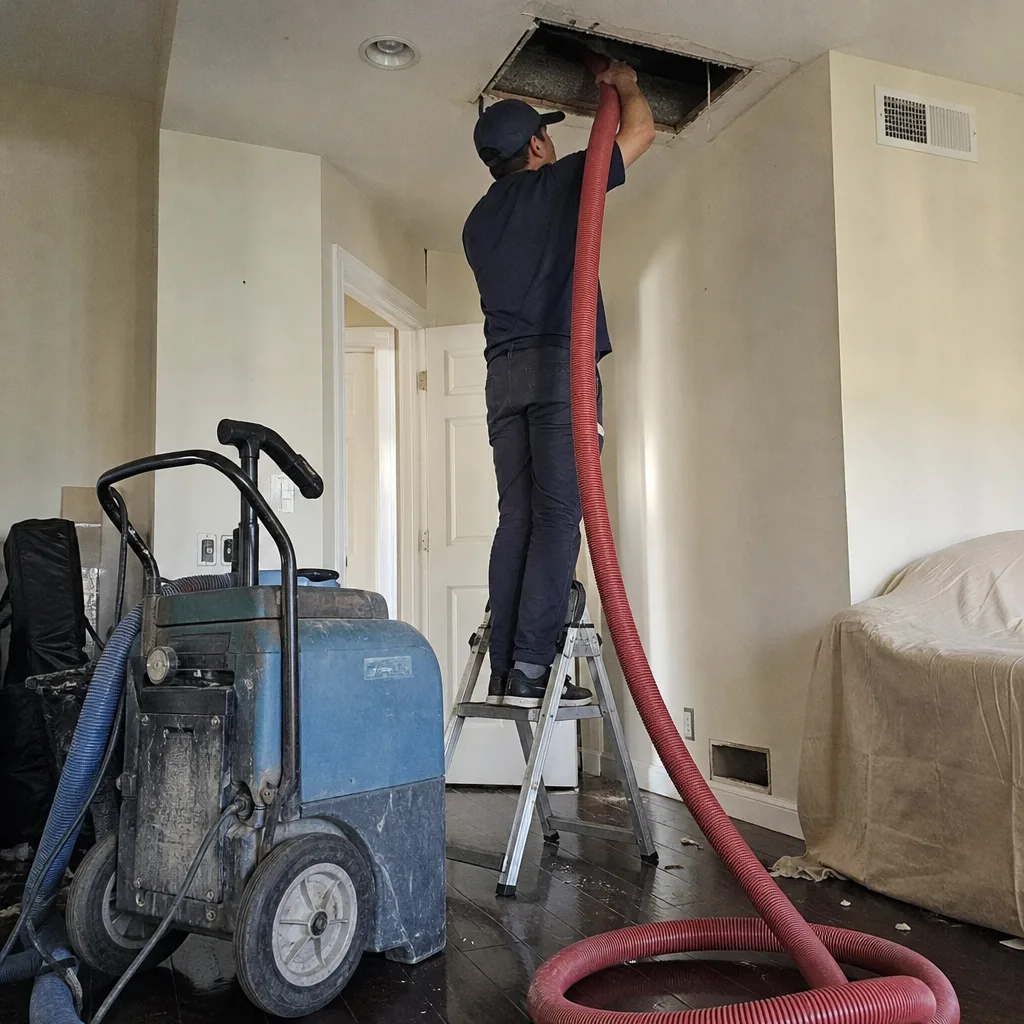 Before
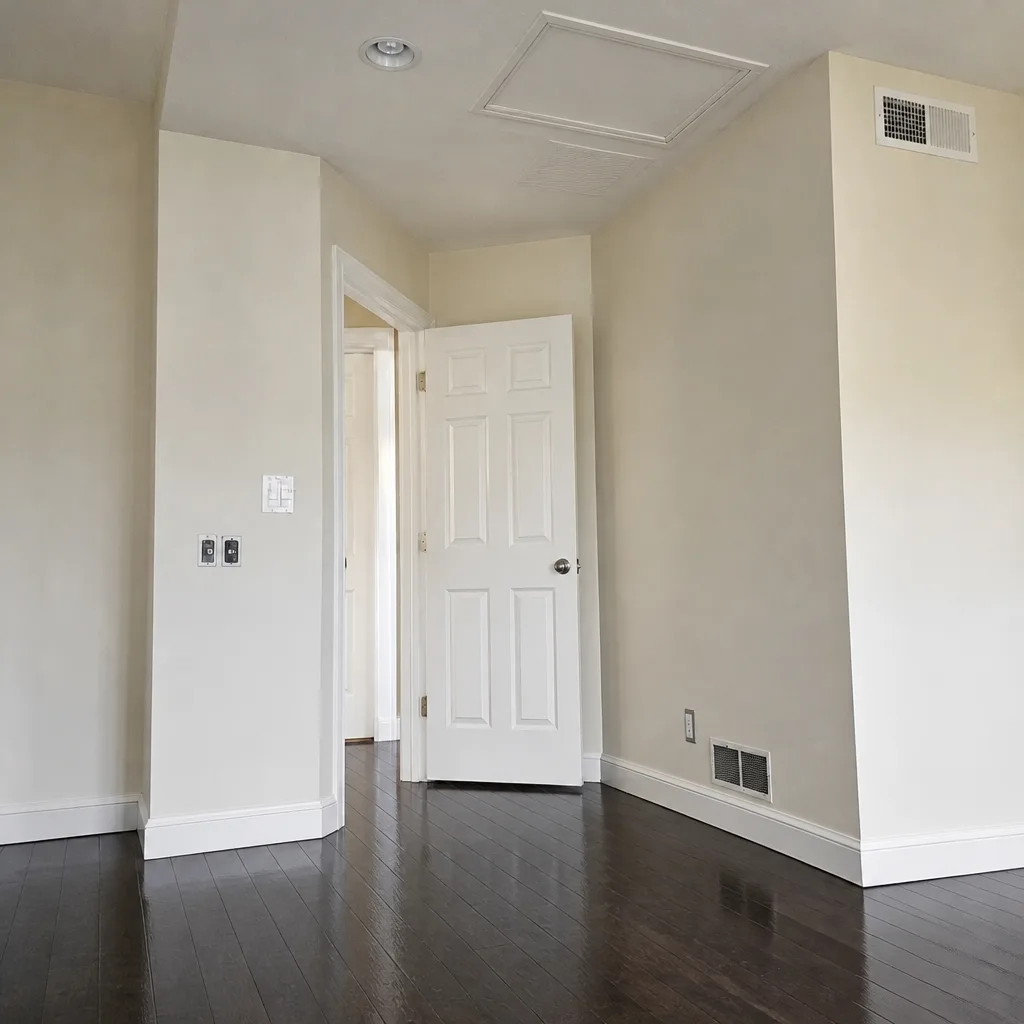 After
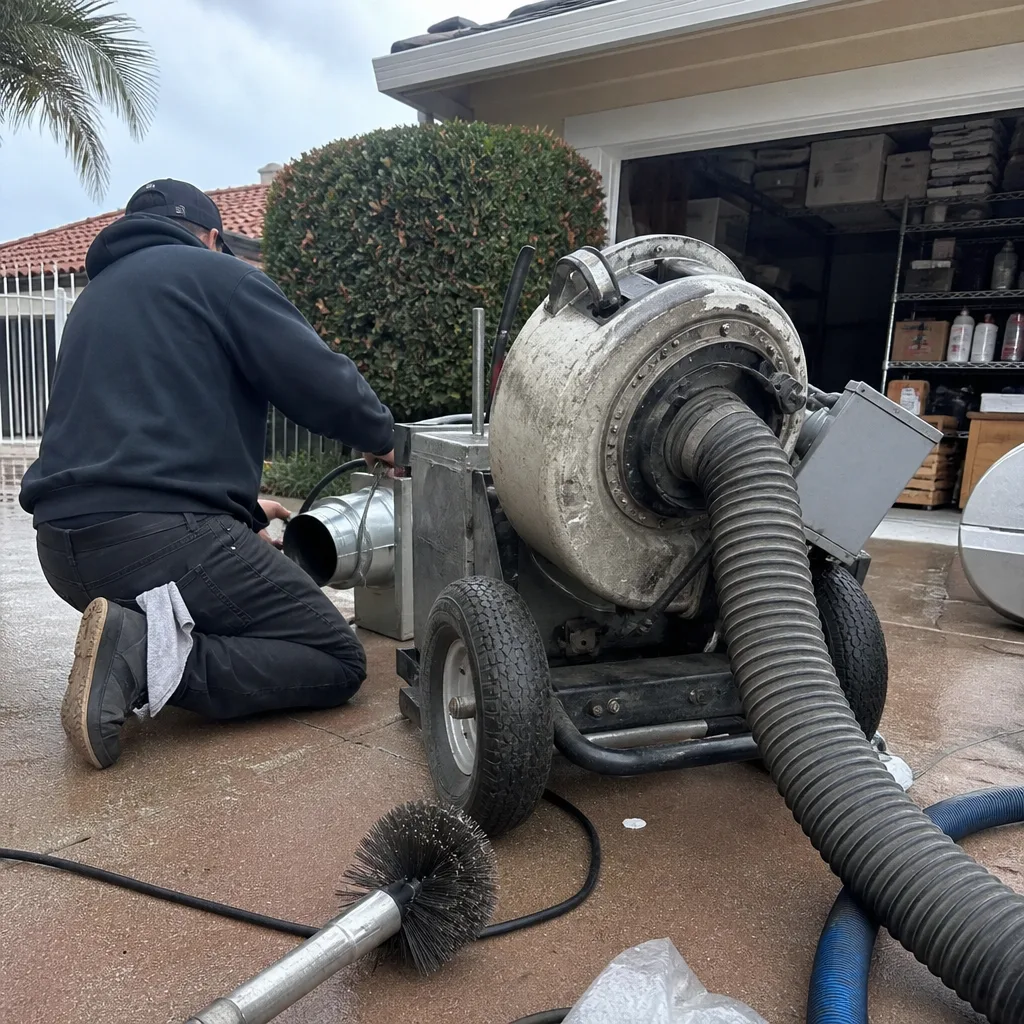 Before
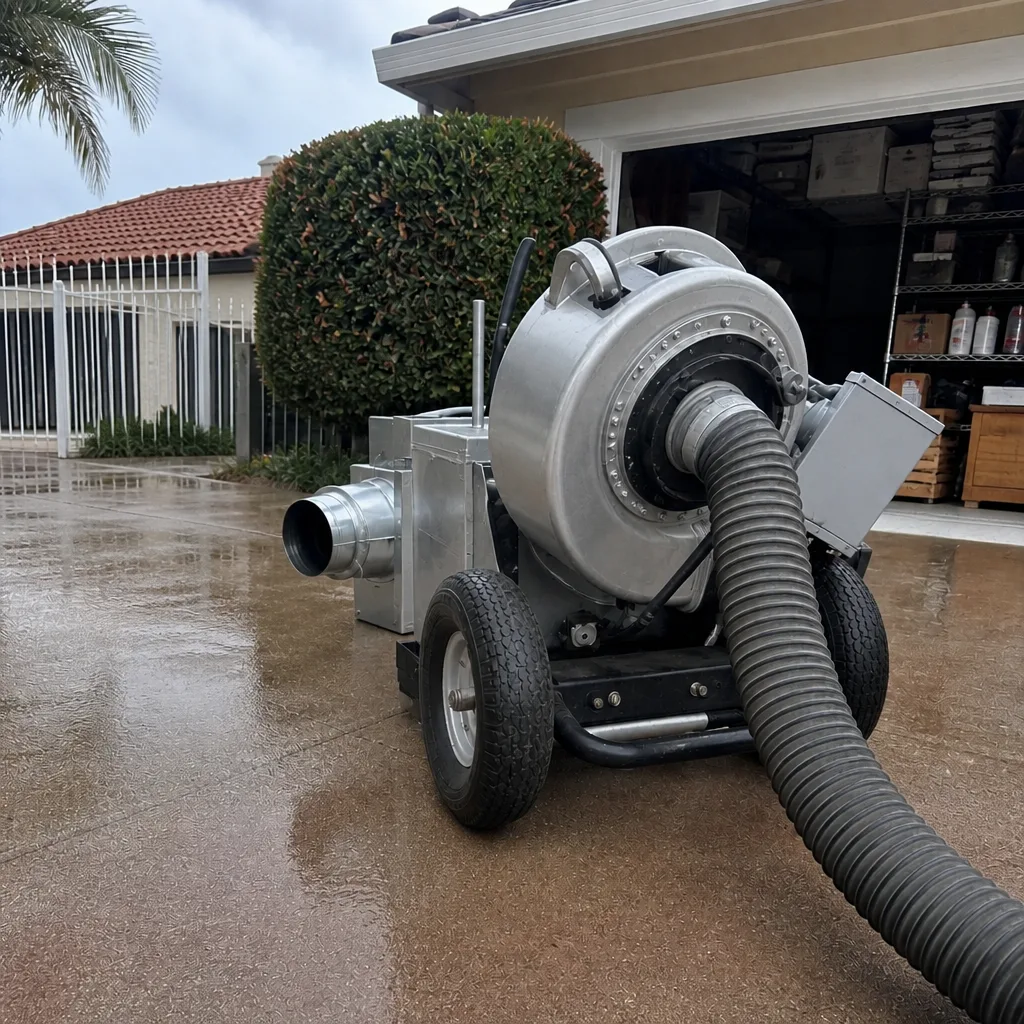 After
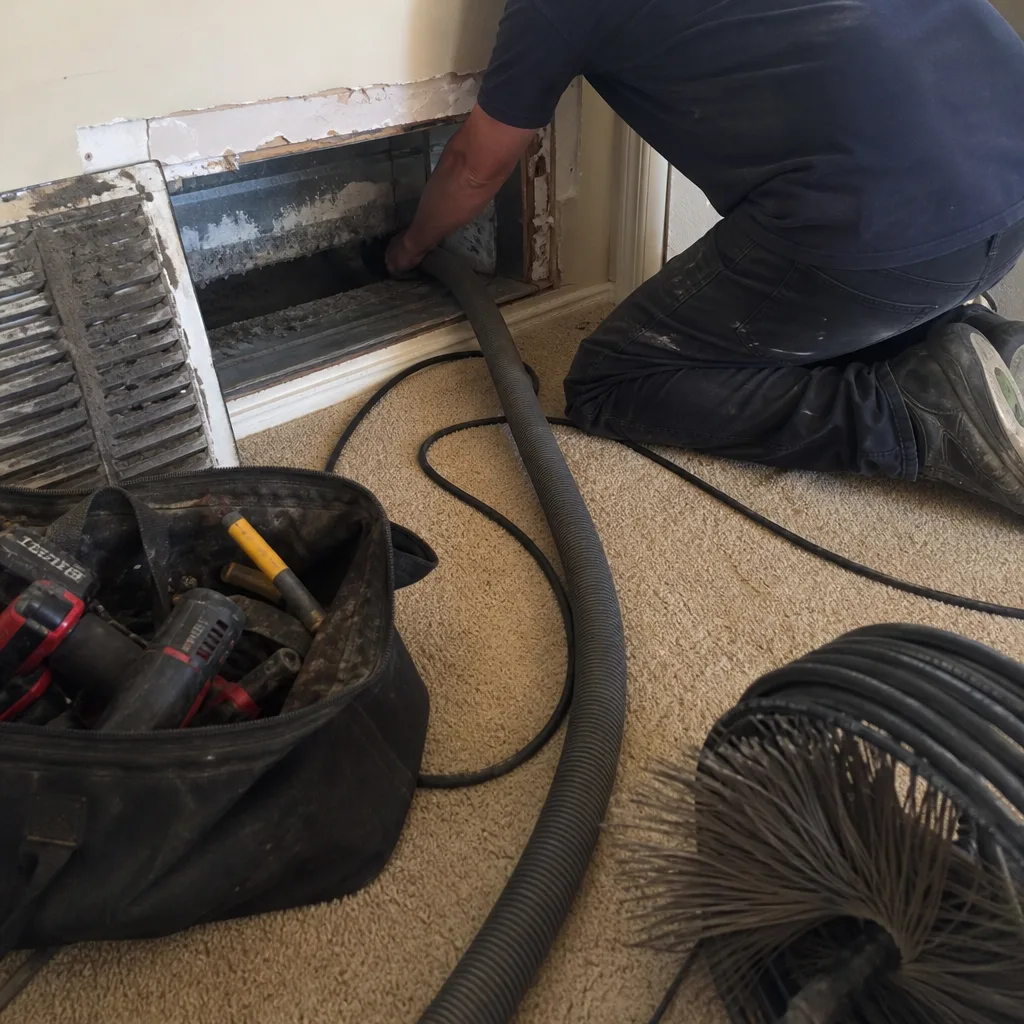 Before
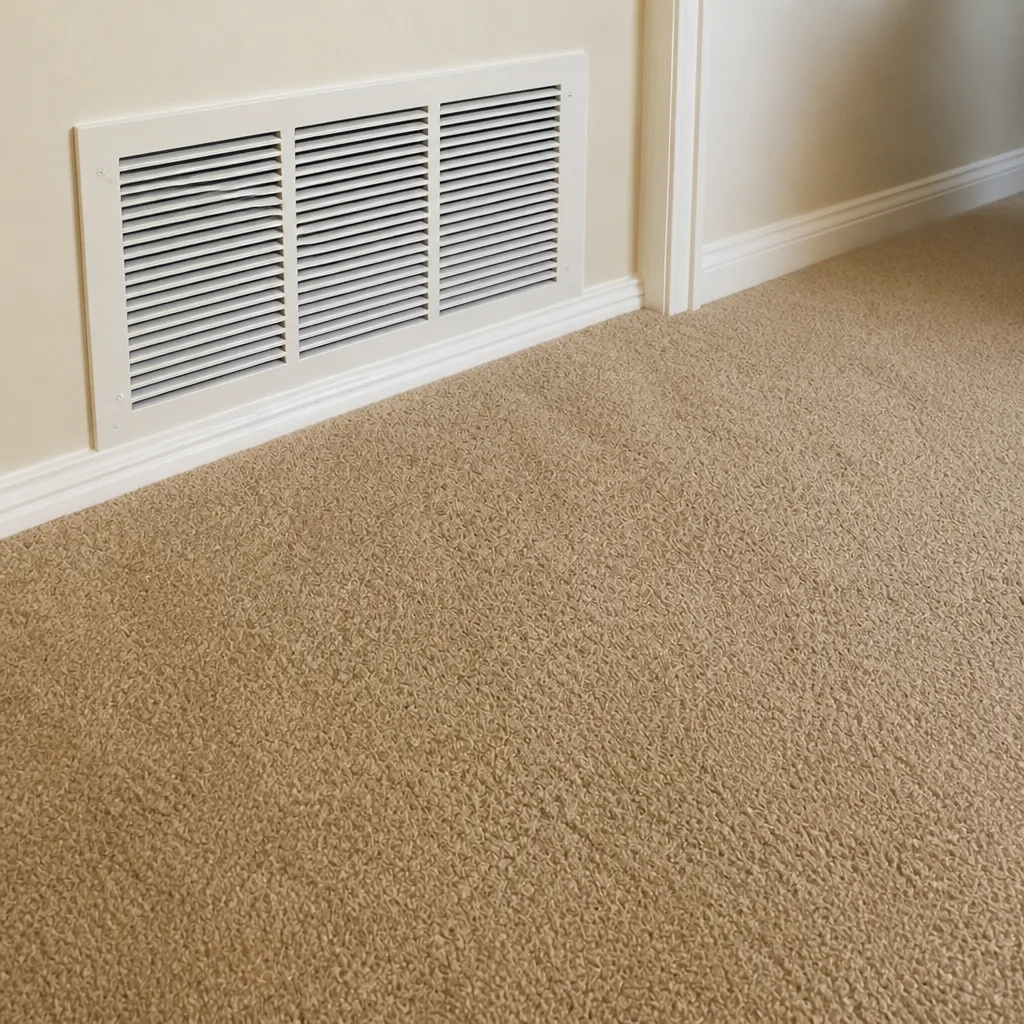 After
When to Call a Professional
You should call a professional when the condition of the ducts isn’t something you can assess from a register. If you’ve smelled mustiness from the system that comes and goes with weather, if you’ve had a local wildfire smoke event that left indoor air hazy for a day or more, if you can see visible dust accumulation on the blower wheel or coil during a filter change, or if you’ve recently renovated and you know construction dust was pulled through return grilles, the system deserves inspection. None of these require guesswork from a ladder with a flashlight. Duct Cleaning Laguna Niguel offers free estimates in Laguna Niguel with inspection-based recommendations. Call (855) 525-6862. We answer 24/7. Fast dispatch from 7am to 7pm, Sunday through Friday.
Frequently Asked Questions
Most Laguna Niguel homes with normal occupancy and good filter habits need a professional air duct cleaning every 3 to 5 years, but the interval should shorten if you have multiple pets, recently remodeled, or experienced significant wildfire smoke. Inspection determines need more accurately than a calendar. Call (855) 525-6862 for an honest assessment; estimates are free.
Yes. Santa Ana conditions drive fine particulate through attic spaces and exterior return pathways, and any gaps in the return plenum or filter slot pull that particulate directly into the system. The pre-October return-side check is the single most useful seasonal inspection for Laguna Niguel homes.
The marine layer raises humidity enough that condensation can form on flex duct surfaces in unconditioned attics, and sustained moisture in dusty duct interiors is the scenario every homeowner should want to avoid. The moisture itself doesn’t create mold out of nothing, but it creates persistent dampness in the material that already contains organic dust, which is why water-stained or compromised flex duct should be replaced during a cleaning visit rather than cleaned around.
If the smoke odor is primarily from surface ash on furniture and window treatments, cleaning indoor surfaces and replacing the filter is the correct first step. If fine combustion particulate has entered the duct system and coated the blower and coil, professional cleaning with containment and agitation is required to remove it. Surface particulate and system contamination are two different problems.
The cheap special typically involves a shop vac or a consumer-grade vacuum with a brush attachment, which cannot agitate and extract the fine particulate that accumulates throughout the duct runs. Professional systems like Rotobrush rotary brush equipment and Nikro negative-air vacuum units are built for sustained commercial use and remediation-grade particulate control. One cleans the first few feet of the duct. The other cleans the system.
We repair what we find. If the inspection during a cleaning visit turns up a separated return boot, a collapsed flex run, or moisture-compromised duct sections, the repair can be addressed in the same visit. A duct specialist who can’t repair is only telling you half the story. Call (855) 525-6862 for a free estimate.
The Bottom Line
Laguna Niguel’s duct-cleaning calendar should follow the conditions that actually matter here: Santa Ana winds in fall, marine layer humidity in late spring, wildfire smoke whenever it arrives, and a cooling-season transition that stresses the system every spring. A well-maintained return path with a properly fitting filter prevents more duct contamination than any amount of periodic cleaning ever will. When cleaning is warranted, the value is in professional-grade agitation and extraction with equipment like Rotobrush and Nikro, plus the ability to repair what a surface cleaning would never reveal. Between those seasonal pressure points, an inspection-based approach beats a calendar-based one every time.
Written by the team at Duct Cleaning Laguna Niguel, serving Laguna Niguel since 2011.