
Last updated November 5, 2026
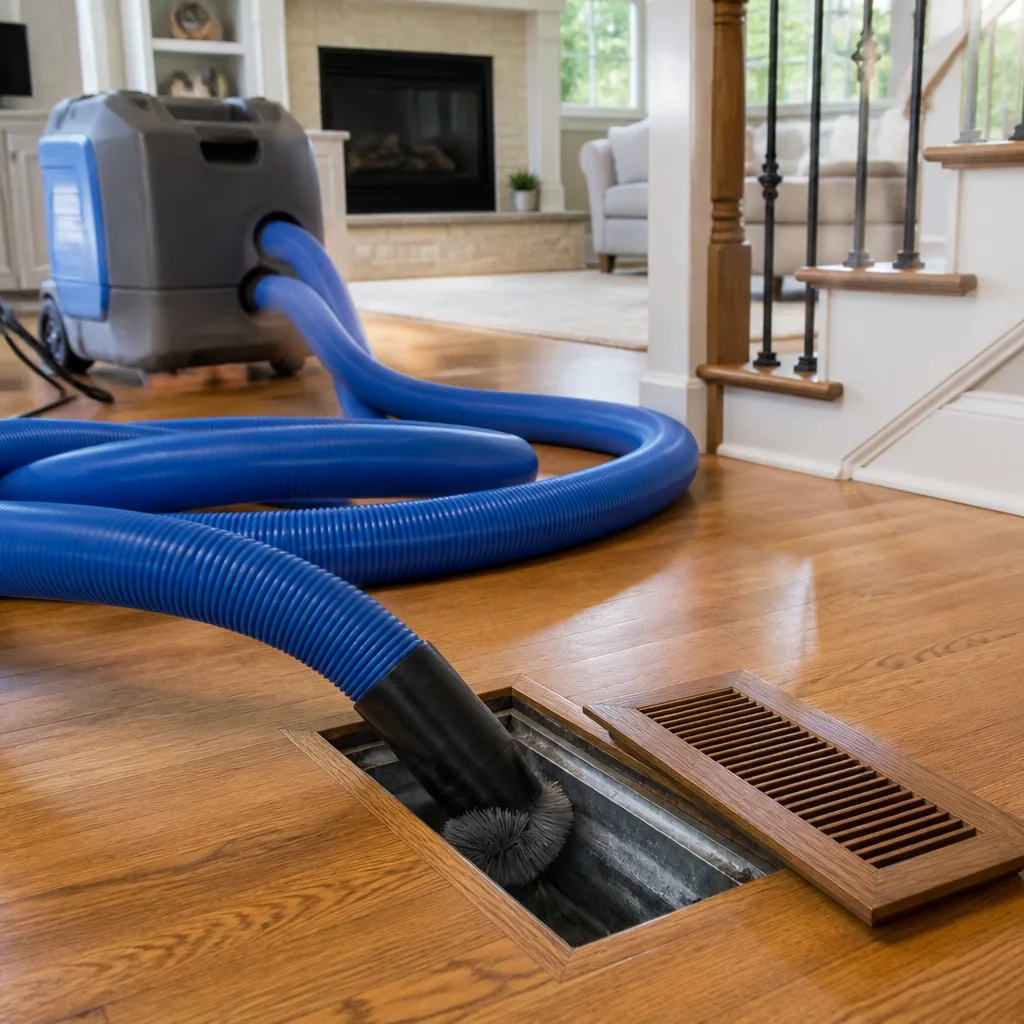 Whole-home duct cleaning
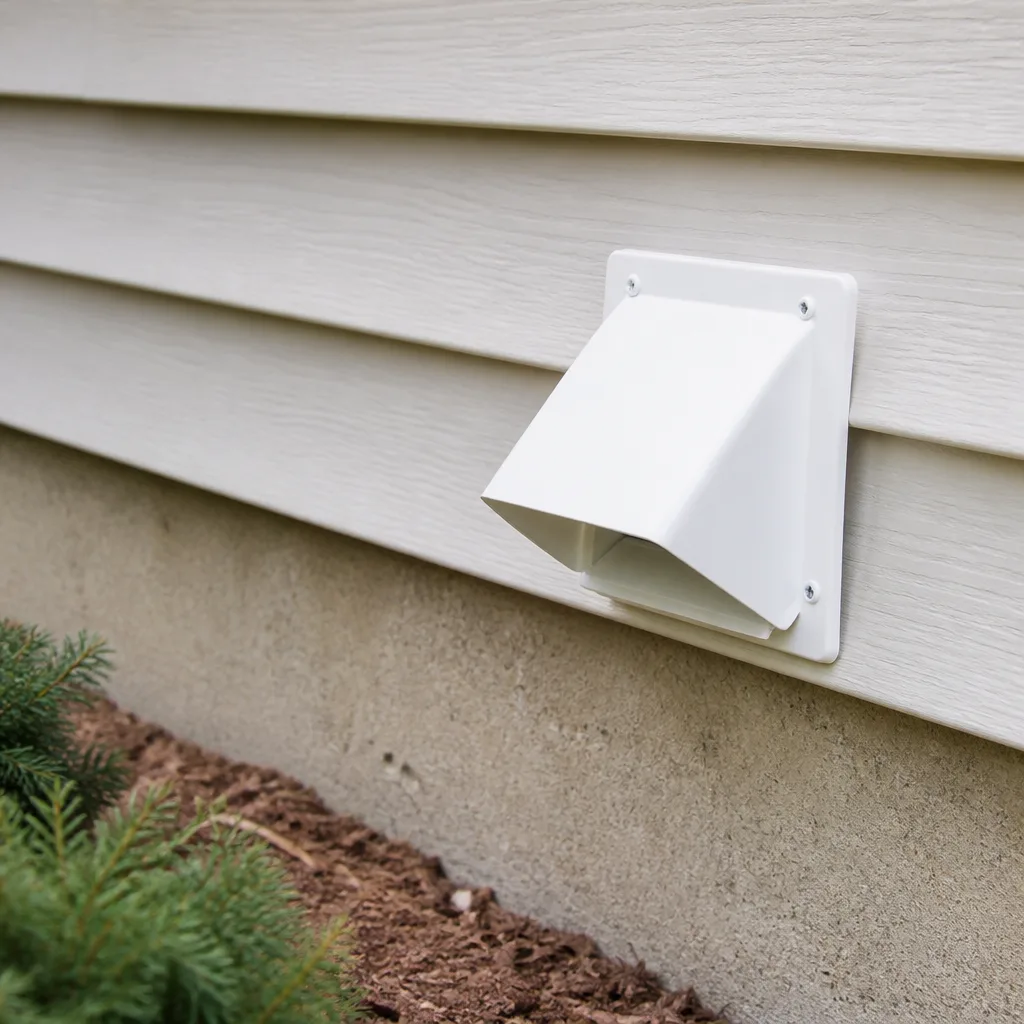 Dryer vent cleaning
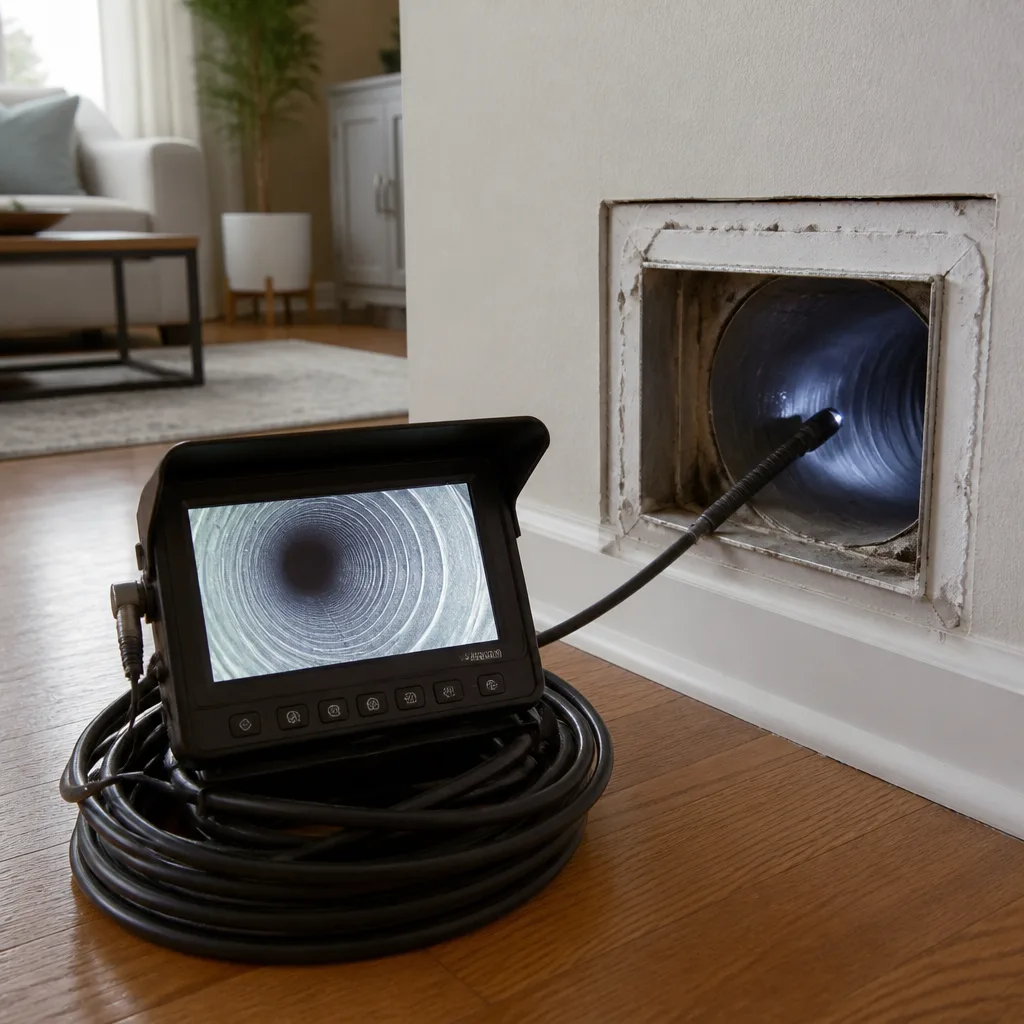 Camera inspection
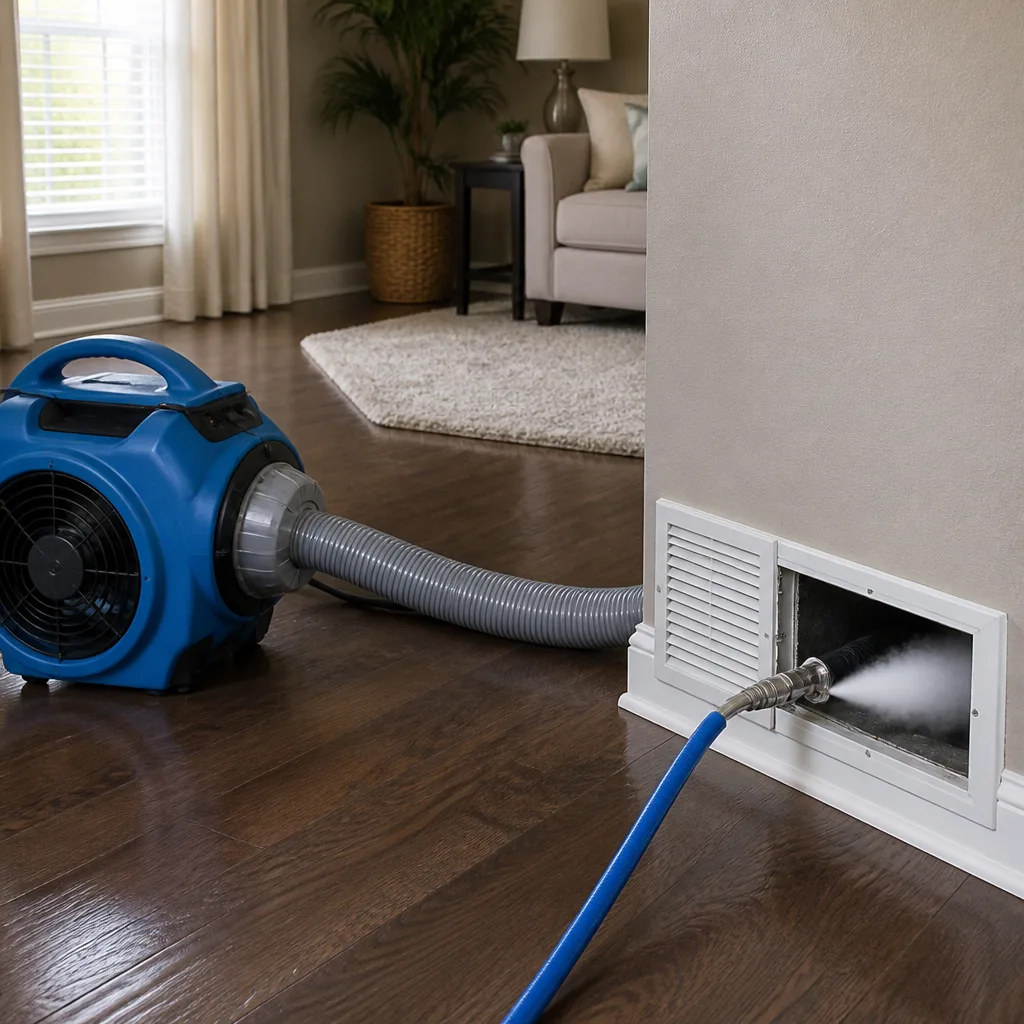 Sanitizing & deodorizing
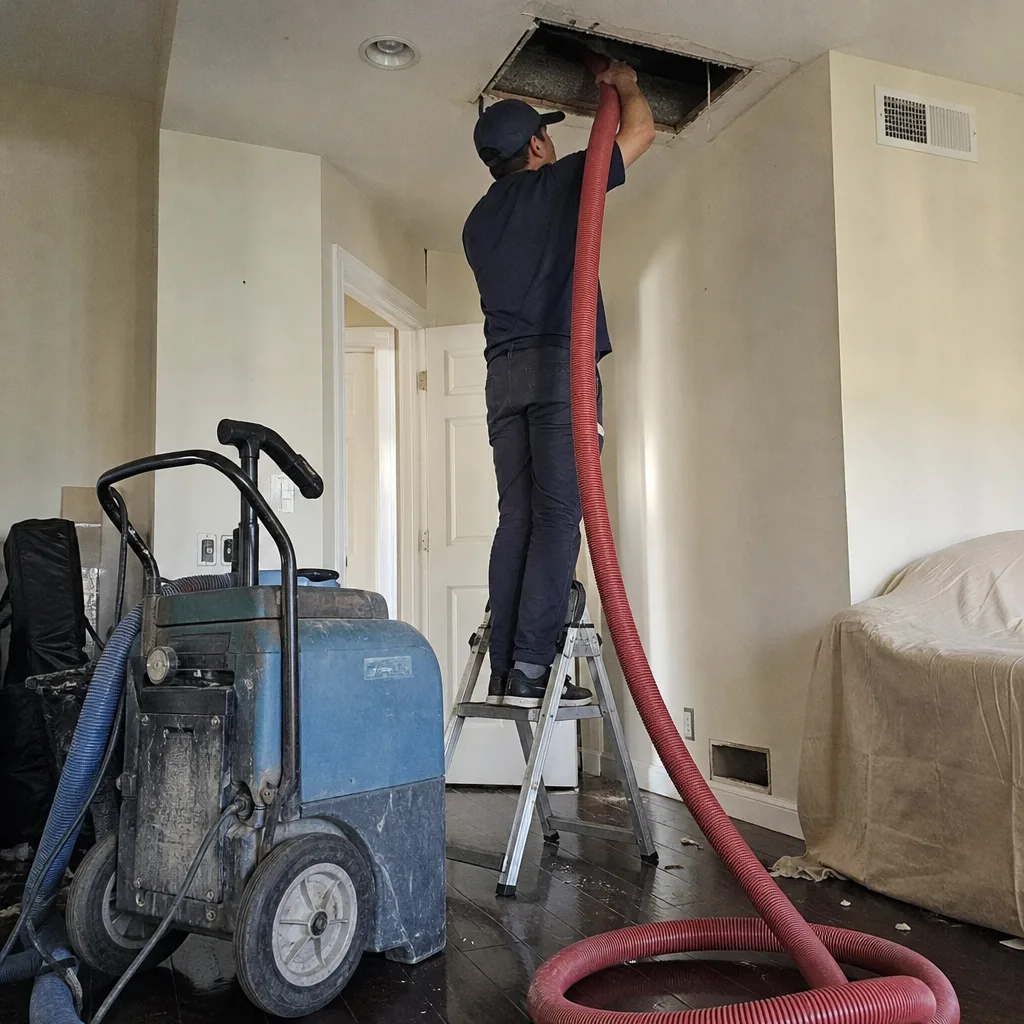
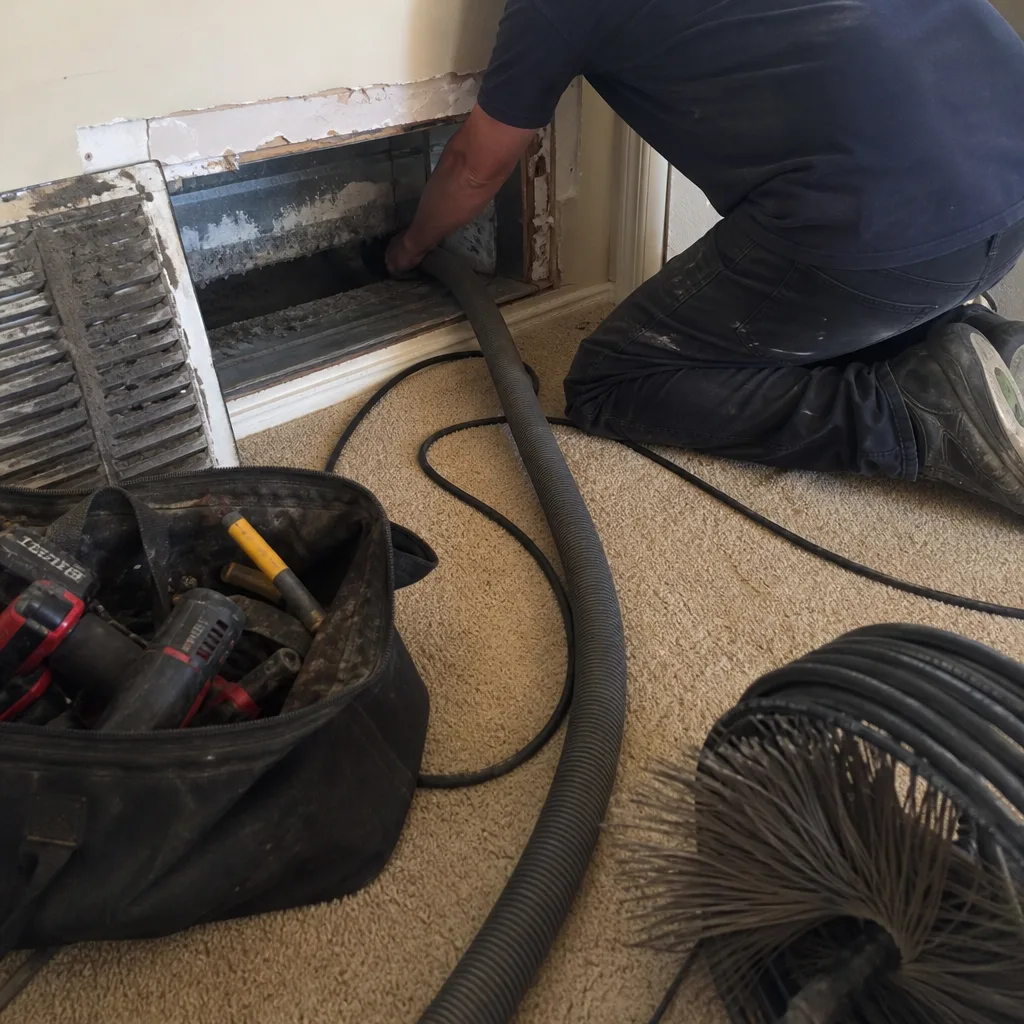
Whole-system duct and dryer vent check with before-and-after photos - you see exactly what came out of your vents
That "$99 whole-house special" is a bait ad - the real number appears once they are in your hallway, or the "clean" is a shop-vac at the register. We photograph the inside of your ducts before and after instead.
Choosing the Right Air Duct Cleaning Brand: A Buyer’s Guide for Laguna Niguel
Most homeowners in Laguna Niguel assume the company they hire is the product. That’s the first mistake. The actual product is the equipment inside your ducts, and two companies can quote the same price while using tools that perform completely differently. Rotobrush and Nikro are both names you’ll hear, but they work on different principles: one is contact-based agitation with simultaneous extraction, the other is high-CFM negative-air evacuation. This guide explains what each system actually does inside your ductwork, where each one shines, where each one falls short, and how to evaluate any company’s equipment claims before you let them cut into your system. By the end, you’ll know the questions that separate a real cleaning from an expensive air disturbance.
Styles & brands we work with
- Whole-home duct cleaning
- Dryer vent cleaning
- Camera inspection
- Sanitizing & deodorizing
Quick Answer
The right air duct cleaning brand for your Laguna Niguel home depends on your duct configuration. Rotobrush systems excel in flexible duct runs common in Orange County residential construction because the rotating brush physically scrubs the interior while the integrated vacuum extracts debris. Nikro negative-air systems are stronger for large trunk lines and plenums where high-volume CFM evacuation matters more than contact agitation. The best choice is a company that owns both types of equipment and matches the tool to the ductwork, rather than forcing one system onto every job.
Table of Contents
- How Rotobrush Actually Works
- How Nikro Negative-Air Systems Work
- Truck-Mount vs. Portable: What Actually Matters
- Five Questions to Ask Any Duct Cleaning Company
- Why Equipment Alone Doesn’t Guarantee Results
- What Laguna Niguel Homeowners Should Know
- Common Mistakes to Avoid
- When to Call a Professional
- Frequently Asked Questions
- The Bottom Line
How Rotobrush Actually Works
Rotobrush is the most recognized name in residential air duct cleaning, and for good reason. The system is built around a rotating brush head attached to a flexible shaft. As the brush spins inside the duct, it physically dislodges dust, debris, and the film that builds up on duct walls. A vacuum runs simultaneously through the same assembly, pulling loosened material out as the brush works. It’s a contact-based cleaning method, meaning something is actually touching the duct surface.
This matters more than most homeowners realize. Dust that has adhered to duct walls over years of conditioned air moving through the system doesn’t simply float out when a vacuum is applied. It needs mechanical agitation. Rotobrush provides that agitation at the point of contact, which is why it’s particularly effective in flexible duct systems. The flex duct used in many Laguna Niguel homes has an interior surface that traps particulate. A brush that can navigate those bends while maintaining contact and extraction is doing real work, not just moving air around.
The limitations of Rotobrush are equally important to understand. In large rigid metal trunk lines, the brush diameter may not fully engage all interior surfaces of a wide rectangular duct. The rotating head does its best work in round or oval cross-sections where the brush makes consistent contact. In a large plenum, contact-based agitation is secondary to volume-based evacuation. That’s where a different type of system becomes relevant.
Rotobrush equipment has also evolved significantly from the early consumer-grade machines. Modern professional Rotobrush units are built for repeated daily use by technicians, with brush heads in multiple sizes to match different duct diameters. Ask any company that uses Rotobrush what brush sizes they carry and how they select the head for your specific ductwork. A technician carrying one brush size is not doing the job the system was designed for.
How Nikro Negative-Air Systems Work
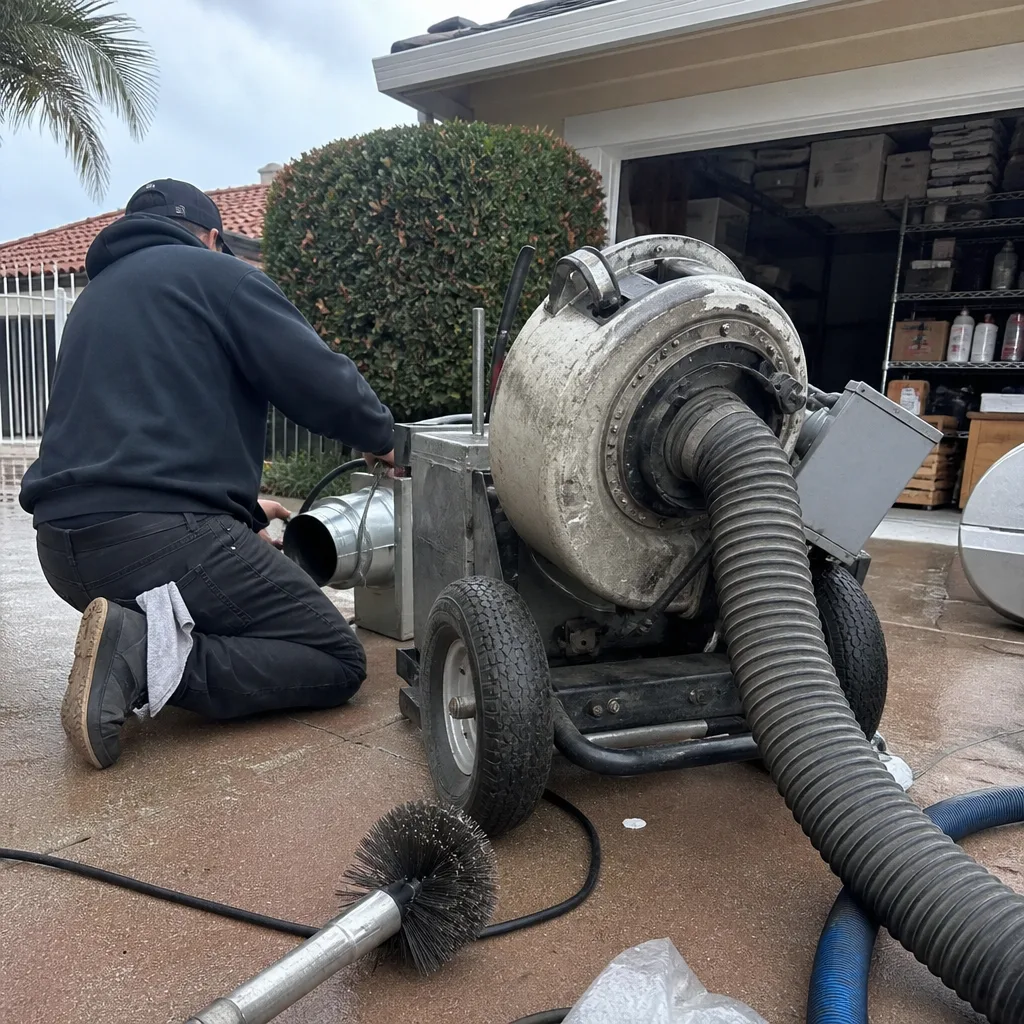
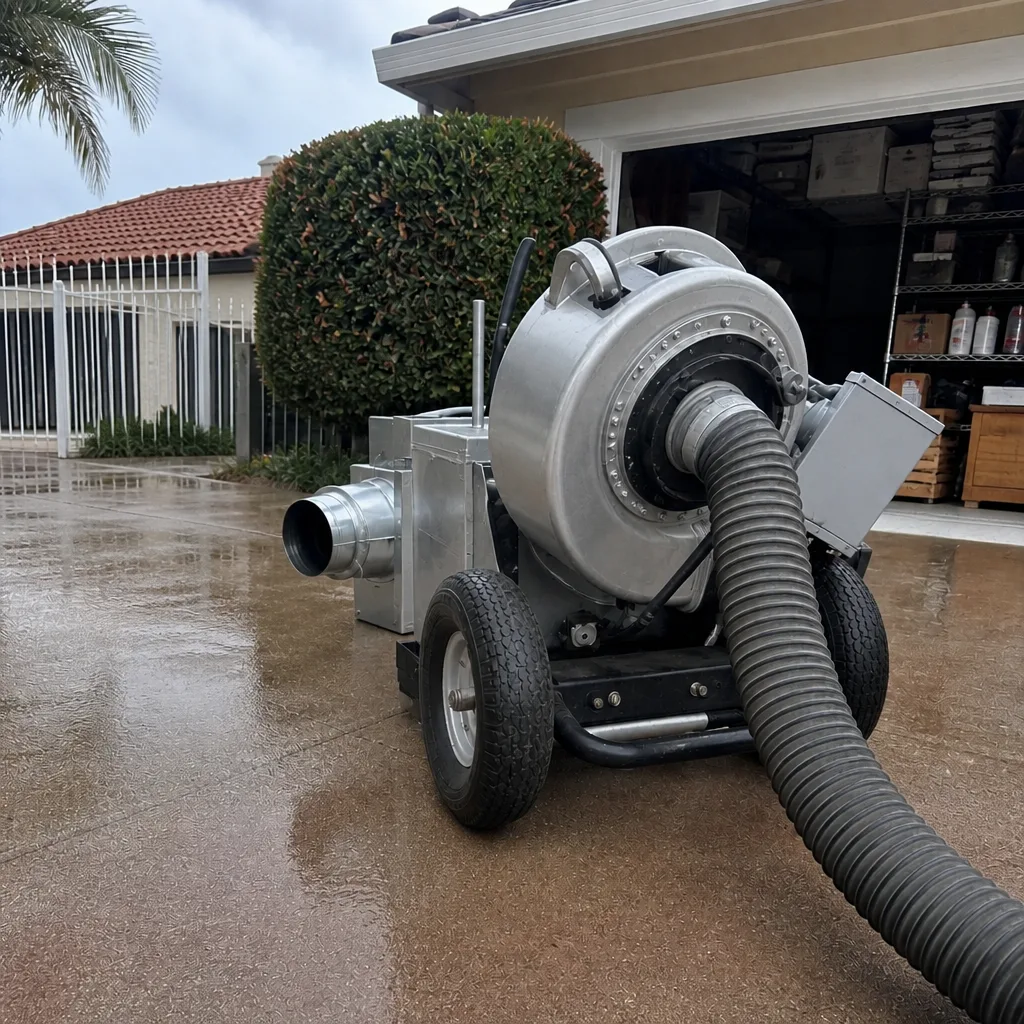
Nikro takes a fundamentally different approach. Instead of contact scrubbing, Nikro systems create negative pressure inside the ductwork to evacuate debris at high volume. The system seals off the duct system, connects a high-CFM collection unit to a main access point, and pulls air through the entire network. Contaminants entrained in that airflow are captured in a HEPA-filtered collection unit before the air is discharged.
The principle is the same one used in commercial remediation work. When you’re dealing with large volumes of loose particulate in a big trunk line or plenum, contact agitation matters less than the ability to move enough air to carry that material out. Nikro equipment generates the CFM numbers that make that possible. In a wide rigid trunk line, a brush head may only contact a portion of the interior surface. Negative air, properly applied, pulls from the entire cross-section at once.
That said, negative-air systems have their own limits. In long flexible duct runs with multiple bends, air velocity drops as distance from the collection point increases. Debris that has adhered to the flex duct interior stays adhered. That’s the situation where contact-based agitation earns its keep. The two system types aren’t competitors in a meaningful sense. They’re suited to different parts of the same duct system, which is why the strongest companies own both.
Nikro equipment is a name that restoration and remediation professionals recognize, not something marketed to homeowners at big-box stores. That’s a useful signal. When a company invests in Nikro gear, they’re buying tools designed for technicians who do this every day, not a consumer-grade vacuum with a marketing budget.
Truck-Mount vs. Portable: What Actually Matters
There’s a persistent belief that truck-mounted systems are automatically superior to portable equipment. That belief is a holdover from the days when portable units were genuinely underpowered. It doesn’t hold up against the equipment actually available today.
A truck-mount system’s main advantage is power source: the vacuum is driven by the vehicle’s engine, which can generate significant CFM. It also keeps the collection unit outside the home, which matters for noise and for containing whatever comes out of your ducts. However, truck-mount systems connect to your ductwork through a single large-diameter hose. That hose runs from the truck through your home to the access point. The effective suction at the far end of a long flex run is reduced by the distance and the bends in your duct system, not just the bends in the hose.
Professional portable units like the Rotobrush and Nikro systems used by serious companies have closed much of the performance gap. Modern portable equipment generates CFM numbers that rival or exceed what many truck-mounts deliver at the point of contact. The ability to bring the extraction unit directly to the access point means less loss through long hose runs. For the multi-level homes common in Laguna Niguel, where duct runs can be extensive, a portable professional unit positioned near the work area often outperforms a truck parked in the driveway.
The distinction that actually matters isn’t truck versus portable. It’s professional versus consumer. A shop vac with a long hose attached to a drill-powered brush is not in the same category as a Rotobrush system. A consumer-grade vacuum with a rotating brush attachment is not a Nikro negative-air unit. When a company talks about their equipment, the question is whether the tool was built for technicians who clean ducts for a living, or whether it was purchased off a shelf at a home improvement store.
Five Questions to Ask Any Duct Cleaning Company
Before you let anyone cut an access hole in your ductwork, ask these five questions. The answers tell you more than any review or price quote.
- What CFM does your extraction equipment generate at the point of contact? CFM, or cubic feet per minute, is the volume of air the system moves. Effective negative-air duct cleaning typically requires enough CFM to pull debris from the full duct cross-section, not just the area immediately around the hose. A company that can’t answer this question is telling you something important.
- What brush sizes do you carry, and how do you match them to different duct diameters? Ductwork in Laguna Niguel homes varies. A 6-inch flex run needs a different brush head than a 10-inch rigid trunk line. If the answer is “one size fits all,” the job will reflect it.
- How do you seal the system during cleaning? Negative-air cleaning requires the system to be isolated. Access points need to be created and sealed properly, registers need to be blocked or managed, and the negative pressure needs to be maintained throughout the process. Ask for specifics, not reassurances.
- Is your collection unit HEPA-filtered? If the extraction system exhausts air back into your home, the filtration level matters enormously. HEPA filtration captures the fine particulate that ordinary filters pass through. This is not a trivial detail. It’s the difference between removing debris and redistributing it.
- What do you do if you find damage during cleaning? Duct cleaning sometimes reveals problems: disconnected joints, crushed flex runs, gaps in the plenum. Some companies clean around the damage and move on. Others can Duct Cleaning Laguna Niguel repair what they find. The answer to this question determines whether you get a cleaning or a complete solution.
Why Equipment Alone Doesn’t Guarantee Results
Good equipment is necessary but not sufficient. Two companies can own the same Rotobrush unit or the same Nikro negative-air system and produce very different outcomes. The variables that determine the actual result are procedural, not mechanical.
Technician training matters. A Rotobrush system in the hands of someone who was shown how to use it for twenty minutes is not the same tool as it is in the hands of a technician who understands duct system design, airflow principles, and how to interpret what comes out of a duct during cleaning. The debris in the collection unit tells an experienced technician something about what’s in the system. An untrained worker just empties the canister.
Inspection protocol matters. A real duct cleaning begins before the equipment is turned on. The system should be inspected: access points identified, the plenum checked, register locations mapped, the return side evaluated separately from the supply side. Companies that skip inspection are cleaning blind.
Post-cleaning verification matters. How do you know the work was actually done? Some companies take before-and-after photos of the duct interior. Some use remote cameras. Some simply hand you an invoice. Ask what verification you’ll receive before you agree to the work. A company that doesn’t document its own results is inviting skepticism about those results.
System interaction matters. Your ducts are not a standalone feature. They connect to a furnace, an air handler, filters, registers, and in many Laguna Niguel homes, IAQ equipment from brands like Honeywell and Aprilaire. A competent technician understands how cleaning interacts with those components, from filter replacement recommendations to ensuring cleaning debris doesn’t work its way into equipment it shouldn’t.
What Laguna Niguel Homeowners Should Know
Laguna Niguel’s housing stock shapes the duct cleaning conversation in specific ways. A significant portion of the homes here were built during the major Orange County development waves from the late 1960s through the 1990s. That means duct systems of varying ages, materials, and configurations, often with original or aging flex duct in parts of the system.
The mild climate has an underappreciated effect. In regions with harsh winters, duct cleaning conversations often focus on seasonal issues like rodent intrusion during cold months or heavy particulate settling during forced-air heating season. Here, the HVAC system runs less seasonally and more year-round, which means the accumulation in your ducts is a slow, continuous process. It’s not dramatic. It’s just gradual, and that’s precisely the kind of buildup that goes unnoticed until someone in the household starts asking why the house is dustier than it should be.
Homes in neighborhoods across Laguna Niguel also tend to have HVAC systems located in attics or closets rather than basements, a construction pattern that affects access to ductwork. Attic installations mean longer flex runs, more turns, and more joints. Each joint is a potential leak point, and each long run is a place where debris settles. This configuration rewards thorough, equipment-appropriate cleaning and punishes the shop-vac approach more than simpler basement-style systems would.
Allergies are a recurring theme in Southern California, and Laguna Niguel is no exception. The combination of year-round growing seasons, ornamental landscaping that produces pollen, and the dust that comes with dry summers means homeowners here are often looking for ways to reduce indoor particulate. Duct cleaning is one part of that picture, and the effectiveness of the cleaning depends directly on the equipment and process used.
Common Mistakes to Avoid
- Choosing based on the lowest advertised price. Low-price duct cleaning offers in the Laguna Niguel market typically mean one of two things: consumer-grade equipment, or a price that will grow once the technician is inside the home. Neither outcome saves you money. The honest approach is a clear price per job, agreed before work starts.
- Assuming all equipment is the same. A rotating brush system and a negative-air system are solving different problems. A company that only owns one type of equipment will apply it to every situation whether or not it fits. Ask what they use and why.
- Hiring a company that only cleans and can’t repair. Duct cleaning reveals problems in a meaningful percentage of homes. Joints come loose, flex duct gets crushed, plenums develop gaps. If your cleaner can only clean, you’ll pay for a separate contractor to fix what the cleaning uncovered. A company that offers dryer vent cleaning alongside duct repair and cleaning means what’s found gets addressed, not deferred.
- Ignoring the dryer vent in the equation. Dryer vents are not part of the HVAC duct system, but many Laguna Niguel homeowners assume they are. Lint accumulation in dryer vents is a fire hazard that your HVAC cleaning won’t address. A company that offers both services understands the difference and handles each with the right process.
- Not asking about containment and cleanup. Cutting into ductwork creates debris. A professional operation uses drop cloths, floor protection, and containment practices that keep the work contained to the duct system. If the company doesn’t mention their containment process, ask. The answer will tell you a lot.
- Skipping verification. You wouldn’t hire a painter and not check the walls before they leave. Duct work is harder to verify than paint, which makes before-and-after documentation more important, not less. Insist on seeing what the ducts looked like before and after the cleaning.
- Treating duct cleaning as a standalone fix for every air quality issue. Cleaning the ducts removes what’s in the ducts. It doesn’t fix a leaking HVAC system, a missing filter, excess moisture, or a clogged condensate drain. A good technician will tell you what the cleaning addressed and what might need attention elsewhere. A bad one will imply the ducts were the whole story.
When to Call a Professional
Duct cleaning is not a DIY project. The access points, the equipment, the containment, the filters, the system knowledge: these are the reasons professional-grade equipment exists in the first place. If you’ve never had your ducts cleaned, if you moved into a home with unknown duct history, if someone in the house has persistent allergy symptoms that improve when they’re away from home, or if you can see visible dust accumulation around your registers, it’s time to have the system evaluated. If you have a dryer vent that hasn’t been cleaned in more than a year, that’s a separate and urgent safety concern. Duct Cleaning Laguna Niguel offers free estimates for air duct cleaning, dryer vent cleaning, and duct repair throughout the area. Call (855) 525-6862. We answer 24/7. Fast dispatch from 7am to 7pm, Sunday through Friday.
Frequently Asked Questions
Rotobrush uses a rotating brush that makes physical contact with the duct interior while a vacuum extracts loosened debris simultaneously. It’s most effective in flexible duct runs where agitation is required. Nikro uses negative air pressure to evacuate debris at high volume, which works best in large trunk lines and plenums where contact-based cleaning can’t reach all surfaces. The most capable companies own both and match the system to the ductwork.
It depends on your home’s duct configuration. Homes with extensive flexible duct runs benefit most from contact-based Rotobrush cleaning. Homes with large rigid trunk lines and big plenums benefit from Nikro negative-air evacuation. Most Laguna Niguel homes have both types of ductwork in the same system, which is why the right answer is usually a company that uses both technologies appropriately.
Not automatically. Truck-mounts generate significant CFM at the source, but lose effectiveness over long hose runs and through your duct system’s bends. Professional portable equipment positioned near the access point often delivers better performance in residential homes. The real distinction is professional-grade equipment versus consumer-grade vacuums, regardless of where the unit sits. Call (855) 525-6862 to ask about the equipment we use on every job.
Ask for before-and-after documentation. Reputable companies capture photos of the duct interior before and after cleaning so you can see the difference. Some use remote cameras for real-time verification. If a company doesn’t offer any verification, that’s a reason to look elsewhere. Written before-and-after visuals are the standard you should expect.
A professional company should identify the damage, show it to you, and offer to repair it. Damaged ductwork that gets cleaned but not repaired is a system that immediately begins leaking conditioned air and pulling in attic or crawl space contamination. Companies that offer both cleaning and repair can address the problem in the same visit rather than referring you elsewhere.
Duct cleaning removes accumulated particulate from the duct system, which can reduce the amount of dust and allergens circulating through your home. It’s one part of an indoor air quality strategy that includes proper filtration, regular filter changes, and addressing any system leaks. Homes near year-round landscaping in Laguna Niguel often benefit more because outdoor particulate finds its way into duct systems and accumulates there.
The Bottom Line
Choosing an air duct cleaning company in Laguna Niguel comes down to understanding the equipment, the process, and the people. Rotobrush and Nikro represent two different cleaning mechanisms, each suited to different parts of a typical residential duct system. A company that owns professional-grade versions of both, knows when to use each, verifies the work, and can repair what it finds is offering something fundamentally different from a low-price operator with consumer gear. Ask the questions outlined in this guide. If the answers include CFM numbers, brush sizes, HEPA filtration, and a clear inspection protocol, you’re talking to a specialist. If they don’t, keep looking.
Written by the team at Duct Cleaning Laguna Niguel, serving Laguna Niguel since 2011.
See the difference
 Before
 After
 Before
 After
 Before
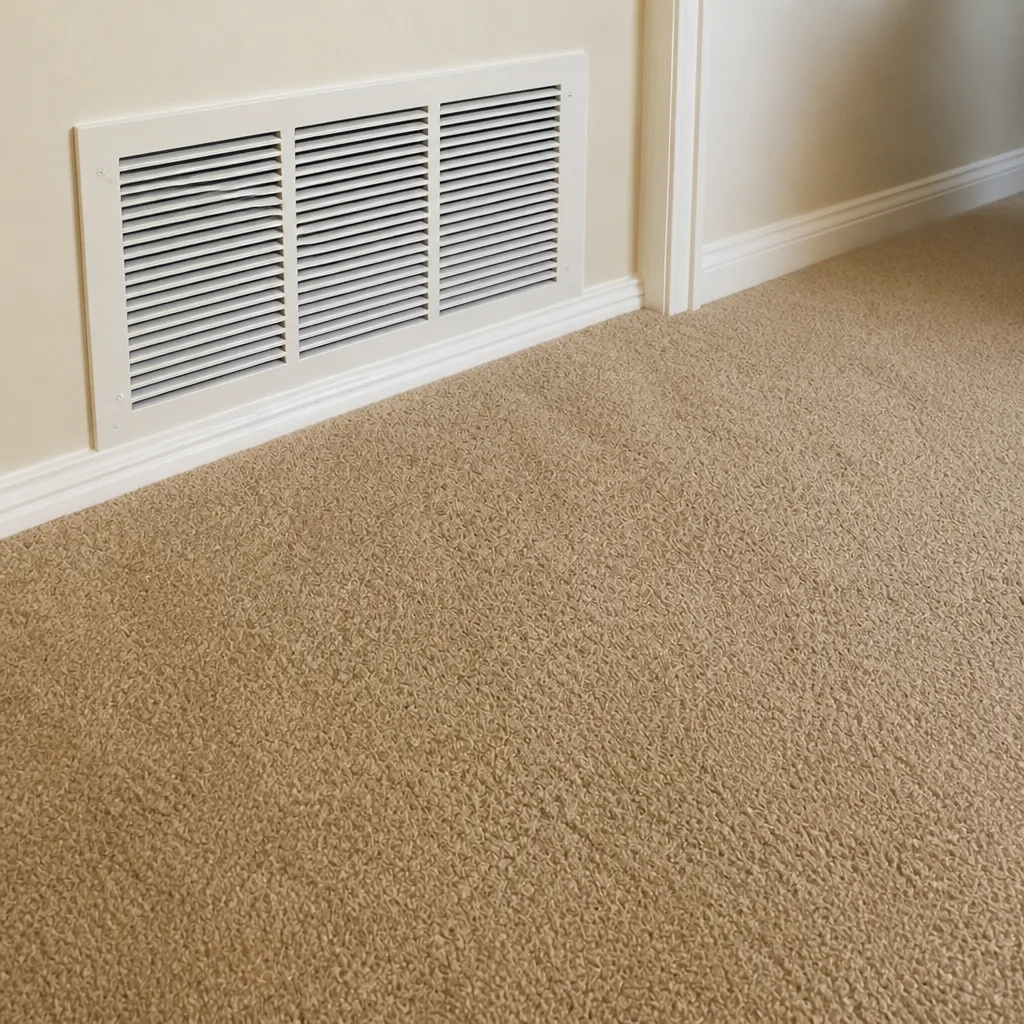 After